

They are preparing for the Artemis III mission, which will see astronauts return to the lunar surface and explore the South Pole region for the first time.
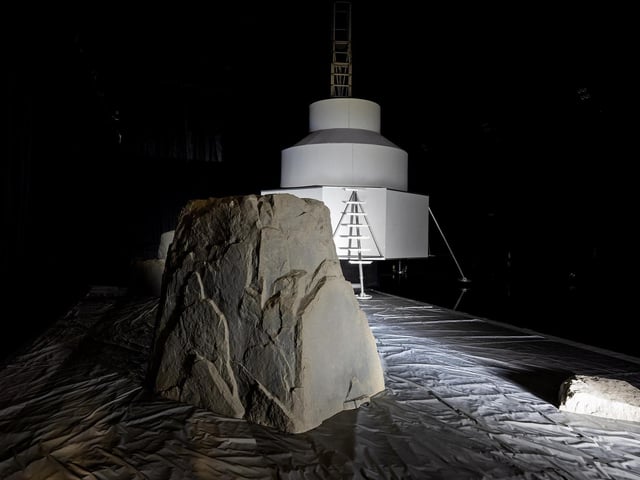
Inside the Flat Floor Facility at NASA’s Marshall Space Flight Center in Huntsville, teams are conducting simulations designed to mimic the harsh lighting astronauts will face during the mission. Using high-intensity lights, low-fidelity replicas of lunar landers, surface terrain and rock formations, the agency is studying how long shadows and high-contrast lighting will affect operations on the Moon.
“The goal is really to understand how shadows will affect lander visual inspection and assessment efforts throughout a future crewed mission,” said Emma Jaynes, test engineer at the facility. “Because the Flat Floor Facility is similar to an inverted air hockey table, NASA and our industry partners can rearrange large, heavy structures with ease – and inspect the shadows’ effects from multiple angles, helping to ensure mission success and astronaut safety for Artemis III.”
The 86-by-44 foot epoxy floor is one of the flattest and most stable of its kind in the world. Mock-ups are placed on air bearings that allow them to move with minimal friction, closely mimicking the experience of low-gravity movement on the Moon.
Engineers use powerful 12-kilowatt and 6-kilowatt lighting rigs to recreate the stark contrast of the lunar South Pole, where the Sun remains permanently low in the sky. White surfaces can become blinding in direct light, while shadows – cast by rocks or the lander itself – can stretch for metres or even kilometres.
“The Sun is at a permanent low angle at the South Pole of the Moon, meaning astronauts will experience high contrasts between the lit and shadowed regions,” Jaynes said. “The colour white can become blinding in direct sunlight, while the shadows behind a rock could stretch for feet and ones behind a lander could extend for miles.”
Large fabric sheets have also been spread across the floor to imitate the reflective properties of lunar regolith, the powdery surface layer of the Moon.
The data gathered is feeding directly into the design and operational planning for Artemis III, helping refine simulation models, astronaut training, and tool development.
1. Contributed
NASA engineers are using a state-of-the-art testing facility in Alabama for mock moon missions. Photo: Submitted
2. Contributed
NASA engineers are using a state-of-the-art testing facility in Alabama for mock moon missions. Photo: Submitted
3. Contributed
NASA engineers are using a state-of-the-art testing facility in Alabama for mock moon missions. Photo: Submitted
4. Contributed
NASA engineers are using a state-of-the-art testing facility in Alabama for mock moon missions. Photo: Submitted