
How solar trailer security systems can help prevent crimes in open venues
Parking lots and other open‑air areas account for 2 million crimes and $6 billion in property losses each year; they are the third‑most common scene of violent incidents, with 7.3 % of all violent crime occurring in these spaces.
Parking lots and other open‑air areas account for 2 million crimes and $6 billion in property losses each year; they are the third‑most common scene of violent incidents, with 7.3 % of all violent crime occurring in these spaces. Where cameras are present, the story changes. A meta‑study found that car‑park crime drops by 51 % once CCTV is installed.

With the 2025 US Open in New York expected to exceed 1 million spectators over three weeks—a record set last year—organisers face the challenge of extending security far beyond stadium gates to fan zones, transit hubs, and sprawling car parks.
Why Open Venues are Vulnerable
- Large crowds create natural cover for offenders.
- Temporary layouts shift sight‑lines and limit fixed‑camera options.
- Remote car parks lack power, data and mounting points, leaving surveillance gaps. Industry analysts note that venues are “ramping up efforts to secure surrounding sidewalks, parking lots, and high‑traffic areas” using analytics and flexible camera platforms.
What is a solar trailer security system?
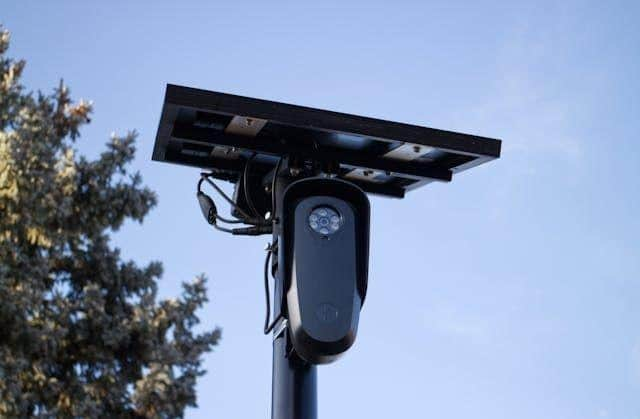
A solar trailer is a tow‑able, self‑powered mast that raises AI‑enabled cameras 20–30 ft high and streams footage over 4G/LTE or private cellular. Batteries and high‑efficiency panels keep the unit online for weeks without fuel or hardwiring, making it ideal for tournaments, festivals, and construction sites.
Proof of concept: Wildflower Arts & Music Festival, Texas
When the City of Richardson needed rapid coverage for its 70 000‑person Wildflower Festival, two solar surveillance trailers delivered live multi‑camera feeds to a command centre within minutes of deployment. Operators could issue voice challenges and coordinate responders before incidents escalated.
How trailers could strengthen US Open security
- Parking‑lot deterrence – Visible 360° cameras at lot entrances cut break‑ins, a common pain point for fans.
- Perimeter intelligence – Analytics flag weapons, crowd surges, or restricted‑area breaches in seconds, giving NYPD and event staff real‑time context.
- Pop‑up flexibility – Trailers fill blind spots created by temporary merchandise tents or broadcast trucks, then redeploy overnight to taxi stands or practice courts.
- Edge recording – Local processing keeps video flowing even if cell service is saturated on championship weekend.
Deployment Best Practices
Stage trailers forty‑eight hours before gates open so sight‑lines can be adjusted during vendor move‑in. Add LED flood‑lighting to improve night‑time image clarity, link AI alerts directly into the incident‑management dashboard that staff already monitor, and review heat‑map analytics afterward to refine placement for future events.
Expert insight
“Solar trailers let organisers move smart‑camera coverage wherever the crowd goes without waiting for power or fibre. For an event the size of the US Open, every minute saved on setup means more time protecting fans.”
— Ashesh Jain, CEO, Coram
Coram’s Solar Surveillance Trailer packages edge AI, licence‑plate recognition, and cellular redundancy in a single tow‑and‑go unit sized for tournaments, fairs, pop‑up fan zones, or any open venue where you can’t put cameras.
Conclusion
Open‑air events succeed or fail on the safety of the spaces outside the ticketed areas. Solar trailer security systems close those gaps quickly, deter opportunistic crime, and give command staff the real‑time intelligence they need—from the Wildflower Festival in Texas to the hard courts of Flushing Meadows.