
Icelandic pool culture confirmed on Unesco's list of intangible cultural heritage
Iceland’s pool culture has today earned global recognition with inscription on UNESCO’s List of Intangible Cultural Heritage, following an evaluation process beginning in March 2023.
Iceland has a dense network of public swimming pools: around 120 public pools operate across the country. As a result, virtually every town, large or small, has a “sundlaug,” which Icelanders visit daily. The UNESCO inscription recognises swimming pools’ importance as public spaces where people of all ages and backgrounds come together to swim and enjoy community. People meet in swimsuits on equal footing; a staple of the community, pools are a daily meeting place where you might find yourself in a conversation with the town mayor.
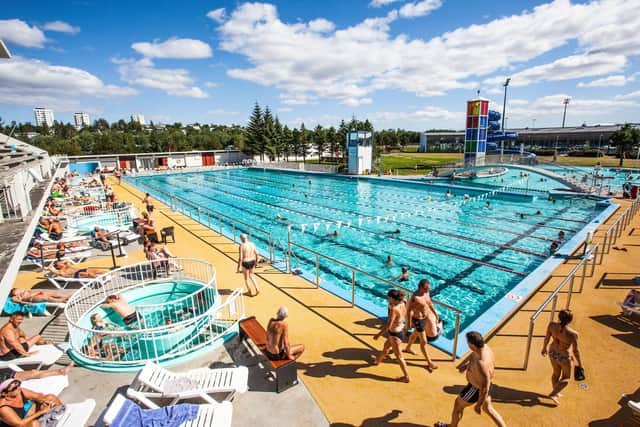

Swimming pool culture is a reflection of core Icelandic values: community and egalitarianism, a close connection to nature and sustainable resources, a cultural prioritisation of well-being, mental health and social connection, and inclusive social infrastructure. The culture supports physical, mental, and social well-being, with many pools also offering cold baths, saunas, and hot tubs.
The designation marks a major milestone and is a significant acknowledgment of the cultural value of Iceland’s swimming pools, the vast majority of which are geothermal-heated, outdoor, and open year-round. It is the first time Iceland had submitted an independent nomination to the list; in 2021, the craftsmanship of Nordic clinker-built boats was inscribed as a joint nomination by all the Nordic countries, along with the Faroe Islands and Åland.
The nomination stems from extensive preparation led by the National Museum of Iceland and previously the Árni Magnússon Institute for Icelandic Studies. Pool-goers, community groups, associations, and municipalities contributed by sharing perspectives and supporting the process. Meetings were held around Iceland to gather local insights, with swimmers and swim groups nationwide offering experiences and encouragement. Swimming clubs, the Icelandic Swimming Association, and UMFÍ also participated, with ten municipalities submitting formal letters of support including the City of Reykjavík, which produced a 10-minute video on pool culture. Former President Guðni Th. Jóhannesson supported the nomination throughout.
Minister of Culture, Innovation, and Higher Education, Logi Einarsson, said: “I am thrilled that UNESCO has affirmed what we already know - Icelandic pool culture is unlike anything else. This recognition highlights the cultural treasure we have in our pools. Filling a concrete basin with water is one thing, but the conversations and connections that happen there, often between strangers, are something entirely different.
There are more than 120 pools across Iceland. They support physical and mental well-being and serve as one of the country’s most beloved gathering places. Each pool has its own character and reflects the community around it. They are among the few places where people put away their phones and honestly talk to one another.”
Reykjavík Mayor Heiða Björg Hilmisdóttir said: “Geothermal energy and our swimming pools are a vital part of Reykjavík’s culture and history, and we are proud of this UNESCO recognition. The eight pools operated by the City of Reykjavík each have their own identity and atmosphere, yet all offer a sanctuary in a busy world. Everyone is indeed equal in the water, and there is nothing more wonderful than seeing people of all ages gathering in the pools to nourish body and mind.”
Icelandic pool culture joins French baguettes and Nordic sauna culture on the list
People often describe the UNESCO List of Intangible Cultural Heritage as the “younger sister” of the World Heritage List. The list features more than 800 inscriptions from over 150 countries and highlights the richness of global cultural traditions, showcasing practices such as Chinese shadow puppetry, Belgian beer culture, the French baguette, and Finnish sauna culture. In New Delhi, the committee added new inscriptions including Deepavali, the Hindu festival of lights; Belgian string puppetry; traditional Japanese papermaking; Swiss yodelling; and now, Icelandic pool culture.
To discover more, see the Inspired by Iceland website here.