
Is your dog too cold inside? Animal behaviourist warns owners of key signs
Electric Radiators Direct and Wood Green, The Animals Charity have teamed up to share tips for keeping your pets comfortable indoors this winter.
As temperatures continue to dip below 0°C across much of the UK, and some areas even waking up to a dusting of snow in recent weeks, households nationwide are turning up the thermostat to ward off the winter chill.
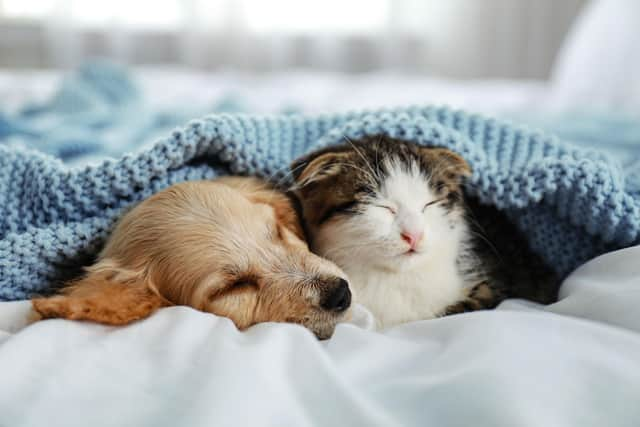

But with 36 million dogs and cats now sharing our homes – a rise of 3 million since last year – have we considered the ideal indoor temperatures for our furry friends this winter?
Stephen Hankinson, heating expert at Electric Radiators Direct collaborated with Sue Ketland, Behaviour and Training Specialist from Wood Green, The Animals Charity – well known for Channel 4’s The Dog House – to provide advice on how to keep your dog or cat a comfortable temperature indoors this winter.
The Ideal Home Temperature for Pets is 18-20ᵒC
A study by Electric Radiators Direct found that most households in the UK prefer to keep their homes at around 20°C during the winter months. But what about our pets’ needs?
The good news is that most four-legged companions are perfectly happy with the usual indoor temperatures we enjoy, with 18–20°C generally being just right. That said, it’s not a one-size-fits-all situation.
Cats and dogs, for example, have an average body temperature of 38–39°C, so it’s important to help them maintain this to stay within their comfort zone.
Since every pet is unique, there are three key things to think about when keeping them cosy this winter:
Watch Out for Odd Behaviour
Pets are ultimately part of the family, and before long, you’ll start noticing all their little quirks. For example, if they’re curling up in a tight ball or camping out by the radiator, they’re probably feeling chilly.
On the flip side, if they’re sprawled out, panting, or acting restless, they’re likely too warm.
Learning to spot these signals early on means you can tweak your home’s temperature to keep your furry friend perfectly cosy!
Consider Your Dog’s Breed
Different dog breeds have coats of varying thickness, which play a key role in determining their ideal temperature. Pets with thick fur, such as Huskies or Norwegian Forest cats, are better suited to cooler conditions, while those with shorter fur – or no fur at all, like Sphynx cats – are less capable of staying warm.
Thicker-coated pets may struggle in warmer temperatures and often seek cooler spots, like drafty areas, which might suggest setting the thermostat slightly lower for their comfort.
In contrast, pets with thinner fur, like Whippets, are less efficient at retaining heat and are more comfortable in warmer environments.
As a general rule, a pet's coat thickness serves as a reliable guide for determining their ideal temperature – the thinner the coat, the more susceptible they are to the cold!
Factor in How Old Your Pet Is
Age is another determining factor when it comes to maintaining body temperature for pets.
If your animal companion is on the older side, they may find it harder to regulate their body temperature and in turn need to be in a slightly warmer environment, so keep this in mind when considering their home heating needs.
Try Smart Heating Solutions to Suit Your Animal’s Needs Electric radiators are a fantastic way to keep your pet comfortable, offering efficient and consistent warmth. They combine convection and radiation to heat both the air and surrounding surfaces, providing deep, long-lasting warmth for both you and your pets.
Making use of the timer function allows you to create a heating schedule that fits around your daily routine and your pet’s needs.
For example, if you walk your dog at the same times each day, you can set the radiator to switch off while you’re out and back on before you return, saving energy while keeping your home cosy.
Further information can be found here: https://www.electricradiatorsdirect.co.uk/news/temperature-regulation-for-your-pets-within-your-home/