
More than 3,000 Brits failed their driving test before stepping foot in car between 2018 and 2023
Budding motorists of the UK are currently facing lengthy delays when it comes to booking a practical driving exam, with more than four in five (84%) of test centres in the UK at the maximum 24 week waiting period to book.
To combat this, the government have recently announced they will clear the backlog by introducing 10,000 new driving tests a month, meaning learners should be able to claim their full driving licenses sooner than they think.
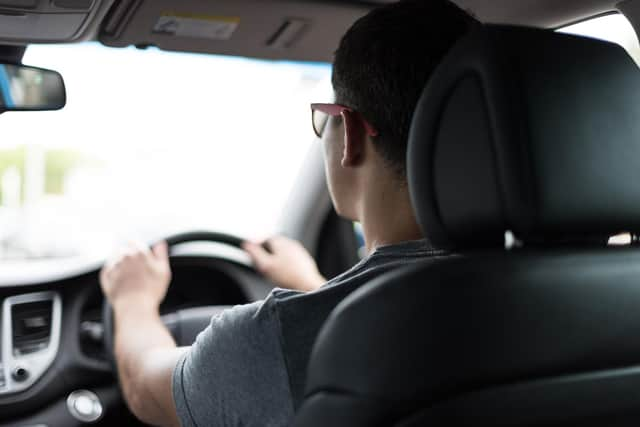

However, in a new study undertaken by prescription glasses retailer Feel Good Contacts, multiple Freedom of Information requests were submitted to the DVLA to analyse the number of road users with eyesight related conditions and how this has affected practical exams across the UK.
The cost of failed driving tests without turning the engine on
While the cost of a practical driving exam can set learners back at least £62 and up to £75 depending on the time of day, you would hope to give the test your best attempt.
Sadly for 3,061 Britons between 2018 and 2023, this turned out to be a waste of money, with these drivers all failing the initial eyesight check of reading a registration plate from 20 metres away – meaning they failed before even stepping foot in the car.
According to gov.uk: “You must be able to read (with glasses or contact lenses, if necessary) a car number plate made after 1 September 2001 from 20 metres.” Those who failed their test at this stage likely either forgot their correction devices or had an inadequate field of vision.
This means that a total figure, of up to £229,000 was spent on driving exams within this period that did not result in the learner switching the engine on for their test having subsequently failed already.
Learner drivers are still not learning their lesson when it comes to good eyesight for a practical exam. With numbers of test fails at the initial eyesight check gradually increasing and returning to pre-covid levels, with numbers peaking at 697 in 2018, sharply dropping to 280 in 2020 and gradually increasing year-on-year to 600 in 2023
Men are much likelier to fail at this stage than women
As a percentage, men are 41% more likely to fail their driving test at this stage than women, totalling higher numbers of fails the majority of age categories – with men aged 21-30 the most likely group to fail their driving test at the initial eyesight check.
Men accounted for 1,842 of the fails whereas women only accounted for 1,219 of the fails at this stage of the driving test.
Overall, the age 21-30 category account for more than a third (36%) of all driving test fails at the initial eyesight check, with 1,103 instances split across this age category.
The ‘01 - Eyesight Correction’ code and the significance to road users
Across the UK, more than 14 million drivers require eyesight correction as a condition of their license, meaning out of the 42 million license holders, a third (34%) contain an ‘01 - Eyesight Correction’ code.
For drivers who wear visual correction devices such as glasses and contact lenses in order to safely drive, drivers need to declare this to the DVLA when applying for or renewing a license and as such will receive an ‘01 - Eyesight Correction’ code on their driving license.
The postcode areas in the UK that feature the most ‘01’ codes on driving license include:
| Rank | Location | Postcode Area | Total |
| 1 | Birmingham | B | 391,437 |
| 2 | Sheffield | S | 278,814 |
| 3 | Nottingham | NG | 260,133 |
| 4 | Glasgow | G | 244,546 |
| 5 | Leicester | LE | 243,988 |
| 6 | Newcastle | NE | 234,962 |
| 7 | Manchester | M | 234,509 |
| 8 | Peterborough | PE | 234,397 |
| 9 | Bristol | BS | 229,388 |
| 10 | Reading | RG | 210,992 |
Birmingham postcodes contain the most ‘01’ codes on driving licenses in the UK, with more than 390,000 out of a population of more than two million.
As a percentage of the population from the top 10 most ‘01’ codes on licenses, Reading postcodes contain the greatest proportion of driving licenses with this code out of the population with one in four (25%) people.
Concerning number of drivers who haven’t informed the DVLA
Although these figures present the numbers that have informed the DVLA about their eyesight issues correctly, this is not always the case.
Worryingly, out of a survey of 2,000 Britons who were asked whether they wear glasses or contact lenses, out of those who drive, more than a third (35%) have not declared this to the DVLA and could be risking their own and other’s safety on the roads.
For those who have declared this to the DVLA, failure to wear visual correction devices can be punishable by up to a £1,000 fine and three points on your driving license.
Khuram Sarwar, Dispensing Optician at Feel Good Contactssays:“Wearing contact lenses or prescription glasses is a must while driving for those who need vision correction to meet the ‘standards of vision for driving.’
“A crystal-clear eyesight at multiple distances is needed to achieve an adequate field of vision during driving and to see road signs, number plates and other vehicles with optimal visual activity.
It is a simple process to get your vision corrected, and it is not worth the risk of failing your driving test or putting others in danger.”
For more information on the study, please visit: https://www.feelgoodcontacts.com/blog/why-are-britons-failing-driving-exams