
Rock bottom to riding the waves: Former addict who helps others get back on board life by teaching them to surf
Josh Dickson was 30 years old when he stopped and looked around at his life and thought: “What on earth am I doing?”
After years of drinking and recreational drugs, his life fell apart and he had no idea what to do with himself. But now he can be found on a beach teaching surfing to clients dealing with addiction.
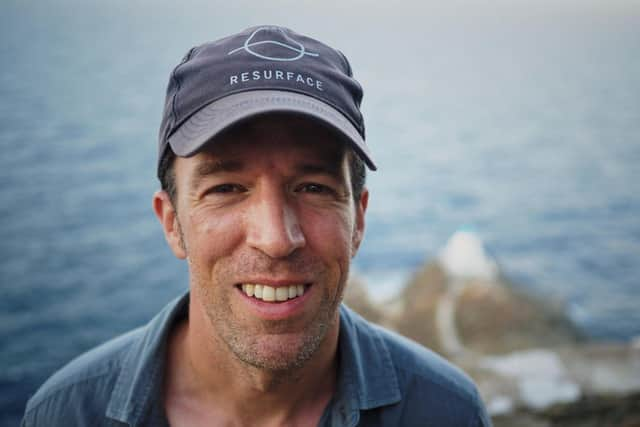

Josh had spent his twenties in the music industry, playing guitar, writing, and producing.
“We signed a record deal, made our first album, and then the whole thing collapsed - the management, the label, all of it,' Josh, now 48, says.
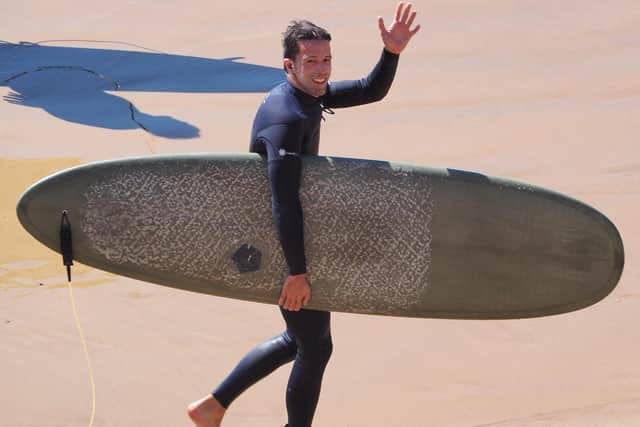
With the band came the lifestyle: drinking, drugs, late nights, the chaotic highs and crushing lows of life on the edge.
“The cliches are real because they come from reality,” Josh says.
Everything changed in 2009 when his music career came crashing down.
“I hit rock bottom. Everything imploded at once: my band fell apart, my relationship was deteriorating, and I found myself just on the wrong side of 30 thinking: ‘What now?’”
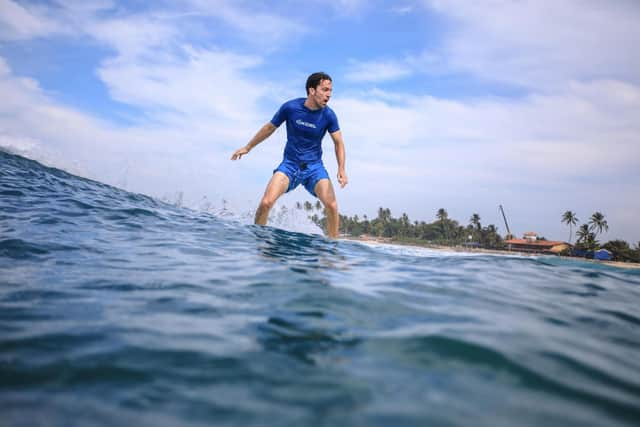
Josh reluctantly followed his then-girlfriend to a support group. It was there, he says, that the seeds of recovery were planted. “I started going to 12-step meetings and joined a weekly group connected to a rehab centre. The same one my dad had been to when I was 14.”
Josh's father, who struggled with addiction himself, eventually died while in recovery.
“He got clean after I did, relapsed, but then stayed clean for the last decade of his life. I saw what could happen if I didn’t get help. I’ve been in recovery for 16 years now,' says Josh, speaking from his London base, though he regularly travels to Oslo, where his wife works as a GP.
With a deepening interest in psychology, Josh trained as an addictions counsellor, then specialised in trauma, qualifying in EMDR (Eye Movement Desensitisation and Reprocessing).
It was through his therapeutic work that he had a realisation: some of the most powerful healing wasn’t happening in clinics – it was happening in the surf.
'It was only in 2015 that I tried surfing for the first time on a yoga retreat in Morocco. It just blew me away. Then I started taking clients from addiction treatment out surfing. And I began to see something powerful was happening.'
It gave him the idea to set up Resurface in 2017, which provides surf therapy retreats, intensives and 1:1 therapy incorporating experiential group work, trauma healing and a chance to connect with others.
“We use surfing to prepare people for better therapy,” says Josh.
“We’re not saying surfing is the therapy, but it’s a key that opens the door.”
His clients are adults and teens process grief, burnout, and trauma. Notably, he's seeing a surge in parents booking their 16+ teens onto his surf retreats as they struggle with online misogyny and low self-worth.
He describes surfing as ‘forced mindfulness’.
“You can’t think about anything else when you’re out on the waves,” says Josh.
“That alone is deeply therapeutic. And surfing gets people into a flow state, which massively improves creativity, problem-solving, and emotional regulation. There’s a real science behind why it works.”
Another layer, Josh says, is self-esteem.
“People come to us feeling broken. And then they learn to do something new and hard and scary. They get up on a board. They laugh. They connect. And they come away thinking: ‘If I can do this, what else can I do?’ It’s transformational
“It’s about corrective experiences,” Josh continues.
“With developmental trauma, it’s not what happened to you, it’s what didn’t happen: the neglect, the absence. We recreate what should have happened. That’s where healing begins.”
Josh doesn’t glamorise recovery.
“It’s simple, but not easy,” he says.
“It means looking at yourself. Committing. Changing. But I was lucky. I had time. I didn’t have kids yet. I could rebuild.”
Now, with a private practice in London and a growing international team of therapists under the Resurface banner, Josh sees his past not as baggage, but as the foundation of his purpose.
“Everything I’ve built has come from the worst moment of my life,” he says.
“But that’s what makes it meaningful. The thing that broke me gave me the tools to help others. And the sea. That’s where it all came together. That’s where the healing began.”