
The Christmas Ad Nobody Expected
While the new John Lewis commercial celebrates music's power to connect, a small charity's ad, filmed on a shoestring, reveals the missing audience that John Lewis forgot
ExCo
A six-year-old girl hands her grandmother an audio player. One card slides in. Music fills the silence. Three generations are finally able to connect.
It's a simple moment – but it's become the unexpected centrepiece of a Christmas campaign that's asking uncomfortable questions about who technology actually serves.
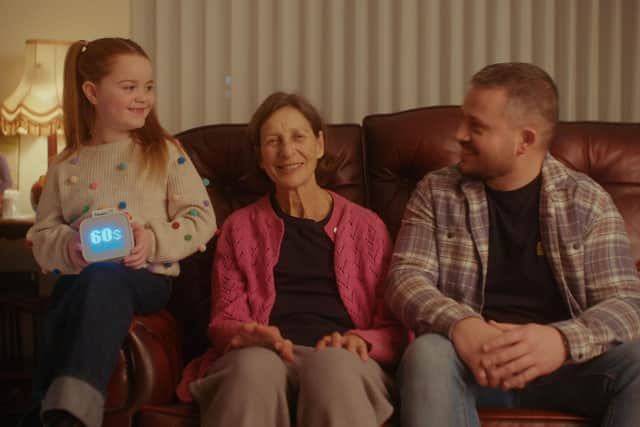

The film, released this week, shows an older woman locked out of her own music collection. She fumbles with vinyl records, struggles with CDs, contemplates devices she doesn't understand. Then comes relief: she's handed a children's audio player that connects to m4dRADIO.
It's a direct response to John Lewis's 2025 Christmas ad – which celebrated music's power to bridge generations. Beautiful, moving, emotionally resonant. But, as one charity points out, it missed something crucial: the millions of older adults who can't actually access the music being celebrated.
The statistics are damning. Research by Music for Dementia conducted with 1,000 family carers found that only three in ten older carers can stream music with their loved one.
Amy Shackleton, Project Lead at Music for Dementia says "John Lewis's Christmas campaign articulates something we have been advocating for years – that music connects us. It’s great that they are helping shine a light on the power of music, but we’re mindful that the people that need music the most often find it hardest to listen to because of barriers with technology."
The problem isn't a lack of music or a lack of desire. It's design.
The woman contemplating putting a CD into her toaster isn't exaggeration. It's real frustration, expressed in a moment that cuts through all the marketing speak.
Shot in ten days on a modest budget, cast entirely with friends and family, it's the antithesis of big budget and big production Christmas commercials, as it was made quickly, cheaply and with conviction.
The film raises questions about access and responsibility. Not just for charities, but for tech companies, streaming platforms and device manufacturers.
If children's technology can be intuitive, why can't music platforms be designed with older users in mind? If screens confuse older adults, why do we keep adding more? If caregivers say they struggle to stream music, why isn't that a design brief for engineers?
Music has been proven to manage symptoms like agitation and distress, unlock lost memories, create moments of connection and combat isolation.
But only if people can access it.
This Christmas, nearly one million families will struggle to give their loved one something science has proven helps them: music.