
This is the worst location in Europe for cycling - and it is in the UK!
The latest City Ratings, a data analysis tool ranking global cities and towns for how amenable they are to cycling has been released - with thousands of locations across the globe analysed. The new annualised data shows that the gap between London and the rest of the United Kingdom persists, whilst the nation as a whole has shown no improvement from last year in relation to its performance compared to European countries.
City Ratings scores and rankings measure the quality and connectivity to local amenities of a city’s bike network, including the efficacy of protected bike lanes, low-speed limits, and safe crossings. All ratings are out of 100.
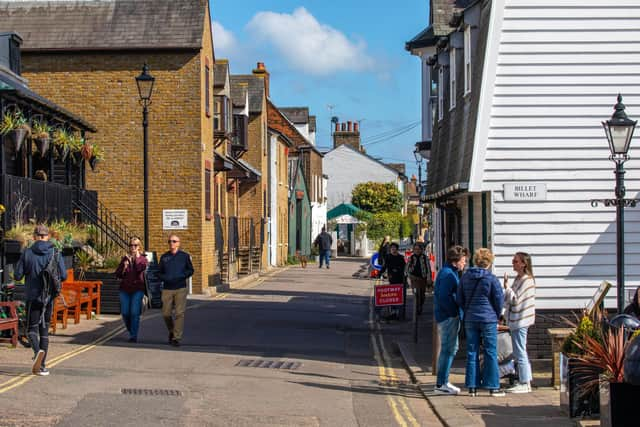

Leigh-on-Sea has been identified as the worst rated location in both the UK and Europe for cycling. It has a rating of 32 (down from 35 last year), with the next worst location being Bury in Greater Manchester with 40. Areas that rate poorly tend to have more ‘’high-stress’’ roads cutting up the overall cycling network, and have insufficient low-speed limits (20mph).
Two other locations in Essex were rated. Southend-on-Sea, which had a score of 55 (remaining unchanged from 2024), and Colchester which had a score of 50 (improved by 5 points from last year). For Colchester, this is the second largest increase of any location in the UK (beaten only by the London Borough of Newham which increased by 16 points).
London leads the way, but remains stagnant
As with last year, London leads the way in the United Kingdom, with 14 of the top 20 locations being in the capital. The highest ranked location however, is Cambridge with a rating of 84 (no change from 2024). That is closely followed by Hackney (83) and Islington (82). The lowest rated locations are Leigh on Sea (32), Bury (40), and Solihull (41).
The location with the highest change compared to last year is Newham in London, which has seen an improvement from 66 to 82.
When looking at regional averages of those rated, London has a rating of 70, up ever so slightly from 69 last year. This is followed by Hertfordshire, which has an average rating of 56 - in part due to Stevenage scoring a high 75. One of the post-war New Towns, Stevenage has a high quality cycle network which is segregated and well-linked. The region with the third highest average rating is North Yorkshire with an average of 53, followed by Greater Manchester and the West Midlands both on 50.
This data helps to spotlight the best cities and towns for cycling, as well as providing politicians and campaigners with information that they can use to make improvements for cycling provision.
Gap between London and the rest of the nation continues
In order to understand the gap between London and the rest of the UK, it is important to look at the overall average ratings. London has an average rating of 70 (up from 69 last year), whilst the average rating for all locations outside of London is 57 (up slightly from 54 last year). The gap between the two has dropped ever so slightly, down from 15 to 14 - a negligible difference.
The UK continues to lag behind European neighbours
When looking at the ratings for European locations, four countries fill the top ten. Unsurprisingly, The Netherlands has six; Delft (89), The Hague (89), Nijmegen (86), Eindhoven (86), Utrecht (85), and Almere (85). France has two; Paris (89) and Lyon (86). Belgium has two: Brussels (87) and Leuven (85). Germany has one; Munich (85).
Paris continues to see the benefits of the significant transport policies introduced by Mayor Anne Hidalgo, as it comes in joint first place for European locations alongside The Hague and Delft. When compared to European cities, just two UK locations are ranked in the top 20 overall. Cambridge comes in 16th place with a rating of 84, and Hackney comes in 17th place with a rating of 83, down from 13th place last year. Both Islington and Southwark have dropped out of the top 20, having been ranked 15th and 19th respectively in 2024. This lack of representation in the top 20 European locations is a sign of the little progress that has been made overall in the UK.
This lack of representation in the top 20 European locations is a sign of the little progress that has been made overall in the UK.
This year, campaigners from PeopleforBikes contacted a wide range of Local Authority politicians and Members of Parliament to share the findings and offer further data and information.
Jenn Dice, PeopleForBikes President and CEO, said: “This year’s City Ratings highlight the progress being made in parts of the UK and the ongoing need for greater investment in safe, connected cycling lanes nationwide. We know that when cities invest in better infrastructure, more people choose to ride, and that leads to wide-ranging benefits like reduced congestion and better health outcomes,”
“These findings give decision-makers and advocates the evidence they need to take bold, informed action to make bicycling a more accessible and appealing option for everyone.”