
The overlooked richness of the French Revolution – and why more writers should explore it

This article contains affiliate links. We may earn a small commission on items purchased through this article, but that does not affect our editorial judgement.
While modern thrillers feast on cybercrime, conspiracy and psychological suspense, one of the most explosive periods in history remains curiously underused. With its bloodshed, betrayal, and real-life espionage, the French Revolution offers rich, untapped ground for writers willing to look beyond World War clichés and explore the chaos that shaped modern Europe, writes author J.R Powell.
Contemporary female-led thrillers, from Gone Girl to Killing Eve and Black Doves, are bound with speed, suspense, and moral tightropes. They unravel in the shadowy depths of familiar cities, riddled with corruption, cybercrime, and betrayal. Heroes and villains have blurred into potent characters with veiled motives, and female protagonists and queer narratives have now woven their way seamlessly into the ensemble. Historical thrillers, on the other hand, remain something of a rarity.
Beyond the well-trodden terrains of World War II and Cold War espionage lies a wealth of underrepresented history ripe for reinterpretation. Some creators, however, have begun to tap into this historical potential. On-screen, the BBC’s Taboo and Gunpowder bring thriller-like intensity to earlier periods – the latter echoing the tension of a modern terror plot through the events of 1605. Equally, La Legge di Lidia Poët (The Law According to Lidia Poët), the stylish Netflix series from Guido Luculano and Davide Orsini, plunges us into the smoky streets of 1880s Turin, where mystery, legal drama, and feminist rebellion collide. In literature, Laura Shepherd-Robinson’s novels uncover murder, secret societies, and corruption in the darkest corners of Georgian Britain.
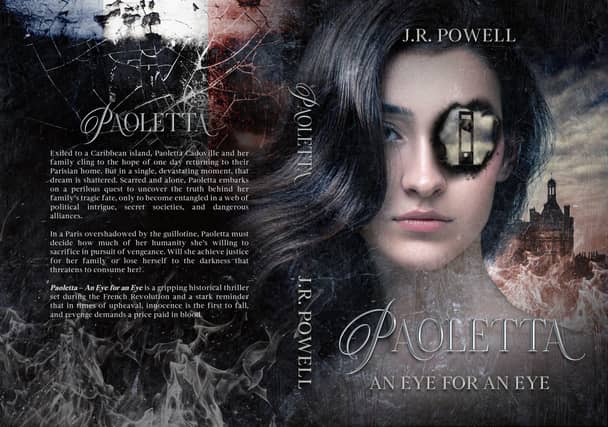
It’s refreshing to see the grit of modern thrillers brought into lesser-known corners of history. But one major event still feels strangely overlooked, arguably the single most defining moment that shaped Europe as we know it – the French Revolution. With its chaos, violence, political upheaval, and ever-shifting allegiances, the French Revolution feels almost tailor-made for a thriller. It’s why I chose to set my novel, Paoletta – An Eye for an Eye, amid the blood-soaked uncertainty of that turbulent time. It’s gripping, gritty, and gloriously cinematic.
Paris, which I called home for four years, is a city where history doesn’t sit politely behind velvet ropes – it thrums underfoot, and the scars of revolution are never far away. Coffee houses whispered with candlelit conspiracies. Cobbled streets crawled with spies and backstabbing – literally. Public trials and executions played out like macabre theatre. Power lay in the hands of fanatical idealists like Robespierre and Marat, whose passion often outpaced their reason. Deadly assassins like Charlotte Corday bided their time in the darkness. And ill-fated figures like Marie Antoinette, whose guilt still sparks debate, lost their heads before bloodthirsty onlookers who, peut-être, mirror us more than we’d care to imagine.
And yet, for all this drama, we have surprisingly little in the way of thrillers set against the backdrop of the French Revolution. Real events are begging for adaptation: the Flight to Varennes, where Louis XVI and his family came within a whisker of escaping France (and the guillotine); Charlotte Corday’s journey from murderer to martyr after slaughtering Marat in his bath; or the 1800 Plot of the Rue Saint-Nicaise, where a horse-drawn bomb carriage almost blew Napoleon to tiny pieces – the 19th-century car bomb.
Instead, we seem to have inherited this image of tear-streaked powdered nobles on their way to the guillotine, jeered by baying mobs, thanks largely to The Scarlet Pimpernel. Emma Orczy’s series follows the dashing Sir Percy Blakeney – a master of disguises, a wit as sharp as his tailoring, swooping in to rescue doomed aristocrats from the clutches of villainous revolutionaries. They’re fun, swashbuckling adventures but leave the real Revolution offstage. Charles Dickens’ A Tale of Two Cities edges closer to thriller territory. Set amid the upheaval of the Revolution, it weaves in espionage, secret identities, and daring rescues – hallmarks of the genre. Yet, its sweeping timeline, slow pacing, and melancholy tone root it more in historical tragedy than the taut, breathless suspense of a modern thriller. It brushes up against the genre’s potential in this setting but never quite dives into the raw chaos that made the era so combustible.
Modern thrillers thrive on momentum. Short chapters tick like a stopwatch, characters clash with conflicting agendas, and secrets tend to explode just as we’re letting our guard down. The goal is simple – keep readers on edge, curious, and too anxious to stop turning pages. With Paoletta, I wanted to bring that same energy to revolutionary Paris – not just the blood and grit but the constant tension, the paranoia, and the claustrophobia of a society devouring itself. It was important for me to immerse the reader in a city coming apart at the seams, threaded through real events, and where no one is quite what they seem. Along the way, the reader faces murderers, plotters, ruthless 18th-century ‘influencers’, as well as those duped by them. And at its core are the flawed ‘heroes’ who challenge the reader to decide whether they’ve the stomach to cheer them on at all. The result is a revolutionary rollercoaster – part spy drama, part revenge tale, all heart-stopping suspense.
Furthermore, historical thrillers set during the French Revolution shouldn’t just reheat the same old narratives from the top down. The Revolution was global and shaped by a far wider, wilder cast. Afro-Caribbean revolutionaries from the French colony of Saint-Domingue, whose uprising led to the birth of Haiti, were central to the broader revolutionary upheaval, though they’re often quietly pushed to the margins. Queer lives, too, carved out space beneath the era’s rigid codes. A thriller following the double life of Chevalier d’Éon – a diplomat, soldier, and spy believed to have lived in part as a woman – would be a new foray into the murky overlap of identity, secrecy and espionage.
One reason thriller writers tend to stick to the second half of the twentieth century might be the convenience of technology – guns that don’t take a full minute to reload and telecommunications that allow information to travel at something faster than a gallop. Add to that the era’s power-hungry ideologies, instantly recognisable by their ominous symbols and track records for ruthless destruction, and we’ve got fast-paced, high-stakes thrillers. But if thriller writers really want to stand out, I’d urge them to introduce audiences to one of history’s less familiar – yet no less bloody or terrifying – moments. The suspense is just as potent, and the terrain far less crowded.
If today’s thrillers can wring danger from dinner parties and summon suspense in suburban cul-de-sacs, just imagine what they could do with guillotines, show trials, and a revolution devouring its own. The revolution wasn’t just a period drama immortalised in oil paintings. It was a seismic event, as shattering to its contemporaries – and as enduring in cultural memory – as the Second World War would be over a century later. For thriller lovers craving familiar tension in unfamiliar terrain, this is fertile ground. Writers, take note.
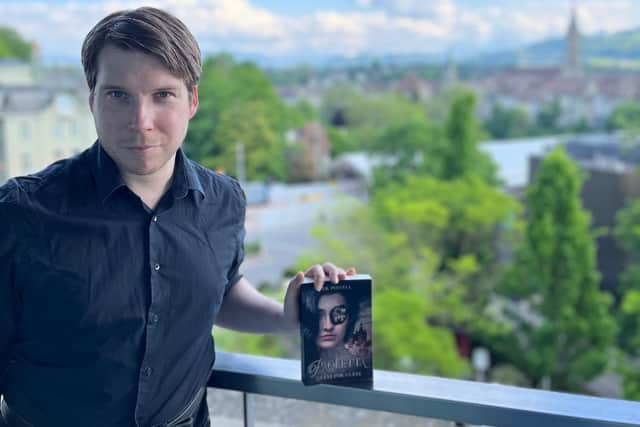
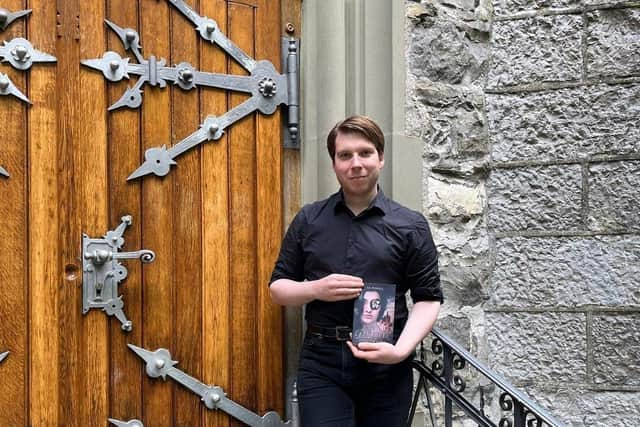
J.R. Powell is a British-born writer and professional translator based in Switzerland. A lifelong history enthusiast, he began writing his debut novel, Paoletta – An Eye for an Eye, while living in Paris, inspired by a fascination with the French Revolution and Napoleonic Wars. His aim was simple: to bring the pace and punch of modern crime fiction to a period too often overlooked by the genre.
Story by Belters News/ Palamedes