
Adolescence on Netflix: A petrifying insight into scary online jungle teen boys are navigating in modern times
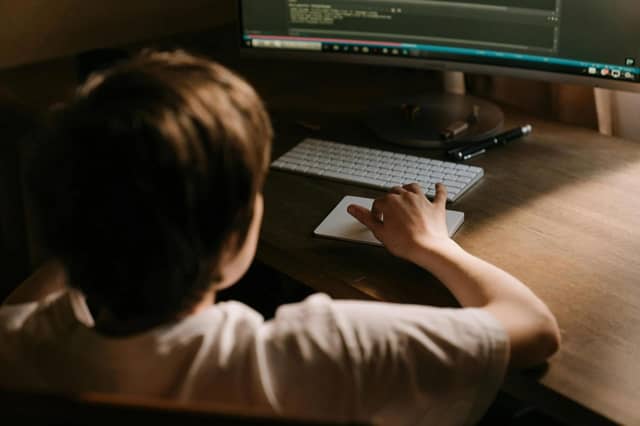

The new Netflix drama, Adolescence is a searing insight into the life of a 13-year-old boy who has been brainwashed on social media by incels, leading him to commit the callous murder of his fellow classmate Katie.
Throughout the series we are transported into the mind of Jamie Miller, played by Owen Cooper, who at first appears innocent in his space themed room.
However, very quickly the audience see a teen who has been corrupted by the online world in which he, and his fellow classmates live.
The focus of the drama is arguably upon the lack of control that many parents feel and experience when their child unlocks the digital world of social media and phones for the first time. It exposes the toxic messaging from young boys to young girls, with many of the teen boys having unrealistic expectations of women which are promoted to them through their screens by figures such as the prolific misogynistic Andrew Tate
Perhaps the most astounding and Oscar worthy episode is the penultimate one which consists of a psychological session between Jamie and his child psychologist, named Briony, played by Erin Doherty, who has been sent to make an independent assessment before the court case takes place where she tries to establish the reasons behind the senseless killing.
Very adept at asking questions, Briony’s intelligence shines through as she engages his psyche, bringing his brooding character to life, as he reveals all, through his subtly sexist remarks, and sarcastic comments which cast a light on his heavily articulated views that even he himself cannot come to terms with.
He is quizzed on what his relationship is like with his parents, how he perceives his mother and father, and lastly on how he views Katie, of whom he consistently refers to as a “bitch” who he believes was deserving of her horrific fate.
Adolescence beckons everyone to ask what we are teaching boys, and how we can expect them to navigate an increasingly toxic world when their concept of masculinity is so skewed and highly dependent upon harmful figures like Tate.
The world is evidently highly lacking in good male role models, who at the moment, are very few and far between, and so social media has left a huge void in which the likes of Tate fill.
Tate and others like him ultimately harm our young vulnerable, hormonal boys at a crucial stage in their journey to adulthood, with potentially lifelong effects. So, from an early age, they are compelled to view women as the lesser sex to which they can command, and abuse.
At the heart of the story though, is the victim, a profoundly young and innocent girl who had the rest of her life ahead of her, which is cruelly snatched away, by the boy that she rejected due to her concerns over his character and treatment of women.
Even though she doesn’t appear in any of the episodes, apart from on CCTV footage, her presence is still a profound one, as her death casts an ugly shadow in the drama, and frankly over the rest of the world, as it warns the audience of the consequences of incel culture infiltrating into the feeds of teenage boy’s social media.
Part of Jamie’s extreme sense of violence, we learn, comes from the incel culture that he is wrapped up with online, as his parent’s played by the iconic Stephen Graham and Christine Tremarco express their extreme sense of regret, in the final episode where they are both grappling with the grief of losing their son , who will most likely spend the rest of his life in prison.
They also show fury and confusion over why he committed such a heinous act. His Mother, whose eyes are filled with tears wishes she had done more to prevent his addiction to both his phone, social media and his PC, that arguably led to the crime in the first place.
The despairing conversation between Jamie’s parents further displays their level of guilt, as they say “We thought he was safe”, (meaning in his room), as it begs the question, who can really take back control and police the dangers of social media, if parents can’t, if the government can’t and if schools can’t?
Already in schools across the country, we are seeing signs of rising extremism amongst young boys who are fuelled by violent misogyny which is then legitimised by their school mates, Tik Tok, Instagram and figures like Tate. All whilst parents become blind to what is really going on with their reserved teenage boy who is consistently glued to his phone or sat in a dark room on his PC.
Ultimately the show suggests that we, “parents”, and the “government” are responsible for cases like this, where children’s lifeless bodies are found on dark gloomy car parks in the middle of the night.
So raw, and real is this drama, it will haunt parents up and down the country who feel a loss of control over their teenage sons, as they regress more into the world of social media, where they become vulnerable to extreme views, like incel culture.
Jamie shows classic signs of being influenced by incels, by suggesting that “no girl would want him” because he is “ugly” and expressing an extreme sense of frustration which actually comes from a place of fragile masculinity. However, instead of putting this down to the consequences of his own actions, he instead places the blame on the girls who have bravely dared to reject him.
The Government’s Commission for Countering Extremism (CCE) commissioned a report into the ideological beliefs of incels, who are a “primarily online sub-culture community of men who forge a sense of identity around their perceived inability to form sexual or romantic relationships”.
“The incel community operates almost exclusively online, providing an outlet for expressing misogynistic hostility, frustration and blame toward society for a perceived failure to include them”.
Incels, for those who don’t know, are young men who consider themselves involuntarily celibate due to their exclusion from wider society, and particularly from women. Typically, they are heterosexual, and childless and demonstrate signs of extremely poor mental health, with one in five contemplating suicide according to the CCE’s report.
The community, largely is utterly devoted to expressing an extreme sense of hatred towards women, despising them for their bodies, qualities, and what they believe women should do, which is usually keeping silent, and being submissive, as well as obeying the man’s orders and possessing a particular body type.
Whenever the psychologist tells Jamie to sit down for instance, he lashes out and refuses by violently throwing his chair across the room as he shows immense hostility towards her by intimidatingly standing over her to express his want of power. This is primarily since he doesn’t wish to take instructions from a woman, as he despises women in powerful positions.
Worryingly, it is estimated that over 100 women in the UK have been murdered or injured in the past 10 years due to attacks that were motivated by incel material.
Overall, the show provides a shocking mirror of the current state of the world as it proposes a very real, and almost horrifyingly visceral possibility of what could happen if we leave young boys to go unchecked on social media.
There are questions for therapists, and governments too, over how can we possibly solve the problems of today when children are glued to their phones, and it is still a pipe dream that phones will be “child safe”.
Without that, there is every real chance that this nightmarish drama could become a reality, as it has done several times in the past already.
It is a tough, yet compulsive watch, that compels us to feel a sense of horror ,as it begs us from the hill tops to make a change, before more people like Katie are tragically taken from the world well before their time.