
Why is it called Black Friday? Is it today, when is it - take a look at the best early deals to grab from Amazon, Sky to Spotify

Black Friday 2025 is looming, but many major retailers have already kicked off their sales.
Black Friday falls on 28 November this year. It is a time-honoured tradition that always falls the day after Thanksgiving in the US.
Nowadays, it is much bigger than a day-long sale that takes place for most of November. Typically, though, the deals come to an end on Cyber Monday, which falls on 1 December this year.
Listed below are some of the best early deals.
- Shark FlexStyle 4-in-1 Air Styler & Hair Dryer Gift Set, £169.99 (was £269.99) - buy from Shark
- Dry:Soon Mini 3-Tier Heated Airer, £109.99 (was £129.99) - buy from Lakeland
- Sky Essential TV & 500Mbps Full Fibre Broadband, £35p/m - buy from Sky
- Dyson V11 Extra vacuum, £349.99 (was £499.99) - buy from Dyson
- Remington Almond Allure Hair Straightener, £19.99 (was £69.99) - buy from Superdrug
- Amazon 43-inch 4-Series 4K Fire TV, £269.99 (was £429.99) - buy from Amazon
- Dyson V8 Advanced Vacuum, £229.99 (was £329.99) - buy from Dyson
- Ninja Speedi 12-in-1 Multi-Cooker, Air Fryer & Slow Cooker, £149.99 (was £229.99) – buy from Ninja
- Spotify Premium: 12-month subscription, £29.99 (was £120) - buy from Wowcher
- Audible: 3 months for 99p (usually £8.99p/m) - sign up at Amazon
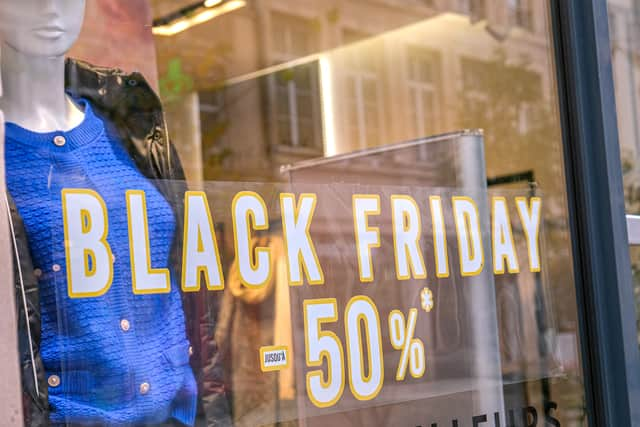

It is believed by many that the term Black Friday derives from the concept that businesses operate at a financial loss, or are “in the red,” until the day after Thanksgiving, when massive sales finally allow them to turn a profit, or put them “in the black.” However, this is untrue.
A more accurate explanation of the term dates back to the early 1960s, when police officers in Philadelphia began using the phrase “Black Friday” to describe the chaos that resulted when large numbers of suburban tourists came into the city to begin their holiday shopping and, in some years, attend Saturday’s annual Army-Navy football game. The huge crowds created a headache for the police, who worked longer shifts than usual as they dealt with traffic jams, accidents, shoplifting, and other issues.
Within a few years, the term Black Friday had taken root in Philadelphia. City merchants attempted to put a prettier face on the day by calling it “Big Friday.”
The phrase “Black Friday” to signify a positive boost in retail sales didn’t grow nationwide until the late 1980s, when merchants started to spread the red-to-black profit narrative. Black Friday was described as the day stores began to turn a profit for the year and as the biggest shopping day in the United States. In truth, most stores saw their largest sales on the Saturday before Christmas.
In more recent years, Black Friday has been followed by other shopping holidays, including Small Business Saturday, which encourages shoppers to visit local retailers, and Cyber Monday, which promotes shopping online.