
Report suggests UK’s mass migration to electric vehicles is accelerating
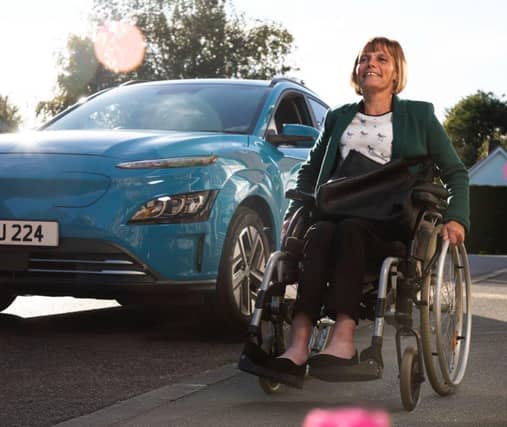

Britain’s transition to electric vehicles is moving faster than many expected. Sales are climbing, manufacturers are under new obligations to produce more zero-emission models, and incentives such as the recently launched Electric Car Grant are starting to shift behaviour.
In July this year, more than one in five new cars sold in the UK was fully electric, a milestone that would have been hard to imagine even a few years ago. Yet behind the headlines there is a more complex picture. A new report from Motability Operations, published on 24 September 2025, suggests that while progress is unmistakable, confidence in the network that underpins the switch is not keeping up.
The EV Transition Tracker, now in its second edition, draws on polling of the public alongside the experiences of more than a thousand disabled drivers on the Motability Scheme. Its findings are striking. While people are warming to the idea of electric cars, many still question whether the charging network can deliver a reliable, fair and inclusive service. Trust, the report makes clear, is fragile. Only three in ten people say they would be prepared to walk more than ten minutes home after leaving their car at a public charger. Yet the reality is that the national average walk time is almost twelve minutes. For disabled drivers, the situation is even more stark. More than a third of Motability customers surveyed said they would not consider using the public charging network at all. For them, worries about narrow bays, heavy cables and poorly thought-through layouts are not minor inconveniences but barriers that make the network unusable.
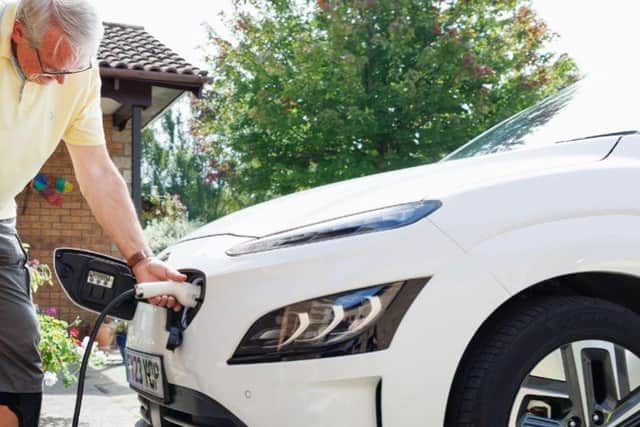
For those who can charge at home, the story is very different. Access to a dedicated home charger boosts confidence and makes the whole experience smoother, with drivers far more likely to say they would choose an EV again. But here too there is a gulf between need and reality. Fewer than one in five households have their own charger, and among Motability Scheme customers the figure is lower still. Off-street parking remains a luxury for many, particularly in cities and older housing stock. Without new solutions such as cross-pavement charging or shared neighbourhood hubs, large numbers of people risk being left behind in the transition.
Cost remains another dividing line. Among those who say they won’t consider an EV for their next car, more than half point to the higher upfront price. Women in particular are more likely to see electric vehicles as financially out of reach. Yet for those who have already made the switch, the picture looks very different. EV drivers, especially those on the Motability Scheme, consistently report lower running costs and cheaper servicing. For many, the savings outweigh the initial concerns. The difficulty is that these benefits are not widely understood, leaving a large section of the public stuck in uncertainty. The government’s Electric Car Grant is designed to address some of this, with up to £3,750 available towards the cost of a new EV under £37,000. Early signs are positive: around a quarter of the public and one in six Motability customers say the grant makes them more likely to consider going electric. But the Tracker makes clear that financial incentives alone are unlikely to win over the hesitant unless they are better explained and promoted.
There are glimmers of more positive news. Earlier in the year, London drivers were far more likely to consider going electric than those in other regions, with almost three-quarters open to the idea compared with just a third in parts of the Midlands. By late summer, however, that gap had narrowed. London’s enthusiasm dipped slightly, but in Scotland and the Midlands consideration levels rose. It is too early to claim a lasting trend, yet the signs suggest that where local governments and councils invest in new charging infrastructure, public attitudes quickly follow. If these regional divides continue to shrink, Britain’s EV transition may become more balanced and less concentrated in urban centres.
Perhaps the most revealing insights come from disabled drivers themselves. More than 100,000 Motability customers now drive an electric vehicle, giving them a unique perspective on both the promise and the pitfalls. Many praise the smoothness of the drive and the money saved at the plug. But the barriers to charging are plain to see. A quarter of disabled EV drivers said they would avoid the public charging network altogether when considering how they would get home from a chargepoint. For them, features such as bay size, curb height and cable weight are not details to be improved later but essential design points that determine whether a journey can be completed. As Motability’s Andrew Miller and Nigel Fletcher put it in their introduction to the report: if we can get the transition right for disabled drivers, it can work for everyone.
That statement is more than a line of advocacy. It underlines a truth about this national transformation. Electric vehicles will only become the default choice if the system around them inspires trust. A driver who knows they can plug in close to home, who can rely on the charger being available, and who understands the cost savings of switching is far more likely to tell their friends and neighbours that going electric works. A driver who struggles with broken units, long walks or inaccessible bays will share a very different story. Word of mouth, positive or negative, will carry enormous weight in the years ahead.

The EV Transition Tracker shows that Britain is on the right path, but the ground beneath that path is uneven. Charging points need to be closer, more reliable and better designed. Home charging needs to be available to more people, with creative solutions for those without driveways or garages. Cost savings need to be communicated clearly and supported with easy-to-use tools. Incentives need to be widely publicised, not buried in fine print. Above all, accessibility must move from the margins to the centre of design.
Britain’s electric moment is here, but it will not be judged by the number of cars sold or chargers installed. It will be judged by whether the transition feels fair, seamless and inclusive to every driver, whether they live in London or rural Wales, whether they park in a driveway or on a busy street, whether they are young professionals or disabled pensioners. The publication of the EV Transition Tracker on 24 September is a timely reminder that progress is being made, but that trust is as important as technology. The cars are ready. The challenge now is to make sure the network — and the experience — is ready too.