
The Salt Path: Biggest literary hoaxes and scandals of all time as author Raynor Winn reveals 'heartbreak' over allegations

The Salt Path author Raynor Winn has said she is “heartbroken” over allegations that the story told in her best-selling novel.
Scandal was sparked after The Observer published an investigation into Winn’s memoir The Salt Path, in which she told the story of how her and husband Moth, whose legal names are Sally and Timothy Walker, set off on a long-distance walk along the South West Coast Path after the couple became homeless following a bad business investment and Moth was diagnosed with corticobasal degeneration (CBD). The memoir, released in 2018, because a best-selling book and was even adapted into a film starring Gillian Anderson and Jason Isaacs, which was released in May.
The newspaper alleged that Winn may have misrepresented the circumstances surrounding the events leading to the couple losing their home, particularly involving allegations that Winn had actually stolen £64,000 from her ex-employer before becoming homeless. The report also said that some medical had expressed doubts over Moth’s CBD diagnosis as described in The Salt Path.
Winn has now said that she is “heartbroken” by the allegations, particularly those involving her husband's health status. She showed letters from a medical clinic addressed to ‘Timothy Walker’ on social media, which she said proved that “he is treated for CBD/S and has been for many years”.
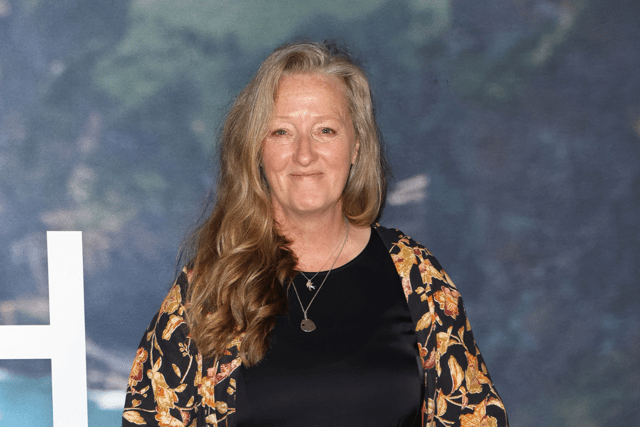

The author, who has said she is seeking legal advice, added: “The Salt Path is about what happened to Moth and me, after we lost our home and found ourselves homeless on the headlands of the south west. It’s not about every event or moment in our lives, but rather about a capsule of time when our lives moved from a place of complete despair to a place of hope.
“The journey held within those pages is one of salt and weather, of pain and possibility. And I can’t allow any more doubt to be cast on the validity of those memories, or the joy they have given so many.”
Publishing house Penguin said that its editors “undertook all the necessary pre-publication due diligence” before The Salt Path was release, including an author warranty about factual accuracy. The company also added that no concerns were received prior to The Observer’s inquiry.
As the drama around The Salt Path rumbles on, here are some of the biggest literary hoaxes and scandals of all time.
A Million Little Pieces by James Frey
One of the biggest literary hoaxes of the 21st century came in 2003, when author James Frey wrote what was believed to be a memoir detailing his drug and alcohol addiction and his subsequent recovery in a rehabilitation centre.
Frey’s story captured the hearts of critics and readers alike, and was eventually given the sought-after endorsement from daytime legend Oprah Winfrey, who put the memoir into her book club. This move propelled the book to even more success, topping The New York Times best-seller list for fifteen weeks.
However, Frey’s success all came crashing down when website The Smoking Gun published an article titled ‘ A Million Little Lies’ in 2006, in which Frey was accused of fabricating parts of his drug experience, life and criminal record. Despite initially standing by his book, Frey eventually appeared on the Oprah Winfrey Show, telling the host that he had indeed fabricated huge moments in his memoir.
Oprah told Frye she felt “duped” by the author, adding that he had “duped” millions of readers across the world into believing his story. She also interviewed publisher Nan Talese, who admitted that she did not take the correct due diligence in checking the veracity of Frey’s story. Readers were also reportedly offered a refund by publishing house Random House to those who felt deceived by the author.
The Autobiography of Howard Hughes by Clifford Irving
In the 1970s, novelist and reported Clifford Irving had planned to publish what was purported to be an autobiography based on the reclusive billionaire Howard Hughes. Irving worked together with friend and author Richard Suskind to conceive a scheme in which they would tell Hughes’ story. The pair were convinced that the recluse would not pursue legal action due to his dislike of public attention.
Irving even enlisted the help of artists friend to make fake documents, such as letters. He told his publisher McGraw-Hill that Hughes has requested for him to ghost-write his autobiography.
Contracts were drawn up between Hughes, McGraw-Hill and Irving, with Hughes’ signature forged by Irving and his friends. Irving also negotiated a fee of up to $765,000 to be paid to “Hughes” - cheques were made out to ‘H. R. Hughes’, which were then deposited into a Swizz bank account opened by Irving’s wife Edith under the name Helga R. Hughes.
After learning of the book and affirming that he had never corresponded with Irving or even met the author, Hughes filed a lawsuit against him. Swiss authorities launched an investigation into the Helga R. Hughes bank account, uncovering that Edith had deposited the cheques.
The couple confessed to the plot and they both, along with Suskind, were indicted for “conspiracy to defraud through use of mails”. They all pleaded guilty - Irving spent 17 months in prison and voluntarily returned the fee to the publisher.
The story was made into a 2006 film titled The Hoax starring Richard Gere.
JT LeRoy
American author and musician Laura Albert was uncovered as the real mind behind transgender, sex-worker persona JT LeRoy. Various works, inspired by LeRoy’s purported experience as an abused child, had been published under the LeRoy pseudonym, including magazine articles, novels and screenplays. Sarah, the author’s first novel was published in 2000, with two other books of fiction- The Heart Is Deceitful Above All Things and Harold’s End - being released in 2001 and 2004.
As part of the charade, Albert used her sister-in-law Savannah Knoop to stand-in as LeRoy at the few public appearance made by the literary star. Albert also posed herself as Emily ‘Speedie’ Frasier, claiming to be LeRoy’s friend and flatmate, when meeting face-to-face, with the writer using LeRoy’s “social anxiety” as an excuse as to why he wasn’t in attendance at some face-to-face meeting, instead allegedly preferring to correspond by phone, fax and email.
The hoax was uncovered in 2005 by New York magazine, with subsequent reports in The New York Times and Vanity Fair. Albert has not published under the JT LeRoy pseudonym since and later explained that she thought of the character as a “phantom limb”. She said: “I had survived sexual and physical abuse and found a way to turn it into art. Having struggled with issues of gender fluidity when there was no language for it, I created a character both on and off the page who modeled this as yet to be named state of being.”
Albert did find herself in some hot water over the hoax after she signed a contract under the name JT LeRoy to give the film rights of Sarah to Antidote International Films Inc., who planned on adapting the novel into a film. After it was revealed that Albert was the face behind the name, Antidote attempt to renegotiate the contract to include her story in the film too, but Albert refused the offer.
Antidote then sued the author for fraud, claiming that the option contract was void as she had signed it under a fake name. A jury found against Albert and she was instructed to return the $110,000 she received for the contract, as well as $6,500 in punitive damages and $350,000 in legal costs. Albert and Antidote reached a further settlement out-of-court.