
Exclusive: Chevelle’s Sam Loeffler on Joe Barresi, horror themes & self-producing

This article contains affiliate links. We may earn a small commission on items purchased through this article, but that does not affect our editorial judgement.
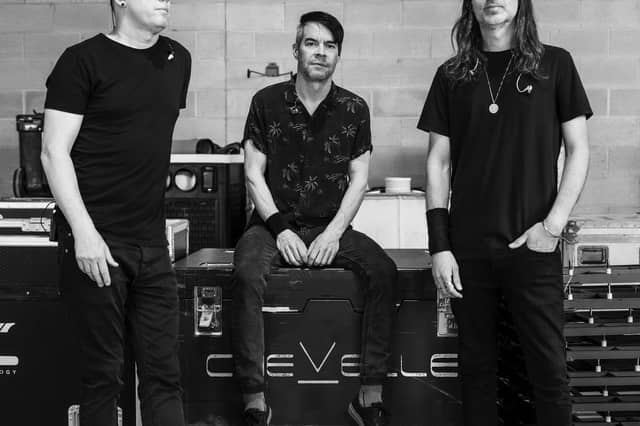
Chevelle drummer Sam Loeffler spoke to NationalWorld earlier this month about the band’s career to date as they continue their run of shows with Breaking Benjamin.
The three-piece from Chicago will continue their run of shows with Breaking Benjamin later this evening at London’s Brixton Academy before returning to North America for further tour dates in August after their set at Kattfest on August 22nd.
Check out our interview below, where Loeffler discussed Chevelle self-producing their ‘Bright As Blasphemy’ album, the decision to leave Epic Records and the biggest thing he and Pete, his brother and Chevelle’s frontman, learned from Joe Barresi.
Q: You released your tenth studio album - ‘Bright As Blasphemy’ - your first record since leaving Epic Records. How refreshing was it that you could control what you wanted to do on that album?
A: Our team at Epic was actually really good and has given us pretty much total freedom to write the music and albums that we wanted to write. So as far as that goes, it’s not a huge difference. I think that Epic has just gone in a different direction in the past years as far as Rock music goes. That was our biggest reason for moving on.
Q: Since your album Hats Off To The Bull, Joe Barresi had been your longtime producer, is it true that he encouraged you and Pete to self-produce the ‘Bright As Blasphemy’ record?
A: Joe is an amazing dude. He is always encouraging bands that he works with to do whatever they can to make the best album they can. I think he was really just encouraging us to think outside of the box when it came to our music. He is the most supportive and encouraging person when it comes to our art. It’s pretty awesome to call him a friend.
Q: How difficult was it to self-produce and did it give you a fresh appreciation for your music? Or was it a feeling of thank god it’s over?
A: Yes, when producing is totally up to you it’s very difficult. When Pete is writing, he also ends up being the person that says when a song is completely finished. That’s hard because when you have a producer, you have somebody that’s taking it out of your hands and sometimes that’s the only way to finish a song. I don’t know that we would ever self produce again. We will see
Q: Over your time working with Joe, what was the biggest thing you and Pete took away from working with him?
A: There isn’t just one thing that we learned from Joe over the years. He’s a great resource and has taught us a whole bunch about production and about being true to the music that you want to write. I really do believe that he wants the musician and writer to be happy. I think that’s the most important thing to him besides writing a great song.
Q: What’s the biggest thing you learned from going back to making music independently on that album?
A: Biggest thing we learned is how heavy the crown is when you’re fully responsible. I think it was always that way, but it was never quite as clear as it is when you’re recording in your own studio and producing your own record.
Q: When it came to leaving Epic, I read that your brother said you made next to no money during your time there despite selling over six million albums. What happened there?
A: That’s actually quite a complicated answer. Long time record contracts are cross collateralized so every time you do a new album, your previous albums go to pay for all those expenses. When you consistently make albums year after year, then you are consistently making new debt. So the truth of it is that even though our albums grossed somewhere in the region of $50 million over our career with Epic Records, that’s a total gross. We only get a small percentage of that money that goes towards our debt. So it takes a long time to pay back. Especially when you keep accruing new debt album after Album. But we are doing fine and we make money doing shows, merchandise, etc. The reality is that going from label to label is one way to make sure that you are able to make money from your music.
Q: After everything that had happened, would you say it was a relief to have left after Niratias?
A: I wouldn’t say it was a relief because it was really just about finding a team that wanted to work on a rock band. The whole state of major labels is changing constantly and there really isn’t any consistency anymore.
Q:Since 2019, it’s just been yourself & Pete in terms of official members. When you first went on tour without Dean, what was the biggest adjustment going from a three-piece to a two-piece and how did you approach filling that gap with Kemble Walters?
A:Well, when dean left it was the end of 2019 and unfortunately the Covid era was ushered in right as we finished the niratias album. So there was a huge transition anyway. We didn’t play any shows or anything for a long while. Starting with Kemble was kind of like starting a whole new chapter and I think that made it easier.
Q: Throughout your career, Chevelle has frequently been compared to Tool. Seeing as you & Pete are typically more alternative and hard-rock whereas they’re prog metal, I struggle to see the comparison. Do you feel it’s a lazy critique?
A: Agreed, that is a lazy critique. We are obviously very different bands, especially if you ask any fan of either of our bands. I think most of the time bands get compared to each other if the singer has any kind of similarity. That’s probably about it.
Q: You’ve been quite inventive when it’s come to conceptualising your albums. La Gargola and The North Corridor, in particular, are heavier, riff-oriented and have lyrical themes influenced by horror. What’s it about horror themes that influenced you and why did you want to explore it lyrically?
A:I think the horror genre is just a good way to get outside of reality. That’s probably most of it as far as the horror genre goes. The same could be said about the sci-fi genre. Those two albums are our heaviest albums, and it was really hard to try and get that music in front of fans of heavy music. I’m glad you noticed that about those albums though. I feel like those two stand out in our catalogue as a very different time in what we do in music.