
History rewritten as Iron Age ruler who helped bring Romans to Britain is revealed to have been female
An influential Iron Age ruler who helped pave the way for the Roman invasion of Britain has been identified as a woman.
An Iron Age ruler who played a pivotal role in bringing the Romans to Britain nearly 2,000 years ago was actually a woman, according to new research.
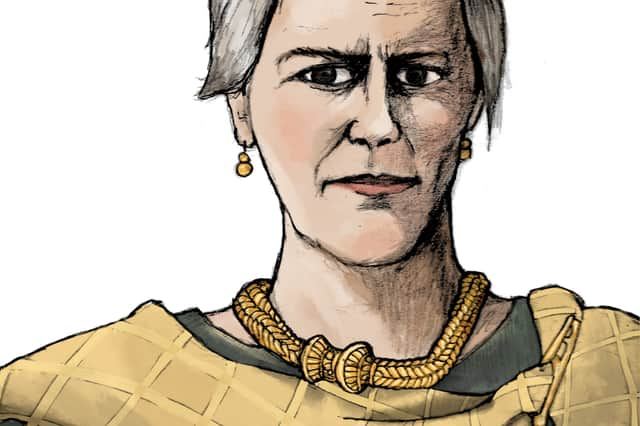

Verica, who ruled the Atrebates tribe before the Roman invasion in AD 43, has long been assumed to have been male. However, archaeologists from Bournemouth University now believe the influential leader was female, challenging long-held assumptions about the history of early Roman Britain.
The Atrebates controlled a significant area of southern England, including much of what is now Hampshire and West Sussex. But around AD 40, Verica was forced from power and fled across the Channel to seek help from the Roman Emperor Claudius.
Her arrival in Rome is believed to have played a crucial part in setting the wheels in motion for the Roman invasion of Britain.
According to the Roman historian Cassius Dio, Claudius was persuaded to launch the military campaign after Verica appealed to him for assistance. At the time, Claudius was often portrayed by Roman writers as a weak and easily influenced emperor, supposedly guided by the women and freed slaves around him.
However, researchers now argue that Verica's involvement was far more significant than previously recognised.
Study leader Dr Miles Russell, director of archaeological fieldwork at Bournemouth University, said the assumption that Verica was male had been influenced by the patriarchal attitudes of 19th-century classical historians.
He said: “Verica is assumed to have been male because of the patriarchal mindset of 19th Century, classical historians. Verica was not only critical to the special relationship between Britain and Rome in the early first century AD but was indisputably female.”
One of the clues, Dr Russell explained, is Verica's name. Ending in the letter 'a', it follows a pattern commonly associated with female names of the period, including Boudica, leader of the Iceni, and Cartimandua, ruler of the Brigantes.
All three women lived during roughly the same period. Although Boudica is perhaps the best-known, thanks to her famous uprising against Roman rule in AD 60, Dr Russell believes Verica was arguably an even more powerful and influential figure.
Another reason Verica has traditionally been identified as male is the appearance of the Latin word 'rex' on coins issued during her reign. The term is commonly translated as 'king', but Dr Russell points out that it was not exclusively reserved for men.
He explained that Rome recognised both male and female rulers using the title, with Cleopatra of Egypt being one of the most famous examples. In Verica's case, the use of 'rex' suggests she governed with the official recognition and authority of the Roman Emperor.
The imagery featured on her coins also offers further evidence to support the theory. While other Iron Age British leaders who produced coins typically chose images of unmistakably male warriors, Verica was portrayed as a slender, feminine, bare-breasted figure riding a horse.
Dr Russell also believes historical accounts have played down the ruler's importance by presenting her appeal to Claudius as an example of the emperor being manipulated by a woman.
He said: “The story of Claudius committing to something only because a woman told him to fits the trope of this emperor as being submissive and henpecked. In effect, Dio was saying that the campaign was undertaken solely because of the whisperings of a barbarian femme fatale.
“Verica’s role was rather more central to the British expedition. Having her onboard ensured the project was a success as she provided tactical information and support on the ground.
“The invasion was Claudius’ great triumph - it being the only chance he had to prove he was a successful military leader. Verica provided the excuse for regime change and the emperor seized it.”
Dr Russell argues that Verica was a major political force in late Iron Age Britain, but that her contribution has been largely forgotten or overlooked. He believes historians should give greater weight to the archaeological evidence and recognise her as one of Britain's earliest and most significant female leaders.
He added: “We should take the archaeological evidence at face value, and remember Verica as a female-king and one of the earliest and most important of British female leaders. Had she not been deposed, fleeing to Claudius for military support, Rome may never have invaded Britain in the first place.”
The findings feature in a new book, Caratacus: Great King of Britain, which is due to be published by Bloomsbury in January. The research also builds on previous work by Bournemouth University examining the influence and status of women in Iron Age Britain.