
Eurovision 2026: Why are countries such as Spain and Ireland boycotting next year's contest? Row over Israel explained

Eurovision 2026 has been plunged into chaos after several countries announced a boycott following confirmation that Israel will be competing in next year’s contest.
Irelands, Spain, The Netherlands and Slovenia all announced that they would be pulling out of the competition, following through on boycott threats, after a vote at the European Broadcasting Union (EBU) national assembly in Geneva on Thursday, December 4.
The vote saw a majority of EBU members vote against a proposal to hold a vote to ban Israel from the competition following repeated calls to remove the country from the contest amid the ongoing assault in Gaza.
Members also voted on rule changes including new guidelines to stop countries from organising campaigns for their Eurovision acts following concerns around the number of public votes Israel won during the 2025 competition. According to the BBC, agreeing to voting rule changes during Thursday’s summit meant that countries were also agreeing not to proceed on a vote on Israel’s participation.
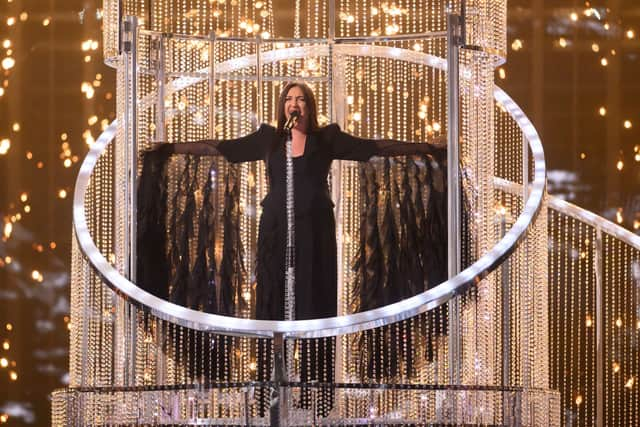

Singer Yuval Raphael represented Israel at the 2025 contest in Basel, Switzerland in May and received the highest number of votes from the public, but finished in 2nd to Austria after the jury votes were taken into account.
It came after the Israeli Government Advertising Agency placed a large number of adverts across several sites including YouTube in which they urged the public to vote for Yuval, as well as instructions on how to vote for Israel up to 20 times. The ads were viewed millions of times across the world, with the Rest of the World also now allocated a vote in the contest too.
Why are countries boycotting Eurovision 2026?
Following the controversy surrounding the Israeli government's advertising blitz, Irish broadcaster RTE requested a breakdown in voting numbers while Spanish broadcaster Radio Television Espanola (RTVE) called for a “complete review” of the voting system at Eurovision to avoid “external interference”.
Some countries have also argued that Eurovision’s swift removal of Russia from the contest in 2022 following in invasion of Ukraine points towards EBU bosses taking a stand in other similar circumstances.
RTE confirmed following the vote that it would be pulling out of the contest and not broadcasting it in Ireland altogether. The statement read: “RTE feels that Ireland’s participation remains unconscionable given the appalling loss of lives in Gaza and the humanitarian crisis there which continues to put the lives of so many civilians at risk.
“RTE remains deeply concerned by the targeted killing of journalists in Gaza during the conflict and the continued denial of access to international journalists to the territory.”
Dutch broadcaster Avrotros confirmed it would also be boycotting next year’s contest. Chief executive Taco Zimmerman said: “Universal values like humanity and a free press have been seriously violated and are non-negotiable for us.
“Furthermore, last year’s political interference demonstrated that the independence and unifying nature of the Eurovision Song Contest can no longer be taken for granted. We choose the core values of Avrotros and, as a public broadcaster, have the responsibility to remain true to these values, even when that is complicated or vulnerable.”
Natalija Gorsck, RTV Slovenia board chairwoman, said: “For the third year in a row, the public has demanded that we say no to the participation of any country that attacks another country. We must follow European standards for peace and understanding.
“Our journalists were not and still are not allowed to enter Gaza, where more than 200 journalists were killed. Last year we saw that the Israeli performance was political. Don’t forget that we banned a similar performance by a Russian singer in Ukraine. Our message is: we will not participate in the ESC if Israel is there. On behalf of the 20,000 children who died in Gaza.”
Spain is one of the EBU’s biggest financial contributors and is one of the ‘Big 5’ countries at Eurovision as a result, but will no longer take part in next year’s contest. National broadcaster RTVE said in a statement: “The board of directors of RTVE agreed last September that Spain would withdraw from Eurovision if Israel was part of it. This withdrawal also means that RTVE will not broadcast the Eurovision 2026 final... nor the preliminary semi-finals.”
RTVE initially led calls for a secret ballot on Israel’s participation but said that the EBU “denied RTVE’s request”, adding: “This decision increases RTVE's distrust of the festival's organisation and confirms the political pressure surrounding it.”
Iceland are also set to discuss their potential withdrawal from next year’s contest during a meeting next Wednesday (December 10).
The BBC confirmed that it had no plans to boycott Eurovision 2026, saying in a statement: “We support the collective decision made by members of the EBU. This is about enforcing the rules of the EBU and being inclusive.”