
As child dies of measles in UK hospital, what are the symptoms and how is it treated?


Concerned parents are wondering what signs to look out for after a child died of measles in a UK hospital.
As already reported by NationalWorld, a child has died at Alder Hey Hospital in Liverpool after falling ill with measles. It comes amid a backlash against the measles vaccine, which protects children from contracting the disease.
According to reports, the number of measles cases is rising across the UK, with this child’s death being the second in the past decade.
In a statement, a spokesperson for Alder Hey Children’s NHS Foundation Trust said: “To respect patient confidentiality, we can’t comment on individual cases. We are concerned about the increasing number of children and young people who are contracting measles.
“Measles is a highly contagious viral illness which can cause children to be seriously unwell, requiring hospital treatment, and in rare cases, death. The number of children being treated at Alder Hey for effects and complications of measles is increasing (we have treated 17 since June).
“We treat children with a range of conditions and illnesses in our hospital, including those with compromised immunity due to other health issues, making them more susceptible to infections, including measles.”
What are the symptoms of measles?
Measles typically begins 10–14 days after exposure with cold‑like symptoms: a high fever (often over 39 degrees Celsius), cough, runny or blocked nose, sneezing, and red, watery eyes.
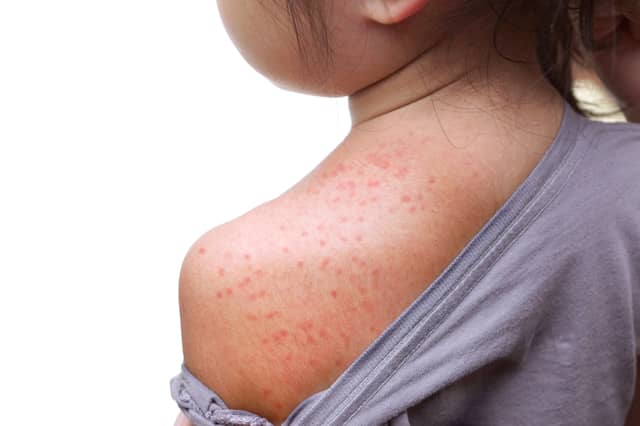
Within four days, small white spots may appear inside the cheeks and back of the lips, with a red‑brown blotchy rash starting on the face soon afterwards. The rash is usually not itchy and tends to form patches behind the ears and hairline, before spreading down the body.
Secondary infections such as pneumonia or ear infections can also follow.
How is measles treated?
There is no specific antiviral treatment to cure measles - instead, treatment is designed to support a patient’s recovery.
Key steps include plenty of rest and fluids to prevent dehydration, with paracetamol and ibuprofen being used to ease discomfort.
In severe cases - especially in young or undernourished children - a high‑dose vitamin A may be considered in hospital‑based care.