
Autistic four-year-old died after doctors didn't recognise neurodivergent child's "atypical" sepsis presentation

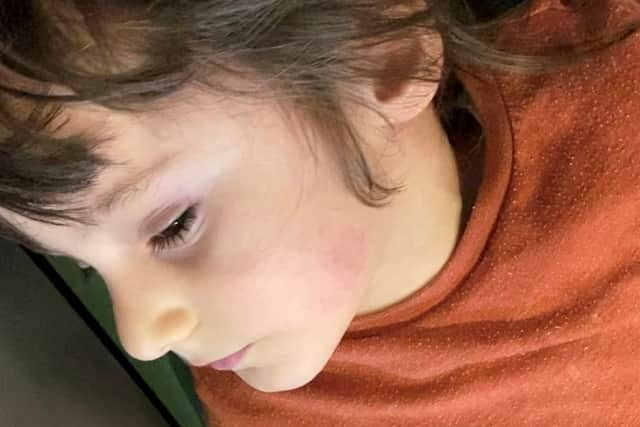
A four-year-old boy who died from sepsis after being sent home from hospital three times had his symptoms missed because doctors did not recognise his "atypical" presentation, an inquest has heard.
The parents of a four-year-old boy who died from sepsis in hospital after staff missed a key chance to save his life are campaigning for better care in his name. Lindita Alushi, 44, and Kastriot Klosi, 50, took Daniel Klosi to the Royal Free Hospital in London four times in the week before his death in 2023.
But the family was sent home on three occasions - allegedly with instructions to give Daniel the medicine Calpol. It was only on the fourth visit to A&E that doctors admitted him to the children's emergency department. Tragically, by this point he had deteriorated rapidly - and died a few hours later in the early hours of April 2 last year.
During the inquest into the death, which concluded last month, coroner Mary Elizabeth Hassell said Daniel, who had autism, came in with an "atypical" presentation of sepsis and there was a "lack of recognition" of how to view the needs of a neurodivergent child.
Now, on World Sepsis Day (September 13), Daniel's parents are campaigning for greater awareness on how to care for neurodivergent children with the life-threatening condition. They hope to introduce 'Daniel's Rule' in their son's memory.
Mum Lindita, a qualified doctor in her native Albania, said: “To lose Daniel in the way we did will haunt us forever. He was our beloved boy and for him to be taken away so suddenly and cruelly is something we’ll never get over.


“We’ll never get over losing Daniel. Hearing that Daniel could have been saved at a time when we were worried and trying to get the medical staff to listen to our concerns is difficult to accept. The parents of children with conditions such as autism know them best.
"We know their behaviour and their routines and can speak for them when they may not be able to speak for themselves. Our lives will never be the same without Daniel. All the happiness, joy, and fun has been sucked out of us and we’re now just existing rather than living.
“We fear that what happened to Daniel could happen to other children with autism and other conditions unless meaningful action is taken. There needs to be change so other children don’t have to endure what Daniel did.”
In a narrative conclusion, Ms Hassell said the doctor who assessed Daniel on his third visit to hospital failed to read his medical records and failed to elicit a full parental history. She added: "Crucially, this meant that the consultant failed to appreciate that Daniel’s current illness had been ongoing for a week.
"As a consequence, she failed to order blood tests. These would have demonstrated a very elevated C-reactive protein. Intravenous antibiotics would then have been administered. Daniel’s life would have been saved."
Daniel's parents are now being supported by law firm Irwin Mitchell to bring legal action against Royal Free London NHS Foundation Trust. They also plan to write to the government asking ministers to support their campaign for 'Daniel's Rule'.
Lucy Macklin, the lawyer representing the family, said: “Sadly, the inquest into Daniel’s death heard worrying evidence regarding his care, including medical staff making assumptions because of his autism. Lindita and Kastriot remain heartbroken by their son’s death and the circumstances surrounding it.
"Understandably the family continue to have a number of concerns about what happened to Daniel. All they want is to ensure all possible issues in Daniel’s care are identified and all lessons are learned so others don’t have to endure what they have.
“Not only is Daniel’s death is a stark reminder of the dangers of sepsis and how early detection and treatment are key to beating it, it also vividly highlights how neurodivergent children may present with different symptoms and the importance of health professionals fully listening to parents and acting on their concerns.
“We urge all health professional to always suspect sepsis from the outset and start appropriate treatment at the earliest opportunity. As we work with the Hospital Trust to resolve the family’s concerns we support their campaign to improve patient safety for neurodivergent children.”
Dr Ron Daniels, founder and joint CEO of the charity UK Sepsis Trust, said: “Because sepsis can arise as a complication of any infection in people of any age, it can be difficult for health professionals to spot. However, years on from the tragic death of William Mead to sepsis in 2014, it is unacceptable that lives are still being lost in cases like Daniel’s, where his parents presented to healthcare multiple times.
“It is crucial that healthcare professionals recognise that for every patient - but particularly those who are neurodivergent or have a learning disability - the parents or carers know how sick their loved one is better than the doctor or nurse. Our professions need to get much better at listening to parents like Lindita and Kastriot to prevent future avoidable tragedies."
A Royal Free London spokesperson said: "We are deeply sorry that Daniel died while under our care and would like to share our heartfelt condolences with his family and loved ones. Following a thorough investigation, we identified a number of areas for improvement, and measures were taken to immediately address these.
"This included improving training and awareness for all of our staff, particularly in relation to children who repeatedly visit our emergency departments; how we care for children with learning disabilities; and the importance of listening to parents and carers when they raise concerns. We will continue to do all we can to raise awareness of the signs and symptoms of sepsis among all of our staff."