
Boiling over: Author describes what it's like living with eczema
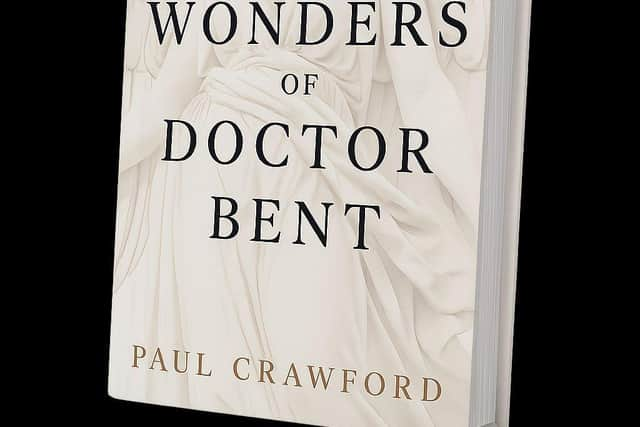
Paul Crawford, author of the acclaimed novel, The Wonders of Doctor Bent, tells how eczema has been a curse and an odd kind of blessing or consolation.
Eczema from ekzein, meaning to boil over or break out, is typically a very distressing, non-contagious skin disorder characterized by inflamed, red, itchy, scaly skin.
Down the ages eczema has provoked revulsion, superstition and stigma. Sufferers have had to battle with its physical, psychological and social impacts but living with it can be a mixed business. It can be bad, ugly and, curiously, good.
Most people invisibly shed their old skin. Mine comes away in cloud bursts when changing clothes, out of the bottom of my trousers like a prisoner of war hiding tunnel dirt, or in tiny pieces like the delicate wings of flies. Either way, I am literally a factory of dust. Conceivably, I would not be surprised to learn that bits of me lie in the lungs of every living person.

At school I was called ‘old man’s hands’ and various other cruel tags slipped from the mouths of schoolchildren from time to time. Still today, I unconsciously hide my hands in my trouser pockets or behind my back. For over half a century I have been plastered with every kind of cream or oil to stop or alleviate the breaking down of my biggest organ. As a child I imagined that if I disappeared and only my hands were found, they would be looking for an elderly victim. Now, as I write, the rest of me is catching up, is getting older. At some point soon, as with my head of greying hair, my hands will suit me, will match the rest of me, and I will be whole.
At school, I was the kid who missed games or sports so that nobody could see my torn flesh. I was the one who sat on a chair at the side of the swimming pool bored stiff watching the others splashing around. I was the kid on the beach wearing jeans, long sleeved shirts and conspicuously without ice cream on the hottest of days. But over the years I got used to wearing inappropriate clothing, avoiding exposure and smelling of ointments such as coal tar paste. I got used to shaking people’s hands with either sandpapery or greasy steroid-laden fingers. I got used to hospital visits and being unglued from bedsheets. I even got used to endless prick-testing for allergies. But I always struggled to accept that certain foods were lost to me: chocolate, ice cream, eggs, cheese, tomatoes, cow’s milk and oranges. At Easter, I was eggless, glaring at the box of fruit jellies my parents bought instead.
Quite aside from increased risk of infections through broken skin, eczema can bring irritability, anger, frustration, anxiety and depression. Exacerbated by certain foods, stress, hot weather, wool and other irritants, the psychological fallout can be significant. This is particularly the case when the condition is visible to others on the face and hands. When it lands on the face, as it sometimes does, you can feel like hiding away, ugly, unlovable. I know from my work as a professor at The Institute of Mental Health just how psychologically challenging it can be to live with eczema.
But it would be misleading to overlook the pleasures of illness for eczema has its dark joys. Scratching an itch is perhaps the most obvious of these and anyone, with or without eczema, will know that satisfaction. But with eczema you get to a whole different magnitude of itch that drives rhythmic, often chronic scratching. The back and forth of this can be blissful. Sometimes, both sets of fingernails go to work in ecstasy-inducing pirouettes. I wonder whether responding to eczema by tearing at your skin, even painfully so, oblivious to drawing blood, is a kind of self-harm, a release, a consolation. But it is poor consolation. I wish I had a pound for each time I have heard "Don't scratch! Rub instead!" from parents, friends, and medics. If they only knew just how hard it is to deny extreme itching!

My best advice to fellow sufferers out there is keep those nails pared, moisturise regularly and love yourself, even those dry, red, itchy bits!
The Wonders of Doctor Bent is available at Amazon, WHSmith, Foyles, Waterstones, Cranthorpe Millner, and all good bookshops.