
Pancreatitis: Mounjaro and Ozempic weight loss jabs bad reactions prompts new study

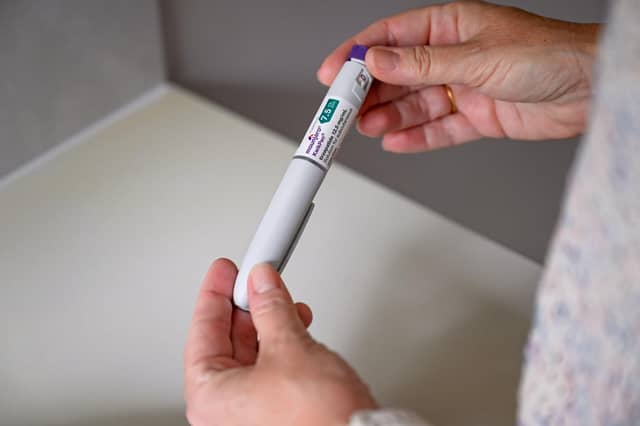

Hundreds of people have reported pancreatic problems after taking weight loss and diabetes jabs - which has sparked a new study.
Some cases of pancreatitis thought to be linked to GLP-1 medicines - glucagon-like peptide-1 receptor agonists - have proved fatal.
Data from the medicines regulator, the Medicines and Healthcare products Regulatory Agency (MHRA), shows that since the drugs were licensed there have been hundreds of cases of acute and chronic pancreatitis among people taking GLP-1 medicines.
This includes:
- 181 reported cases of acute and chronic Pancreatitis linked to tirzepatide – the active ingredient for Mounjaro. Five people died.
- 116 reported reactions of this kind linked to liraglutide, one of which was fatal.
- 113 cases of acute and chronic Pancreatitis linked to semaglutide – the active ingredient for Ozempic and Wegovy. One person died.
- 101 reported reactions of this kind linked to exenatide, three people died.
- 52 reported reactions of this sort linked to dulaglutide and 11 reported reactions lixisenatide. No fatalities were linked to either drug.
These cases are not confirmed as being caused by the medicines, but the person who reported them suspected they may be.
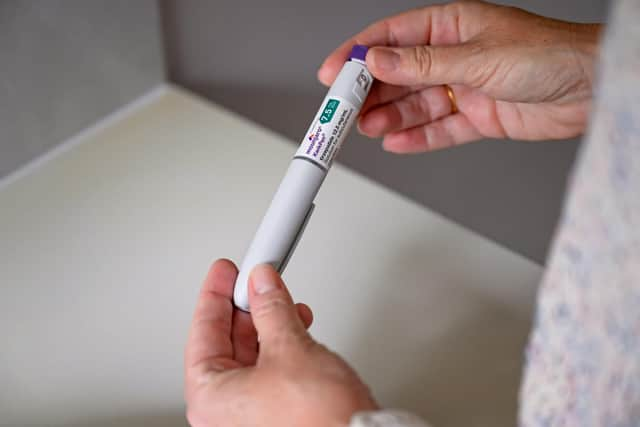
Nonetheless, Yellow Card Biobank project, launched by the MHRA and Genomics England, will see researchers examine whether cases of pancreatitis linked to GLP-1 drugs may be influenced by people’s genes.
The MHRA is calling for people who are taking GLP-1 medicine who have been admitted to hospital due to acute pancreatitis to submit a report to its Yellow Card scheme.
When a Yellow Card report is received, the MHRA will contact patients to ask if they would be willing to take part in the study.
Patients will be asked to submit more information and a saliva sample which will be assessed to explore whether some people are at a higher risk of acute pancreatitis when taking these medicines due to their genes.
What is pancreatitis?
The NHS explains that acute pancreatitis when the pancreas becomes inflamed and swollen quickly.
It says: “The pancreas is a small organ, located behind the stomach, that helps with digestion. Most people with acute pancreatitis start to feel better within about a week and have no further problems. But some people with severe acute pancreatitis can go on to develop serious complications.”
The most common symptoms of acute pancreatitis include:
- suddenly getting severe pain in the centre of your tummy
- feeling or being sick
- a high temperature of 38C or more
How many people are on weight-loss jabs?
GLP-1 agonists can lower blood sugar levels in people living with type 2 diabetes and can also be prescribed to support some people with weight loss.
Recent estimates suggest that about 1.5 million people in the UK are taking weight loss jabs. Health officials have suggested that they can help to turn the tide on obesity, but have stressed they are not a silver bullet and do come with side effects.
Most side effects linked to the jabs are gastrointestinal including nausea, constipation and diarrhoea.
And the medical regulator recently warned that Mounjaro may make the oral contraceptive pill less effective in some patients.
What have medics said about weight-loss jabs and pancreatitis?
Dr Alison Cave, MHRA’s chief safety officer, said: “Evidence shows that almost a third of side effects to medicines could be prevented with the introduction of genetic testing, it is predicted that adverse drug reactions could cost the NHS more than £2.2 billion a year in hospital stays alone.
“Information from the Yellow Card Biobank will help us to better predict those most at risk of adverse reactions – enabling patients across the UK to receive the safest medicine for them, based on their genetic makeup.
“To help us help you, we’re asking anyone who has been hospitalised with acute pancreatitis while taking a GLP-1 medicine to report this to us via our Yellow Card scheme.
“Even if you don’t meet the criteria for this phase of the Biobank study, information about your reaction to a medication is always extremely valuable in helping to improve patient safety.”
Professor Matt Brown, chief scientific officer of Genomics England, said: “GLP-1 medicines like Ozempic and Wegovy have been making headlines, but like all medicines there can be a risk of serious side effects.
“We believe there is real potential to minimise these with many adverse reactions having a genetic cause.
“This next step in our partnership with the MHRA will generate data and evidence for safer and more effective treatment through more personalised approaches to prescription, supporting a shift towards an increasingly prevention-focused healthcare system.”