
China bans hidden car door handles - when do the new rules come into effect?
China will ban concealed door handles on electric vehicles, becoming the first country to take such a step after a series of fatal incidents raised concerns about the design.
Under new rules announced on Monday by the Ministry of Industry and Information Technology, all cars sold in China will be required to have a mechanical release on both the inside and outside of every door, excluding the boot.
The ministry said the changes would “improve the level of automotive safety design”.
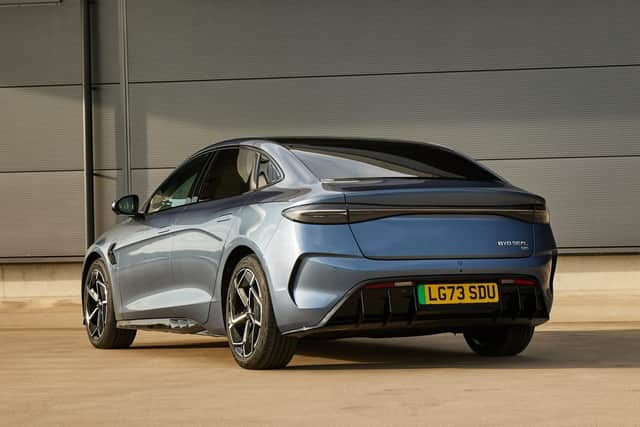

The regulations are due to take effect on January 1 next year. They require every vehicle to include a hand-operable opening space of at least 6cm by 2cm by 2.5cm to allow doors to be opened manually.
Inside the car, clear signage must also show occupants how to operate the release.
Flush-mounted, pop-out door handles were first popularised by Tesla with the launch of the Model S in 2012. The design relies on electrical signals to activate the latch and offers a small efficiency gain by reducing aerodynamic drag.
Since then, the feature has become widespread on EVs around the world. In China, it appears on roughly 60% of the top 100 bestselling new energy vehicles, which include electric and hybrid models, according to state media.
All new vehicles launched after January next year will have to comply, forcing many Chinese manufacturers to redesign existing models. Some cars that have already been approved and are close to launch have been granted a two-year grace period to update their designs.
The move follows several high-profile accidents in which power failures prevented doors from being opened, trapping occupants inside vehicles. These incidents have drawn increasing attention from safety regulators globally.
In October, a fatal crash in Chengdu involving Xiaomi’s SU7 electric sedan reportedly left bystanders unable to open the car and rescue the driver before it caught fire. In the US, Tesla is facing legal action from the parents of a teenager killed in a 2024 Cybertruck crash.
According to a police report, the vehicle hit a tree and burst into flames, cutting power to the electric doors and leaving passengers trapped. Three of the four occupants died.
China is the world’s largest EV market, with dozens of domestic brands expanding overseas. Figures published last month showed BYD sold more electric vehicles than Tesla last year, overtaking the US company for the first time on an annual basis.