
Fuel prices fall: London Stock Exchange saw huge gains as oil costs fell sharply following Middle East ceasefire

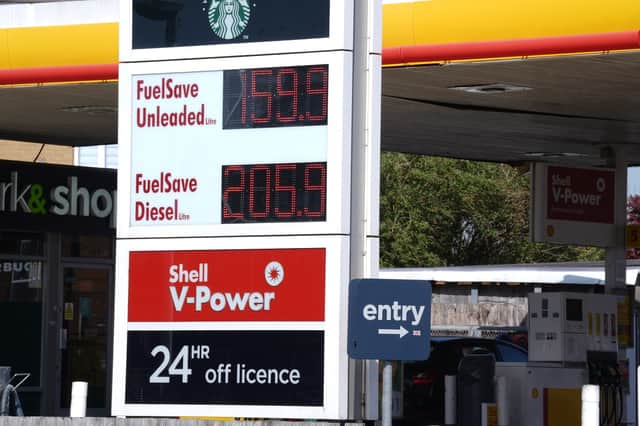
The cost of oil fell sharply on Wednesday following news of a ceasefire in the Middle East.
Fuel prices fell as the London Stock Exchange saw huge gains on Wednesday (April 8) - and oil costs fell sharply - after the US and Iran agreed a two-week ceasefire in their Middle East conflict. The FTSE 100 closed up 260.09 points, 2.5%, at 10,608.88. The FTSE 250 ended up 878.38 points, 4.1%, at 22,434.83, and the AIM All-Share rose 25.38 points, 3.4%, to 763.81.
The “risk-on” move came after the US and Iran agreed the 14-day truce, although Tehran warned the war was not over until formal terms were negotiated, with both sides claiming victory in the conflict. US president Donald Trump told AFP the deal was a “total and complete victory”, while Iran warned it would enter talks with the US on Friday in Pakistan with “complete distrust”.
The Iranian regime, however, did agree to temporarily reopen the Strait of Hormuz, sending oil prices tumbling on Wednesday, with brent oil trading lower at 95.20 dollars a barrel on Wednesday afternoon, down from 110.24 at the time of the equities close in London on Tuesday.
“A two-week ceasefire has pulled price action back from the edge and replaced immediacy with a defined window, and in this market, time is the most valuable currency,” said Stephen Innes, of SPI Asset Management. “The reopening signal in the Strait of Hormuz shifts the market from a trading blockage to tracking flows, and that transition is driving this broad risk repricing,” he explained.
In European equities on Wednesday, the Cac 40 in Paris closed up 4.5%, while the Dax 40 in Frankfurt jumped 5.1%, with stocks in New York also higher. The Dow Jones Industrial Average was up 2.3%, the S&P 500 index rose 2.1%, while the Nasdaq Composite was 2.6% higher. The yield on the US 10-year Treasury narrowed to 4.27% on Wednesday from 4.37% on Tuesday, while the yield on the US 30-year Treasury fell to 4.86% from 4.95%.

But David Morrison, senior market analyst at Trade Nation, warned the recovery could be short lived, adding: “Whether these early ‘risk-on’ moves are sustainable or not is another matter entirely.”
He added: “All eyes now turn to the Strait of Hormuz. If shipping starts to move through it again, and there’s strong evidence that things can return to pre-war normality, then that will embolden investors. But given the complexity of the issues around this, a two-week ceasefire is unlikely to be sufficient to convince investors that it’s safe to go back in the water.”
Mr Innes also urged caution over the situation in the Middle East, and said: “This is not a resolution; it is a test phase. The next two weeks will be telling. Markets are now moving from pricing outcomes to pricing probabilities around a fragile negotiation framework.”
Maritime monitor Marine Traffic said two ships had passed through the Strait of Hormuz since Iran agreed to reopen the waterway, but Iranian foreign minister Abbas Araghchi raised “ceasefire violations” by Israel with Pakistani mediators - and warned that Tehran could pull out of the ceasefire.
UK Prime Minister Sir Keir Starmer welcomed the ceasefire agreement, calling it an opportunity to secure a long-term solution for shipping through the Strait. Sir Keir is travelling to the Middle East, where he is expected to discuss diplomatic efforts to support and uphold the pause in fighting with leaders of Gulf allies. He said there was still work to do to ensure “this ceasefire should be not a temporary ceasefire but a permanent ceasefire”.
The pound rose to 1.3438 dollars on Wednesday afternoon from 1.3248 on Tuesday. Against the euro, sterling climbed to 1.1495 from 1.1447.
On the FTSE 100, the oil price plunge knocked Shell and BP down 4.7% and 5.8% respectively. Shell also delivered a mixed first-quarter trading update, with higher refining margins reflecting the oil price surge, but lower production amid disruption from the Middle East crisis.
Other oil and gas stocks on the wane included Ithaca Energy, down 6.2%, Harbour Energy, down 6.1%, and Tullow Oil, down 3.7%.