
Mum says ChatGPT helped spot deadly Addison's disease after holiday tan turned 'black'
A mum-of-two says an unusually dark holiday tan and months of sickness were dismissed as anxiety before ChatGPT suggested a rare condition that doctors later confirmed was life-threatening.
A mum-of-two says ChatGPT helped point her towards a life-threatening illness after her skin turned so dark on holiday that her family joked she had won their tanning competition.
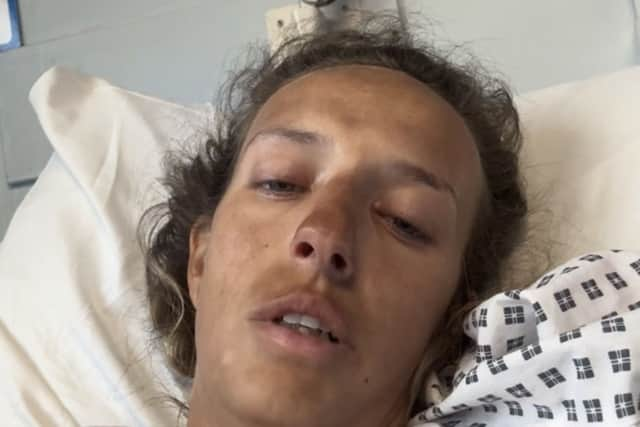

Poppy Guy, 29, had travelled to Malaga, Spain, with her family expecting to return home with a golden glow. Instead, she says her skin became an alarming "black brown" colour as she battled daily sickness, dizziness and breathlessness.
The teaching assistant, from Fowey, Cornwall, said she had been suffering with unexplained symptoms for months and had repeatedly been told they were caused by anxiety.
But after searching her symptoms using ChatGPT, the AI chatbot suggested Addison's disease as one possible explanation.
Addison's disease, also known as primary adrenal insufficiency, is a rare condition in which the adrenal glands fail to produce enough vital hormones.
Poppy researched the condition before returning to her GP, where she raised her concerns and was referred to hospital for further investigations.
Just a week later, she collapsed at home while preparing dinner and was rushed to hospital in what doctors diagnosed as an adrenal crisis – a life-threatening complication of Addison's disease.
Following tests, medics confirmed she had the rare condition. Poppy says one doctor later told her that if she had not been admitted to hospital that day, she "probably would be dead".
Recalling the family holiday, she said: "We all started having a tanning competition. I usually go a nice golden brown but my belly was literally black.
"I've always been quite tanned because I live in Cornwall and spend lots of time at the beach, but this was completely different. Everyone kept asking why I was so dark."
She added that she was so unwell she spent much of the holiday feeling sick before becoming "horrifically ill" at the airport on the journey home.
Poppy says she first became unwell in July 2025, developing nausea, vomiting and unusual pigmentation on her arms.
Despite visiting her GP several times over the following months, she says she was repeatedly told anxiety was the likely cause and was prescribed medication, but her symptoms continued to worsen.
She recalled: "From January to May I couldn't stand up without feeling horrifically dizzy. My vision was shaky, I was vomiting multiple times a day and I was out of breath just walking around."
After reading ChatGPT's response, she became convinced Addison's disease matched her symptoms.
"I asked ChatGPT about my symptoms and Addison's disease was one of the options," she said.
"I Googled it and thought it fitted. I went back to the doctor and said I thought it could be Addison's disease."
Within days she collapsed at home and was taken to hospital, where she spent two weeks receiving treatment.

Poppy now takes 11 tablets every day to replace the hormones her body can no longer produce and is undergoing physiotherapy after losing the ability to walk independently during her illness. She currently uses a wheelchair and walking frame while recovering.
She said: "I was in shock because I'd been to the doctors so many times and kept being told it was anxiety. Then suddenly I was diagnosed with a life-threatening disease."
Her GP practice declined to comment. OpenAI has also been approached for comment.
What is Addison's disease?
According to the NHS, Addison's disease, also known as primary adrenal insufficiency, is a rare condition where the adrenal glands, located above the kidneys, do not produce enough hormones.
Symptoms can include extreme tiredness, weight loss, dizziness, nausea, vomiting, muscle weakness and darkening of the skin. The condition can usually be managed with lifelong medication.
The most serious complication is an adrenal crisis, where hormone levels suddenly become dangerously low. This is a medical emergency requiring urgent hospital treatment.