
Secret WW2 bunker buried beneath White Cliffs of Dover opens for first time

This article contains affiliate links. We may earn a small commission on items purchased through this article, but that does not affect our editorial judgement.
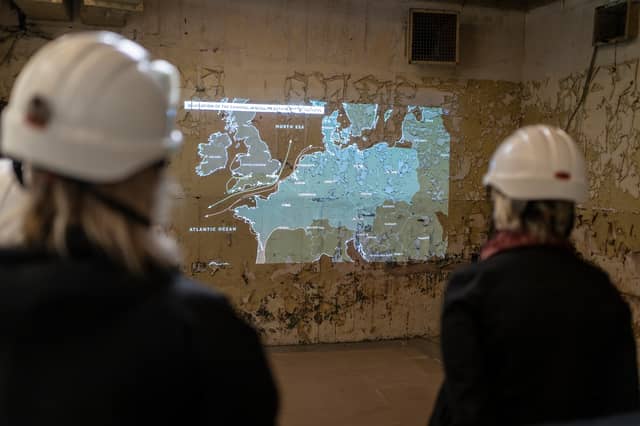
Hidden beneath the White Cliffs of Dover, a secret wartime command centre that helped defend Britain from Nazi attack is opening to visitors after decades buried underground.
A secret Second World War command centre hidden deep beneath the White Cliffs of Dover is opening to the public for the first time, more than 80 years after it helped defend Britain from Nazi attack.
The underground plotting room, which played a vital role in protecting the country from German forces across the English Channel, was abandoned after the war and eventually buried beneath tonnes of soil.
For decades, one of Britain’s most remarkable wartime sites lay forgotten beneath one of its most famous landmarks.
Now, following years of painstaking conservation work, the National Trust is opening the Fan Bay Plotting Room to visitors from Friday, November 13.
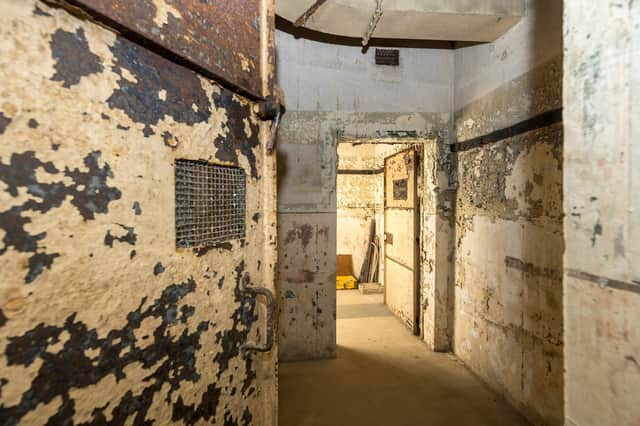
And rather than restore the bunker to its wartime appearance, conservationists have deliberately left its peeling paint, original pipework and graffiti untouched.
The secret room that helped defend Britain
Built in 1940, the plotting room was part of Britain’s desperate efforts to strengthen its coastal defences following the fall of France to Nazi Germany.
With enemy forces occupying the French coastline just 21 miles away, Dover became one of the most heavily defended and attacked locations in the country.
The area earned the nickname Hellfire Corner because of the relentless shelling it endured from German guns across the Channel.
Hidden deep inside the cliffs beneath a powerful coastal gun battery, the plotting room housed some of the most sophisticated military equipment available at the time.
Its vital job was to calculate where British artillery should fire and help coordinate the guns protecting the Strait of Dover.
At the heart of the operation was a fire direction table, an advanced mechanical system used to calculate firing information and direct artillery operations.
The personnel working underground played a crucial role in Britain’s coastal defences, operating out of sight while shells fell on the surrounding coastline.
Buried and forgotten for decades
When the war ended, the plotting room was abandoned.
In the 1970s, the site was buried beneath soil, seemingly consigning a piece of Britain’s military history to the past.
But in 2017, the underground chamber was rediscovered.
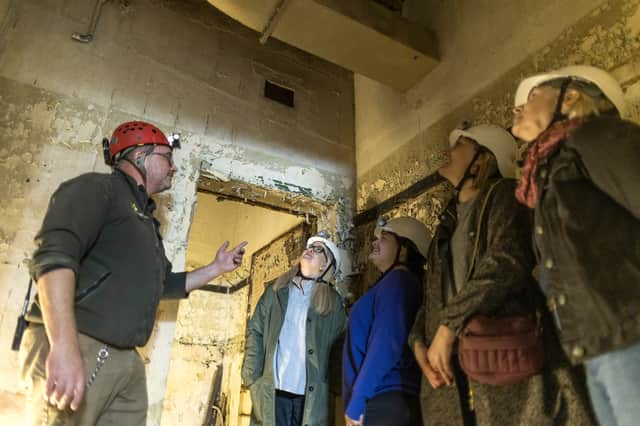
The National Trust subsequently began researching and conserving the site, with the aim of allowing visitors to experience the room much as it had survived.
Unlike many wartime attractions, there has been no attempt to recreate a fully functioning military command centre.
Instead, visitors will find the original walls, peeling paint, exposed ducts and wartime graffiti left behind by those who worked there.
Jon Barker, from the National Trust, said: “There’s something very special about standing in a place that has changed so little since the people who worked here left.
“Rather than recreate the past, we’ve carefully conserved the plotting room so visitors can experience it much as we found it, with all the marks of its history still visible.
“It’s a rare opportunity to discover a completely different side of the white cliffs, and a fitting tribute to everyone who has helped bring this remarkable place back into public view.”
The forgotten people who worked beneath the cliffs
The conservation project has also uncovered details about the men and women who served at Fan Bay during the war.
Volunteers have spent years examining military records, photographs and other historical material to piece together the stories of those who worked inside the bunker.
National Trust volunteer Gordon Wise said the research had transformed his understanding of the site.
“A name in a service record, or a detail in a photograph, helps connect the surviving marks on the walls with someone’s working day,” he said.
“There are still questions to answer, but each discovery helps us build a clearer picture of the people behind the machinery.”
How to visit the Fan Bay Plotting Room
The plotting room opens to visitors on Friday, November 13, 2026, offering a rare opportunity to explore a previously inaccessible part of Britain’s wartime history.
The underground site is located at Fan Bay beneath the White Cliffs of Dover in Kent.
Visits are by guided tour only, and advance booking is essential through the National Trust.
The opening gives visitors a chance to see a surviving piece of the military infrastructure that once stood between Britain and the German forces occupying continental Europe.