
Stamp prices blamed as Christmas card decline hits disabled artists and charities

Rising postage costs are forcing people to cut back on Christmas cards, with disabled artists warning fewer sales are threatening incomes and charities also facing a potential festive fundraising squeeze.
Stamp prices are being blamed for a sharp fall in Christmas card sending, with disabled artists warning the decline is threatening their livelihoods and potentially hitting a traditional source of income for charities.
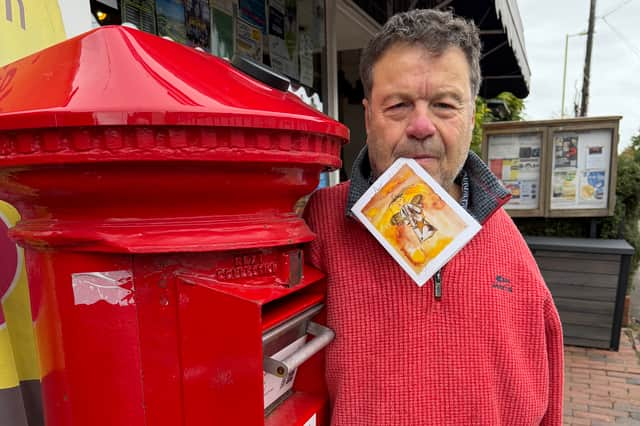

Almost one in five people who have previously sent Christmas cards by post say they have stopped altogether because of postage costs, according to new YouGov polling.
The research found two-thirds of current and former Christmas card senders have either cut back or stopped, raising wider concerns about organisations which make money from festive card sales.
The survey was commissioned by the Mouth and Foot Painting Artists (MFPA), whose 28 UK artists have disabilities and produce artwork using their mouths or feet.
For its artists, the impact goes beyond fewer cards arriving on doormats. They earn money through sales of Christmas cards, calendars and other products featuring their work, making the festive period an important part of their annual income.
But charity Christmas cards are also a significant fundraising market more widely.
Cards for Good Causes, a not-for-profit retailer working with more than 70 UK charities, says it has returned £17 million to charities over the past decade through sales of cards and other products.
The organisations it supports include the British Heart Foundation, Marie Curie, Samaritans, the RSPCA and Macular Society.
The MS Society says Christmas cards sold through Cards for Good Causes have raised more than £100,000 for the charity since their partnership began.
Marie Curie has also said money it received through the scheme in 2025 was equivalent to funding 195 nursing hours.
There is no evidence that all of that fundraising is being lost because of postage prices. But the new YouGov figures suggest the rising cost of sending cards is already changing behaviour.
Of 1,731 people surveyed who had sent Christmas cards through the post, 19% said stamp prices had caused them to stop completely. Another 33% said they now send far fewer.
The sums quickly mount up for anyone with a long Christmas card list.
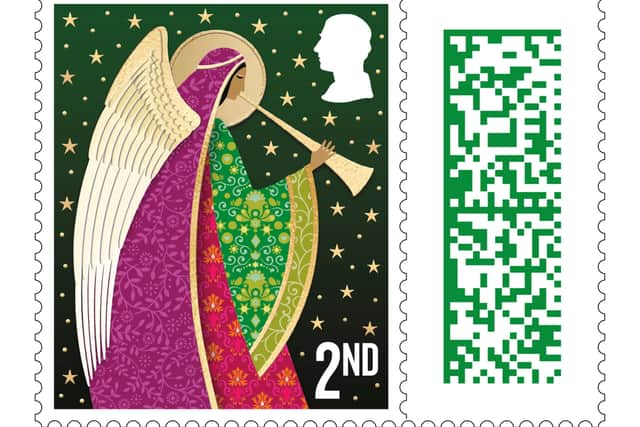
A second-class stamp now costs 91p, meaning postage alone for 20 cards costs £18.20 and sending 50 costs £45.50.
Using first class, at £1.80 per stamp, would cost £36 for 20 cards or £90 for 50.
Five years ago, according to the MFPA, first-class postage was 85p and second class 66p.
The decline could disproportionately affect older people as both senders and recipients.
More than half of over-55s surveyed, 55%, said they still send Christmas cards by post every year, rising to 62% among retired people.
At the other end of the age range, only 12% of 18 to 24-year-olds said they send cards annually, while half of 25 to 34-year-olds said they had never posted a Christmas card.
The findings come as regulator Ofcom considers extending its safeguard cap on second-class stamp prices until March 2028.
The MFPA wants the regulator to go further by examining measures such as cheaper second-class postage during the Christmas period or discounted books of stamps.
MFPA president Tom Yendell OBE said fewer cards had a direct financial consequence for its artists.
“For our artists, many of whom have no other way of earning a living because of their disability, this isn't an abstract concern,” he said.
“Every card that goes unsent is money that doesn't reach one of our artists who has worked hard, often against real odds, to build an independent livelihood through their art.”
He also argued that physical cards continue to matter particularly to older and isolated people.
“For a lot of people, particularly those who are older, isolated or living alone, a card through the letterbox is a genuine lifeline of connection at a time of year that can otherwise feel very lonely,” he said.
Christmas cards have been sent in Britain for more than 180 years, with the first commercial card widely credited to Sir Henry Cole in 1843.
The YouGov survey questioned 2,310 UK adults on October 9 and 10, with the figures weighted to represent the adult population. Questions about the impact of stamp prices were put to the 1,731 respondents who had previously sent Christmas cards by post.