
COP30 fire: UN climate talks in Brazil evacuated after "huge flames" take out venue

The entire COP30 site in Brazil has been evacuated after a fire broke out at one of the venues.
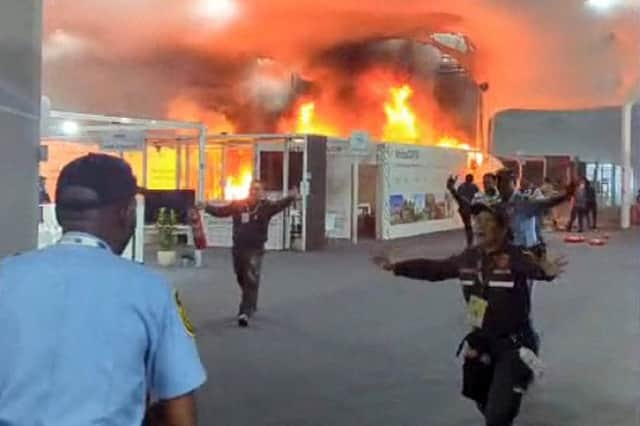
UN climate talks came to an abrupt end on Thursday (November 20) after a fire broke out at one of the COP30 venues in Brazil. Fire officials ordered the evacuation of the entire site for the conference, and it is not yet clear when the talks would resume.
Officials say the fire spread through pavilions prompting evacuations on the next-to-last day of the conference, although nobody was hurt. Organisers have now confirmed the blaze is under control and caused no injuries.
Brazil’s tourism minister, Celso Sabino, told journalists at the scene that the fire started near the China pavilion, which was among several pavilions set up for events on the sidelines of the climate talks. Video showed huge flames in one of the pavilions, which are reinforced canvas or fabric structures that typically have three walls and a floor.
Para state Governor Helder Barbalho told local news outlet G1 that a generator failure or a short circuit in a booth may have started the fire.

What is COP30?
Cop30 is the 30th “Conference of Parties”. It is the latest set of UN climate negotiations, which take place every year. Governments, business leaders, scientists and campaigners gathered this year in the city of Belem in Brazil’s Amazon Rainforest, for two weeks of talks from November 10 to 21.
Negotiators will also be seeking to make progress on climate action against a backdrop of global divisions, deepened by the election of US President Donald Trump, record heat and a string of deadly weather events.
With the energy transition moving forward at different speeds across the world, negotiators are focusing on how to push forward action and deliver on global commitments to cut planet warming emissions amid increasingly dire warnings over the planet’s future. Boosting adaptation to climate change and integrating nature more meaningfully into the final agreement has also been front of centre of the talks.
Many countries are expected to publish their new national action plans to cut emissions – known as nationally determined contributions (NDCs), which outline how each nation plans to help meet the goals of the 2015 global Paris Agreement to limit dangerous warming. The latest NDCs, which cover 2025 to 2035, were meant to be submitted by September but the majority of countries have yet to do so.
With more NDCs expected to be unveiled in Belem, the world will be waiting to scrutinise the plans as negotiators discuss how to accelerate the rollout of measures they outline.
Beyond an already announced fund to protect the world’s rainforests, Cop30 could bring a package of announcements on nature initiatives. Carbon markets and climate finance are also on the agenda as are measures to tackle nitrogen emissions and cut down on methane as a “handbrake” to warming in the near-term.