
Agriculture to be at the centre of this year’s COP30 agenda

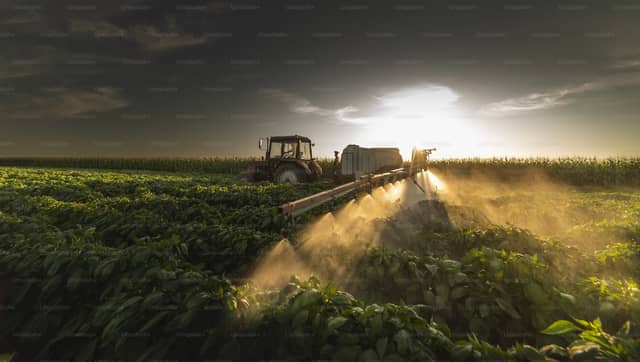

The COP30 will be hosted in the heart of the Amazon, Belém, between November 10th and 21st, 2025.
The city will welcome global leaders, civil society and scientists for one of the most decisive climate conferences of the decade. Agriculture will be at the center of the agenda, making COP30’s focus on agriculture and Brazil’s agricultural sector’s climate reckoning a defining theme of the event.
Between November 10th and 21st, 2025, Belém, in the heart of the Amazon, will host COP30. The city will welcome global leaders, civil society and scientists for one of the most decisive climate conferences of the decade. Agriculture will be at the center of the agenda, making COP30’s focus on agriculture and Brazil’s agricultural sector’s climate reckoning a defining theme of the event.
The agricultural sector has a dual role in climate debates: on the one hand, it is one of the main sources of greenhouse gas emissions, largely through deforestation and methane from livestock. On the other hand, it also offers some of the most scalable solutions for climate mitigation and adaptation.
This tension has already shaped climate dialogues worldwide and will take prominent place in Belém, where discussions will revolve around how agriculture can evolve from a driver of the climate crisis into a cornerstone of climate resilience.
Brazil’s agricultural sector power and climate pressure
Brazil is one of the world’s largest food producers and exporters. Soy, beef, coffee, and sugar flow from Brazilian farms to markets across the globe. Agribusiness generates nearly a quarter of the country’s GDP and ensures its position as a global supplier.
However, this strength also calls for responsibility. The expansion of farmland continues to drive deforestation, soil degradation and greenhouse gas emissions. The contradiction is sharp: Brazil’s economy depends on agriculture, yet its climate commitments hinge on making the agricultural sector more sustainable.
The political debate
Agriculture is more than a key economic sector in Brazil; it is also a political battlefield. A right-wing economic perspective dominates national discourse, often prioritizing short-term profits over long-term preservation.This view underpins controversial initiatives such as the Destruction Bill, a legislative proposal that would weaken environmental protections and undermine Brazil’s Nationally Determined Contributions (NDCs).
If enacted, this bill would directly clash with the goals of COP30. Instead of showcasing climate leadership, Brazil would face criticism for backtracking on its commitments. The debate surrounding the bill illustrates why the agricultural sector is more than symbolic — it is about credibility.
Evidence of a different path
Despite its political disputes, Brazil has proven that agriculture can grow without the destruction of virgin soil. Over the past two decades, productivity gains have created what researchers call a “land-saving effect.” Direct planting, pasture recovery, and integrated crop-livestock-forestry systems have allowed farmers to produce more while sparing millions of hectares.
Soil management has also made a difference. Carbon removal by Brazilian agriculture has grown steadily, turning the sector into a potential carbon sink. These practices show that the agricultural sector can be part of the climate solution if policies, financing and incentives align. This is why international attention is fixed on Brazil’s agricultural decision-making process at COP30.

Food systems in the spotlight
Until recently, food systems received little attention in climate negotiations. However, COP30 marks a turning point. For the first time, discussions will connect food production with consumption, distribution, and waste reduction. The transformation of these systems is critical not only for emissions reduction, but also for resilience in a world facing extreme weather and food insecurity.
Latin America, with Brazil at its center, has the potential to influence this shift. Civil society will play an essential role in holding governments and companies accountable. Other key players — including social organizations, NGOs, grassroots movements and CSR communication agencies working at this intersection — will also be vital in designing campaigns that link sustainability and social responsibility, while giving a voice to the communities and people most affected.
Financing the transition
For sustainable agriculture to scale up, technical knowledge alone is not enough. Farmers need access to credit, insurance, and markets that reward and incentivize low-carbon practices. International finance will also be key. Brazil is expected to leverage COP30 to advocate for mechanisms that support the adoption of climate-smart agriculture, from soil regeneration to carbon sequestration.
The Brazilian Agriculture Action Plan, designed to align the sector with national climate goals, will be subject to rigorous evaluation in Belém. If presented convincingly, it could serve as a blueprint for other countries, balancing economic growth and environmental responsibility. If it’s not, the narrative may again be dominated by policies such as the Destruction Bill, undermining trust in Brazil’s leadership.
Social inclusion and indigenous voices
The agricultural sector in Brazil is not just about exports and GDP. It also intersects with the rights and livelihoods of indigenous peoples and traditional communities. These groups play a vital role in protecting forests and managing land sustainably.
COP30 can be the stage for amplifying their voices. Including them in agricultural and climate strategies will be essential to ensure legitimacy and fairness. Their participation will remind negotiators that agriculture is about more than just production; it is about people, culture, and survival.
One of the most pressing issues in this context is the debate around the Marco Temporal, a legal thesis in Brazil that restricts Indigenous land rights to territories physically occupied on the date of the 1988 Constitution.
Critics argue that it disregards forced displacements and undermines constitutional protections, while supporters see it as legal certainty for landowners. The controversy highlights how land governance and Indigenous rights are inseparable from the climate agenda: without securing these territories, efforts to preserve forests and advance sustainable agriculture risk being undermined.
A regional and global opportunity
The global context makes COP30 even more important. Climate commitments are weakening in major economies, and international cooperation faces increasing fragmentation. In this environment, Brazil has a chance to step forward and show that the agricultural sector can be competitive, sustainable and socially inclusive.
By leading with concrete proposals, Brazil can position itself as a model for the Global South. Latin America as a whole could use COP30 to shape frameworks for soil health, low-carbon farming and food system resilience alike.
It is also important to highlight the findings of the Ellen MacArthur Foundation’s Big Food Redesign Study, which show that food systems are not only major drivers of climate change and biodiversity loss, but also powerful levers for change. The study demonstrates how circular economy principles — from regenerative farming to redesigning food products — could cut global greenhouse gas emissions, restore biodiversity and build resilience across agricultural value chains.
If these insights are incorporated, COP30 could mark a new chapter in agricultural climate action, showcasing how systemic redesign of food production and consumption can unlock benefits for people, nature, and the economy.
COP30’s focus on agriculture and the way forward
The stage is set for a turning point. COP30 is not only about global negotiations but also about Brazil’s domestic choices. The country can either embrace the transition already underway, rooted in technology, governance and sustainability, or risk losing credibility by pursuing destructive policies.
For the agricultural sector, the reckoning is clear. Its future role is not just about feeding the world, but about helping protect the planet. The path forward depends on rejecting legislation that undermines progress, scaling up proven solutions, and securing financing for climate-smart practices.
The world will be watching Belém closely this November. Success will mean proving that agriculture is not only part of the problem, but part of the solution. That is the challenge — and promise — of COP30’s Focus on Agriculture.