
Lee Anderson: What actually happened at the Battle of the Somme?

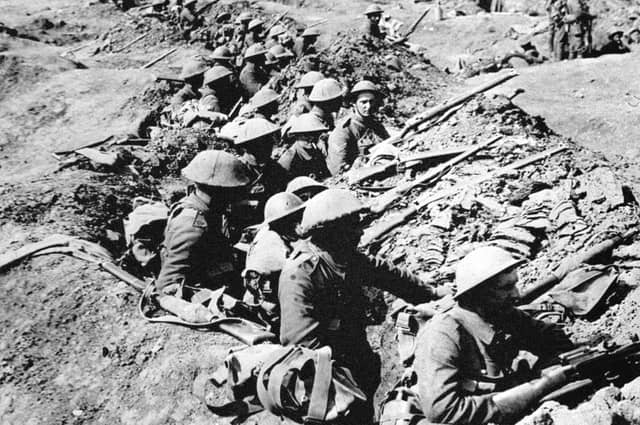

As MP Lee Anderson has - again - become an online figure of fun for a recent post on X, this is what actually happened at the Battle of the Somme.
The Reform Party MP sparked derision on Sunday when, in reply to a woman posting “Women deal with periods, pregnancy, and menopause. What do men have to deal with?” he replied with the non-sequitur “Try the Battle of the Somme”.
Probably an attempt to equate war to a “masculine” duty - slightly offensive to the thousands of women who serve in the military, but there you go - it backfired as certainly he did not take part and, as the conflict was 108 years ago, neither did any man alive.
As expected, X shrieked with delight at the stupidity of the response, with men pretending to have been fighting recently - “I remember my battle of the Somme last month unreal” - and women adopting the phrase as a metaphor for periods: “I'm so glad I'm 56 and no longer have to deal with the battle of the Somme every month.”
Anderson’s crude and blokey attitude has been widely and rightly mocked - and perhaps it’s time for him to step away for social media for a while after repeatedly putting his foot in it. It’s only last month that he claimed a “lunatic” had been given a police caution for sending him a message on X - and then posted a screenshot of a WhatsApp message that, given it was coloured green, had been sent by the account holder. Perhaps he’d copied it from X to WhatsApp and it wasn’t all made up. That’s teh likely explanation.
Anyway, here’s what actually happened at the Battle of the Somme.
What was the Battle of the Somme?
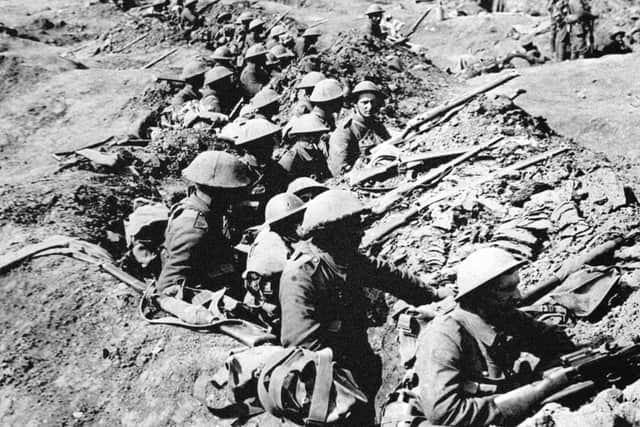
The Battle of the Somme was a First World War battle fought by the armies of the British Empire and the French Third Republic against the German Empire, between July 1 and November 18, 1916. The name comes from the Somme River in France.
The Allies thought one big push could clinch the war on the Western Front, which had been raging for two years - hence the battle’s alternative name of the Somme Offensive. But it led to further deadlock and mass killing on both sides: it’s estimated 3m men fought in the battle, with a third killed or wounded.
A British government summary published in November 2016 to mark 100 years since the Somme offensive was abandoned said: “The attack on the first day was a disaster, with 60,000 British casualties including nearly 20,000 dead. The Allied troops had suffered heavy losses by both machine gun and artillery fire as the Germans emerged from deep dug-outs to defend their positions during the prolonged artillery barrage in the weeks preceding the battle. Many attacks faltered on German barbed wire and reinforcements suffered heavily as German artillery concentrated their fire on the British trenches.
“Over the following 141 days, the Allies continued to struggle gaining just six miles of territory. Many attacks were launched, often with mixed results and little progress overall. Infantry pressed forward, but ultimately foundered and were unable to seize their objectives. Where surprise could be achieved the results were often successful, but the Allies were never able to exploit local successes.”
The Somme saw tanks used for the first time in the First World War, but they were not reliable enough, nor were there enough to make a difference.
And most of the British Army’s pre-war regular soldiers had been lost in 1914 and 1915, and so the bulk of the Army was now made up of volunteers of the Territorial Force and Lord Kitchener’s New Army which had been forming since August 1914 - including the ‘Pals’ regiments which recruited groups of friends in workplaces and at football grounds.
The 2016 statement says: “The vastly expanded armies on both sides lacked experience at every level of command and both had the weapons to make any attack on trench lines and heavily fortified positions very costly. Mounting an offensive meant months of preparation (building roads, railways, camps and water supplies) but such efforts meant surprise was difficult and the problems of exploiting success proved insurmountable. The British had fielded new technology and achieved limited success, but not on the scale needed.”
By the time the offensive was called off on November 18, the Allies had lost around 620,000 men and the Germans 450,000.
“Allied success was limited; the British ‘Kitchener’ Army had developed as a fighting force, Commonwealth forces had distinguished themselves, the front line had advanced some six miles on a twelve mile front, and the Germans had been forced to divert troops away from Verdun,” says the 2016 summary. “But no breakthrough had been achieved, the German fighting spirit had not been broken, and they too had learnt lessons.”