
Metal detectorist finds 1,500 pieces of crashed WW2 Spitfire and launches search for pilot’s family
Danny Jones uncovered thousands of fragments from a 1942 Spitfire crash and has spent years trying to reunite the story with the pilot’s family.
A metal detectorist who uncovered more than 1,500 pieces of a crashed Second World War Spitfire is on a mission to find the family of the young Polish pilot who died at the controls.
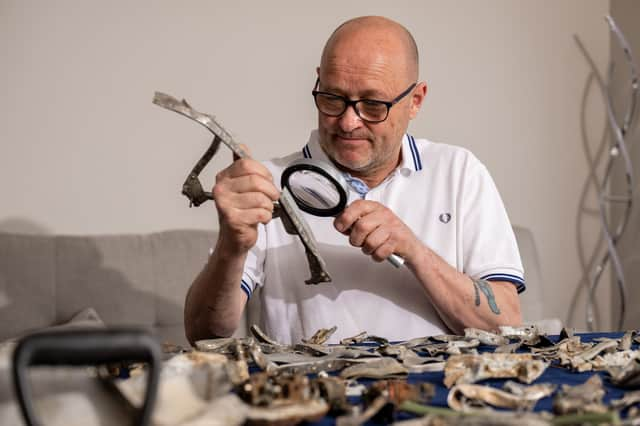

Danny Jones stumbled across the crash site in woodland near Henley-on-Thames, Oxfordshire, in March 2021.
The 57-year-old initially had no idea what he had discovered.
While detecting with his dogs, Danny found a small, expertly manufactured metal bracket carrying an inspector’s stamp.
As an engineer, he immediately suspected it had come from an aircraft.
When he returned the following day and widened his search, the finds started coming thick and fast.
“It was read after read after read,” Danny said. “I thought it had to be a crash site.”
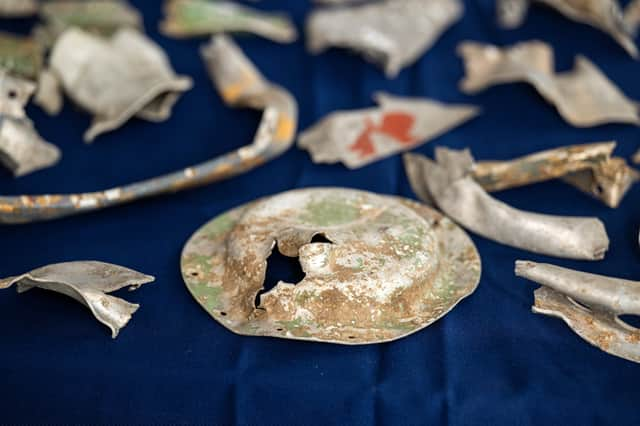
He initially wondered whether the wreckage could have belonged to a German aircraft because many of the pieces no longer carried the distinctive green colour associated with British Spitfires.
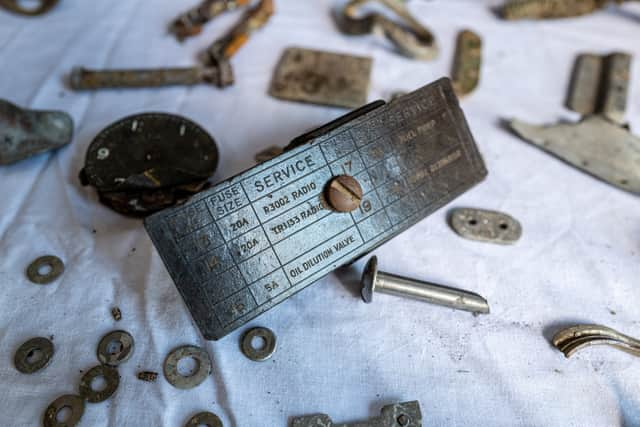
But then he uncovered a plate carrying a warning about re-cocking guns during flight.
“I knew it was British and a military aircraft,” he said.
Over the next three months, Danny recovered more than 1,500 fragments, ranging from tiny pieces of metal to sections of wing measuring around two feet long.
He also discovered ammunition and a cockpit clock.
The finds prompted him to search through national archives, where he eventually uncovered reports of an aircraft crash near Henley-on-Thames on May 29, 1942.
The plane was identified as a Supermarine Spitfire Mk IIb flown by Polish airman Sylwester Jerzy Godlewski.
Godlewski, from Warsaw, had fled Poland after the Nazi invasion and joined the fight in Britain.
He was killed during a training flight after losing control of his aircraft.
Danny says his research indicates Godlewski was flying at around 24,000ft when he left formation and entered a spin.
The young pilot was just 27.
Godlewski was buried at Northwood Cemetery in Middlesex alongside dozens of other Polish airmen who died during the war.
Danny later asked the Ministry of Defence for permission to continue excavating the crash site, but his request was refused because human remains may still be present.
He has nevertheless continued finding fragments on the surface.
By studying where the pieces landed, Danny says he has been able to work out the direction of the aircraft and reconstruct how it came down across a distance of around 200 metres.
But his biggest mission has been finding Godlewski’s relatives.
With help from members of the local Polish community, Danny has searched for the pilot’s family both in Britain and abroad.
The language barrier has made the search particularly difficult.
Now, inspired by the anniversary of the first flight of the Spitfire prototype, he has renewed his efforts.
Danny says he wants Godlewski’s relatives to know what happened to the young airman and to understand the story of his final flight.
“I want to explain his story to them, how brave he was,” he said.
In another twist, Danny has discovered that some of Godlewski’s personal possessions, including his dog tags and badges, were recently sold by an auction house in Kent for £3,000.
The auction house has passed the pilot’s details to both the buyer and seller in the hope the discovery could finally help connect the belongings with Godlewski’s family.
For Danny, the search is about more than an archaeological discovery.
“It’s a mark of respect,” he said. “He had such a short life but what he did was so important.”
And after almost 85 years, he hopes the story of the young Polish pilot can finally make its way home.