
Microsoft outage: Is it another cyber attack as global blackouts and hacking incidents mount?
Microsoft says hackers are not behind its global outage, but the disruption follows cyber attacks on retailers, supermarket freezers and major cloud failures.
Microsoft insists there is no evidence of a cyber attack behind a massive global outage that has left thousands of people unable to access emails, workplace messaging and other essential online services.

But the latest disruption comes after weeks of increasingly serious cyber attacks and technology failures, raising fresh questions about just how vulnerable the systems millions of people rely on have become.
From hackers turning supermarket freezers into ovens to attacks on major retailers and a six-hour Google Cloud blackout, recent incidents have exposed the risks of relying on interconnected digital infrastructure.
Now Microsoft is struggling to restore its own services after initial attempts to fix a worldwide outage failed to work as expected.
Contingency plans are being put in place across Whitehall to minimise the impact of Microsoft’s technical problems on government services.
A Government spokesman said: “We are aware of the ongoing global technical issues affecting Microsoft services.
“We are working closely with Microsoft to assess any impact on government services, with robust contingency plans in place to minimise disruption.”
Is the Microsoft outage a cyber attack?
The short answer, according to Microsoft, is no. At least, there is currently no evidence that hackers are responsible.
The problems began on Thursday (November 12), affecting Outlook, Microsoft Teams, Copilot and other Microsoft 365 services across dozens of countries.
At its peak, monitoring website Downdetector recorded more than 130,000 reports of Outlook problems in the US alone. Reports came from 74 countries and territories within an hour.
Microsoft executive vice-president Charles Lamanna said: “There is no indication this is the result of malicious or cyber activity.”
Instead, the company has pointed to overloaded infrastructure and problems bringing servers back online.
Engineers have tried redirecting traffic and restoring affected systems, but some servers became unresponsive again when users attempted to reconnect.
The company admitted its changes were not working “as expected”, although it later reported improvements in server stability.
From supermarket freezers to blood banks: Europe's cyber attacks
The disruption comes just days after France accused Iran of orchestrating an extraordinary cyber attack against supermarket refrigeration systems.
Hackers remotely seized control of fridges and freezers at hundreds of French stores, pushing temperatures above 50C in some cases.
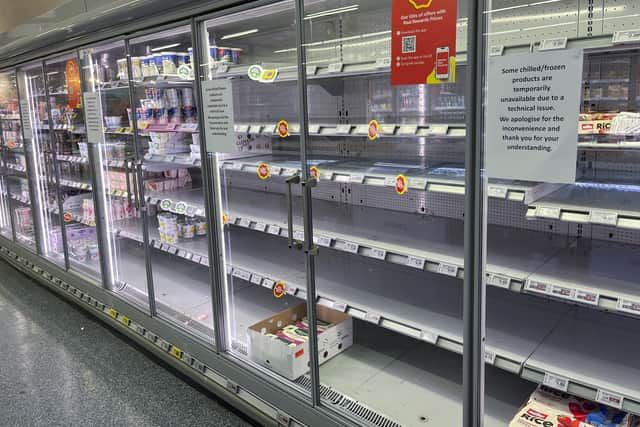
Thousands of tonnes of food were destroyed, with losses running into millions of euros. Some stores even suffered fires.
French authorities blamed a cyber warfare unit linked to Iran's Islamic Revolutionary Guards Corps.
Similar attacks subsequently affected retailers elsewhere in Europe, while hackers also targeted refrigeration equipment at French blood bank facilities. Alarm systems prevented blood products from being destroyed.
The incidents demonstrated how cyber attacks can cause damage far beyond stolen passwords or disrupted websites, potentially threatening food supplies and essential healthcare services.
Major UK retailers have also been hit
British shoppers have already seen the consequences of cyber attacks on major high street names.
Marks & Spencer and the Co-op suffered serious disruption earlier in 2026, while fashion retailer Asos confirmed a separate security breach in October.
The owner of Hobbs, Whistles and Phase Eight also reported a cyber incident affecting parts of its UK operations.
Meanwhile, H&M investigated claims involving hacking group ShinyHunters, although the retailer said it had found no indication its data environment had been compromised.
The attacks have highlighted the potentially enormous consequences when criminals gain access to the systems underpinning everyday shopping.
Google Cloud suffered a major blackout too
Not every major technology failure involves hackers.
On October 20, Google's cloud infrastructure suffered a serious outage affecting services hosted in its London region.
The disruption lasted more than six hours, affecting computing, databases and other cloud services used by businesses.
Google subsequently traced the incident to an external electrical power failure at a data centre, rather than a cyber attack.
It was another reminder that even the world's biggest technology companies remain vulnerable to failures involving the physical infrastructure keeping their services online.
How serious is the Microsoft outage?
The disruption has spread well beyond people being unable to check their inboxes.
Government departments, courts, schools and businesses have reported problems, with officials in Australia and Japan among those affected.
The Samaritans charity reported difficulties accessing emails, shared documents and other cloud services.
The worldwide disruption has also affected organisations relying on Microsoft 365 to communicate with customers and manage everyday operations.
While there is no established connection between Microsoft's problems and the recent wave of cyber attacks, the incidents underline a common vulnerability.
When essential services depend on a relatively small number of technology platforms, a single major failure can have consequences around the world.
Microsoft's investigation continues, and the company has promised to explain the underlying cause once the disruption is resolved.