
Biggest UK outages of 2026 so far: Google, BBC, Tesco and Heathrow

From supermarket payment failures and banking outages to disrupted flights and cyberattacks on household-name brands, we look back at the technology incidents that have affected Britain in the first ten months of 2026.
From banking apps that stopped working to supermarket tills that couldn't accept payments, 2026 has already delivered a string of major technology failures affecting millions of people across Britain.

With more than two months of the year still to go, some of the UK's biggest brands have experienced outages, cyberattacks and computer breakdowns that have disrupted shopping, travel, banking and healthcare.
In just one week in October, customers of major banks faced problems accessing services, fashion retailers were recovering from cyberattacks and parts of the BBC's online services - including the Traitors website - were reported offline amid an international security scare.
But the disruption has gone well beyond shopping and banking. Technical failures have caused chaos at airports, while cyberattacks on medical equipment suppliers have threatened deliveries to NHS hospitals.
Here we look at some of the most significant incidents reported between January 1 and October 22, what went wrong and how customers were affected.
Google Cloud outage: Revolut, Lloyds, HSBC and Screwfix – October 20
One of the year's most widespread internet outages began with a reported electrical problem at a Google Cloud facility in London.
The failure disrupted services used by numerous organisations, with customers reporting problems involving banks, retailers and delivery companies.
Revolut customers reported difficulties accessing accounts and making payments, while users of Lloyds and HSBC also experienced online banking problems.
Meanwhile, customers reported disruption involving Screwfix, DPD, Rightmove and Royal Mail.
Google confirmed a power-related incident affecting its London cloud infrastructure, with services subsequently restored.
Although not every reported problem was independently established as a direct consequence of the Google incident, the outage highlighted how a failure at one technology provider can affect apparently unrelated businesses.
BBC's The Traitors and Doctor Who websites – October 21

Fans of The Celebrity Traitors faced an unexpected mystery when the programme's website was reported offline just as excitement was building ahead of Thursday's new episode.
The BBC's Doctor Who website was also among pages reported unavailable, alongside websites operated by councils and other public organisations.
The disruption coincided with an international cybersecurity alert over serious vulnerabilities in PHP, a programming language used to power millions of websites.
Britain's National Cyber Security Centre warned organisations to urgently update vulnerable systems or consider temporarily taking them offline.
Websites operated by Edinburgh and Oxford councils were among those reported affected.
However, the BBC had not confirmed that the outages affecting its programme websites were directly connected to the PHP vulnerabilities.
The incident was particularly unusual because it demonstrated how websites can disappear from the internet without necessarily having been hacked.
UK air traffic control failure: Thousands of flights disrupted – September 8
One of the year's most disruptive reported technology failures affected passengers who were nowhere near a computer.
A software problem involving Britain's air traffic control systems led to widespread flight restrictions, leaving holidaymakers facing delays, cancellations and missed connections.
Air traffic control provider NATS said the problem arose during the processing of aircraft identification information.
The fault triggered restrictions designed to maintain safety while engineers investigated and restored normal operations.
More than 2,000 flights were reported delayed, cancelled or diverted, with disruption continuing after the initial technical problem had been resolved.
The incident showed how a relatively small computer fault could have consequences across an entire transport network.
NATS said the problem was not a cyberattack and stressed that passenger safety had not been compromised.
Hobbs, Whistles and Phase Eight: Online shopping disrupted – October
Fashion shoppers faced a different kind of technology crisis when TFG London, owner of Hobbs, Whistles and Phase Eight, investigated a cybersecurity incident.
The company temporarily suspended online orders while dealing with disruption to its IT systems.
Physical stores remained open, although customers faced difficulties shopping online and concerns were raised about potentially compromised information.
The incident illustrated how a cyberattack can interrupt normal retail operations even when high street shops remain open.
Asos: Customer information at risk following security incident – October

Online fashion giant Asos investigated suspicious activity after customers received an unauthorised notification through its systems.
The retailer warned that some names and contact information might have been accessed through third-party communication platforms.
However, it said there was no indication that payment-card information or passwords had been compromised.
Unlike the disruption affecting Hobbs and Whistles, Asos said its website and app continued to operate normally.
This was primarily a customer-data and cybersecurity incident rather than a major shopping outage, but it was another example of a familiar brand being caught up in a technology crisis.
Tesco and Worldpay: Card payments fail during England World Cup match – June 23
Football fans and shoppers found themselves searching for cash when a power failure disrupted payment processing company Worldpay during England's World Cup match against Ghana.
Card and contactless payments stopped working at some pubs, restaurants and shops, including Tesco stores.
Some businesses were forced to accept cash only, with queues forming at cash machines as customers struggled to pay for shopping and drinks.
Worldpay blamed an external power disruption affecting its systems.
Tesco subsequently confirmed that the payment problems affecting its stores and online operations had been resolved.
The incident was a reminder that even when shop doors are open and products are on shelves, a failure behind the scenes can prevent customers paying for them.
Heathrow and British Airways: Thousands of bags stranded – May
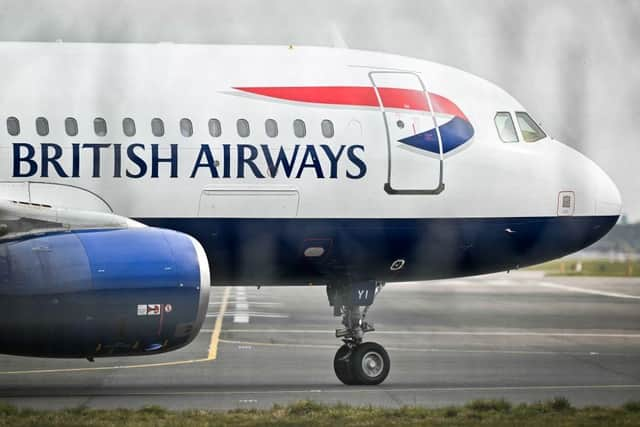
Passengers flying with British Airways suffered repeated baggage-handling problems at Heathrow Airport during 2026.
A major breakdown in May reportedly left around 20,000 pieces of luggage separated from their owners, following earlier problems affecting thousands more bags during busy holiday periods.
British Airways was reported to be seeking up to £10 million in compensation from Heathrow following three significant baggage system failures during the year.
Passengers faced delays in recovering their belongings, with the disruption continuing after flights themselves had departed.
Heathrow apologised and said its baggage systems had returned to normal operation.
The problems highlighted how airports depend on complicated, interconnected computer-controlled systems to keep passengers and their luggage moving.
NHS medical supplies disrupted by cyberattacks – March and August
Technology failures have also had potentially serious consequences for healthcare.
In March, medical technology company Stryker suffered a cyberattack that disrupted its global computer networks, affecting production, distribution and shipping.
NHS England issued warnings to hospitals about the potential impact on supplies of medical equipment and consumables.
A separate cyberattack involving Boston Scientific in August caused network outages and difficulties processing and delivering orders.
NHS Supply Chain subsequently warned that although manufacturing had resumed at most facilities, backlogs remained at the company's European distribution centre.
Neither incident was simply a website going offline. Both demonstrated how cyberattacks on suppliers can affect the availability of essential physical products.
What the technology failures of 2026 have revealed so far
Although these incidents have different causes, ranging from criminal hacking and software defects to electricity failures, they expose a common vulnerability.
Businesses and essential services increasingly depend on interconnected technology, often supplied by a relatively small number of companies.
A failure at a cloud provider can prevent customers accessing their money. A problem with a payments processor can leave supermarket tills unable to accept cards. And an error in an air traffic control computer can disrupt travel across an entire country.
The October Google Cloud outage has also raised questions about the financial industry's dependence on major technology suppliers and the resilience of services used by millions of customers.
With the final months of 2026 still ahead, the incidents so far have demonstrated that even the biggest and best-known brands can be vulnerable when the technology supporting their everyday operations stops working.