
Bank windfall tax: UK bank shares fall as City fears Rachel Reeves budget tax raid

UK bank shares have dropped after an influential think tank said Rachel Reeves could raise billions by imposing a windfall tax on lenders.
Following a recommendation from an influential think tank for a windfall tax on banks to raise billions of pounds for the public purse, share prices have fallen. City traders were reacting to a report from the Institute for Public Policy Research (IPPR) which raised fears banks could be targeted at Chancellor Rachel Reeves’ upcoming autumn budget.
NatWest and Lloyds share prices have tumbled by more than 4%, and Barclays was dropping by more than 3% on Friday morning, leading the biggest fallers on the UK’s FTSE 100. HSBC and Standard Chartered shares were down by about 1.5%.
The IPPR said Ms Reeves should tax bank windfalls to recover taxpayer money spent on compensating losses from the Bank of England’s cash-printing drive. Hiking a levy on the profits of British banking giants could raise up to £8 billion a year for public services, the IPPR said.
The think tank argued the UK is an international outlier in having its Treasury pay for central Bank losses on its bond-buying quantitative easing (QE) programme.
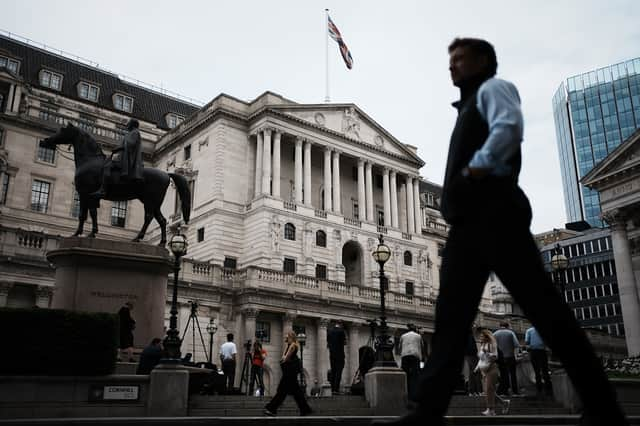

Russ Mould, investment director for AJ Bell, said: “It’s hardly a surprise that every cushion is being upended in the hunt for extra cash to fill the much-discussed black hole in the Treasury’s finances. The issue is whether taxing the banks more will end up stifling the very growth the Government is keen to foster, by crimping lending to businesses and households alike.
“The banks will undoubtedly argue as such, and shareholders may not want to see any such raid either. The wider public may see it differently, given how HSBC, Barclays, NatWest and Lloyds are expected to earn some £44 billion between them worldwide in 2025, their third-best year ever, after 2023 and 2024.”
After a period of making profits on the QE programme, the Bank of England is facing record losses, estimated to cost the taxpayer £22 billion a year, as interest rates have risen since 2021, the IPPR warned.
This money is then partly being funnelled to bank shareholders due to a “flawed” policy design, boosting profits while millions across Britain continue to face cost-of-living pressures, the report said. It recommended the Treasury introduce a “QE reserves income levy”, similar to the 2.5% deposit tax imposed on banks under Margaret Thatcher in 1981, to rebalance the existing set-up.
The bosses of Britain’s biggest banks recently spoke out to caution the Chancellor against hiking taxes for banks in her autumn budget. Lloyds chief executive Charlie Nunn said efforts to boost the economy and foster a strong financial services sector “wouldn’t be consistent with tax rises”. Barclays chief executive CS Venkatakrishnan echoed Mr Nunn’s remarks by saying banks were already “among the biggest tax payers in the country” and were an important sector to help drive the Government’s pro-growth aims.
Carsten Jung, the IPPR’s associate director for economic policy and a former Bank of England economist, said the central bank and Treasury had “bungled” the implementation of QE.
“What started as a programme to boost the economy is now a massive drain on taxpayer money,” he said. “While families struggle with rising costs, the Government is effectively writing multibillion-pound cheques to bank shareholders.”