
Proposed changes to NPPF: Default approvals for homes near rail stations and high-rise developments in towns and cities

Housing Secretary Steve Reed has announced new planning rules which will make it easier to build on greenbelt land.
Following changes to the National Planning Policy Framework (NPPF) which came into effect in December, further changes to planning rules have been revealed in a bid to speed up the delivery of new housing, the Government announced. In what has been described as the most significant overhaul of planning requirements for more than a decade, the changes are set to pave the way for increased development on greenbelt land in certain circumstances.
Proposed changes to the NPPF include default approvals for homes around rail stations and high-rise developments in towns and cities, with high-quality designs for eco-friendly homes fast-tracked. Housing Secretary Steve Reed said: “Right now we see a planning system that still isn’t working well enough. A system saying ‘no’ more often than it says ‘yes’ and that favours obstructing instead of building.
“It has real-world consequences for those aspiring to own a home of their own and those hoping to escape so-called temporary accommodation. We owe it to the people of this country to do everything within our power to build the homes they deserve.
“We’ve already laid the groundwork to get Britain building but our planning overhaul was only the first step to fix the housing crisis we face. And today I’m going further than ever before to hit 1.5 million homes and place the key to homeownership into the hands of thousands more hard-working people and families.”
Under the new policy, railway stations will be classified as ‘well-connected’ based on the number of train services available and the economic performance of the area. Development within a 15-minute walk of the station will then be permissible, even if it is within the greenbelt, with the only requirement being a minimum density of 50 dwellings per hectare.
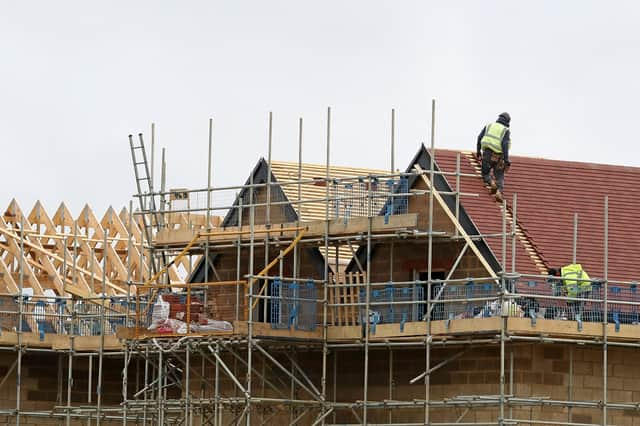

This “default yes” approach will apply near stations “within existing settlements and around well-connected stations outside settlements”, housing minister Matthew Pennycook told the Commons. He said the move was part of a “targeted series of changes to drive urban and suburban densification, including through the redevelopment corner and other low-density plots, upward extensions, infill development and residential curtilages”.
The Government is seeking to make it easier for developers to build higher density housing on smaller sites and underused land. The aim is also to streamline standards on energy efficiency and other requirements to provide greater clarity for housebuilders, while developments which support local businesses, improve town centres or boost shops, restaurants and leisure facilities will be given preferential treatment.
In addition, the changes seek to give certainty for developers so they can provide housing for various groups, including the elderly and those with disabilities. Mr Pennycook admitted “progress” towards meeting Labour’s manifesto pledge, to build 1.5 million new homes by the end of this Parliament, had been “slow”.
He told MPs: “Progress towards that ambitious 1.5 million new homes target was always going to be slow in the early years of this Parliament. After all, the Government inherited a housing market downturn exacerbated by the conscious and deliberate decisions of ministers in the previous Conservative government to make a series of anti-supply changes to national planning policy, including the abolition of mandatory housing targets.”
Conservative shadow housing minister Gareth Bacon labelled the Government’s housebuilding record “dreadful”, adding it would take seven years to meet the manifesto commitment.
“In London under their abysmal mayor (Sir Sadiq Khan), for the last decade Labour have conspicuously failed to build the right amount of housing and now they are going to fail to build the right kind of housing in the right places in the rest of England, clearly preferring to target building in rural areas, while not building in the cities and urban areas where demand is highest and much of the necessary infrastructure already exists,” Mr Bacon said.
Mr Pennycook replied: “Building on our brownfield passports this will mean in practice that the development of suitable urban land will be acceptable by default. That is a doubling down of a brownfield-first approach.”
In a statement, Chancellor Rachel Reeves said: “For too long our economy has been held back by a housing system that slows growth, frustrates business, and prices the next generation out of a secure home.
“These reforms back the builders not the blockers, unlock investment and make it easier to build the 1.5 million new homes across every region – rebuilding the foundations of our economy and making affordable homes a reality for working people once again.”
The Ministry for Housing, Communities and Local Government said the measures will “pave the way for a clearer, rules-based system which means ticking the right boxes will bring communities, councils and builders together to turn plans on paper into spades and cranes, as part of the fundamental rewrite of national policy in over a decade”.
“And to help make sure these new decision-making policies make a difference quickly, the Government is proposing that they effectively override conflicting local policies from day one,” it added.