
Who are the Waspi women? Calls for pension compensation explained

A glimmer of hope has been given to thousands of women who feel they have been cheated out of some of their state pension - as the government says it will look again at a decision not to offer compensation.
An document from 2007 has been re-discovered as part of court proceedings - it is a Department for Work and Pensions evaluation which had led to officials stopping sending automatic pension forecast letters out.
The Waspi women will see it as strengthening their case that women born in the 1950s, who were due to retire in the 2010s, were not told sufficiently clearly about the increase in the female retirement age from 60 to 65 and then 66.
Last year the government ruled out compensation - estimated at just under £3,000 per woman affected, which could have cost £10bn in total.
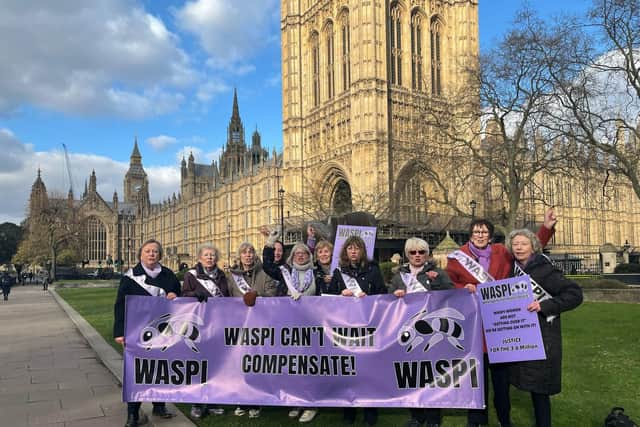

Who are Waspi women?
"Waspi" stands for Women Against State Pension Inequality, and refers to a group of women in the UK who were born in the 1950s and have been adversely affected by changes to the state pension age.
The issue revolves around changes made to the state pension age for women, which were implemented by the UK government with the aim of equalising the pension age between men and women.
Historically, the state pension age for women in the UK was 60, while for men it was 65. However, changes introduced by successive governments, starting in 1995 with the Pension Act, aimed to gradually increase the state pension age for women to bring it in line with that of men.
These changes were further accelerated by the Pensions Act 2011, resulting in a significant increase in the state pension age for many women born in the 1950s.
One of the key grievances of Waspi women is that they were not given sufficient notice of these changes, leaving many of them with inadequate time to plan and prepare for their retirement.
The changes were implemented with relatively short notice, often just a few years before the affected women were due to retire, leaving them with significantly reduced incomes during what they had expected to be their retirement years.
Many of these women had expected to retire at the age of 60, based on the previous state pension age, and had made financial decisions accordingly.
For many, the sudden increase in the state pension age meant having to continue working for longer than planned, often in physically demanding jobs that they may have struggled to continue with as they got older.
Others have been forced to rely on alternative sources of income, such as savings or private pensions, which may not be sufficient to maintain their standard of living in retirement.
Despite this, the UK government has so far resisted calls to provide compensation or transitional arrangements for affected women, arguing that the changes were necessary to ensure the long-term sustainability of the state pension system.