
Shocking footage shows surfer coming face to face with great white shark off Santa Barbara coast

A video of a surfer coming face to face with eight-foot great white shark has emerged as juveniles gather in warm shallow water.
It's every water-goer's worst nightmare - coming face to face with a great white shark. But in a scene reminiscent of sea-bound thriller, Jaws, that was exactly what happened to one surfer.
An eight-foot great white was caught on drone footage passing within yards of a surfer off the coast of Santa Barbara, in the US, on June 30. The juvenile predator was captured swimming off the California coast by 45-year-old Carlos Gauna but, despite immediate thoughts of Spielberg's movie coming to mind, experts say swimmers are unlikely to fall victim to the sharks.
Juveniles like the one captured on camera belong to a unique coastal population that prefers warm, shallow waters — known as nursery habitats — where the young sharks find food and relative safety from larger predators.
"That was another young juvenile white shark that was near shore," said photographer Carlos, of Ventura County. “What often happens is surfers, sometimes we'll see a dorsal fin and, as backwards as that may seem, they'll paddle over to the shark and take a closer look.”
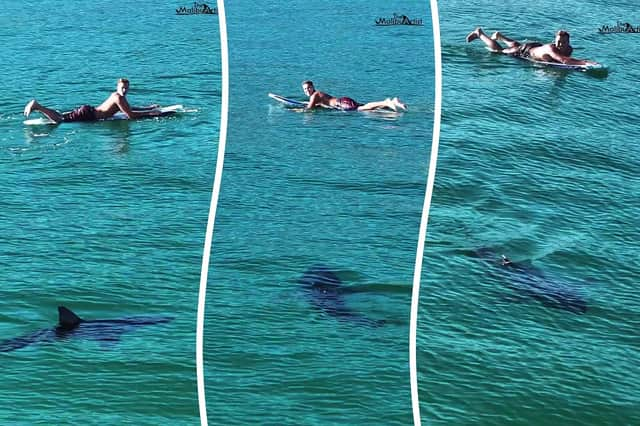

Juvenile white sharks, ranging from six to 10 feet long, are still developing their hunting skills and typically do not target large prey. “These are juvenile white sharks that don't necessarily pose a significant threat to a surfer because they don't go after large prey at this point in their life,” Gauna said. “So even as juveniles, it's a big fish. I mean, eight feet is a juvenile, and it’s still a big fish.”
Marine experts said the sharks frequent near-shore nursery areas along the central California coast, especially near Santa Barbara. And despite their relatively small size and reluctance to confront larger prey, experts caution against approaching or provoking juvenile sharks.
“If you ever find yourself in a situation where you'd see whether it's a juvenile shark or a large adult white shark, just give it space,” Gauna said. Eventually, it’ll figure out what you are and probably go on its own way. Don't chase it and just let it be.”
Populations of such sharks are monitored carefully, as white sharks take over a decade to fully mature and have relatively low reproduction rates, making them vulnerable to overfishing and environmental changes.
“It’s important to give these sharks the space they need,” Gauna said. “They’re a big part of the coastal ecosystem and deserve our respect.”