
What time is the 'blood moon' lunar eclipse tonight? Why the moon will look red this evening

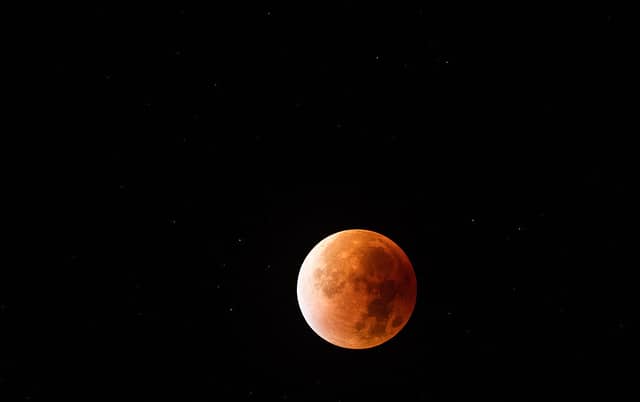

A total lunar eclipse will turn the full moon a deep red in the UK this evening.
Tonight (Sunday, September 7), people right across the world will experience a “blood moon” during the lunar eclipse.
A lunar eclipse occurs when Earth sits directly between the sun and the moon, casting its shadow across the lunar surface. The last total lunar eclipse visible from the UK was in 2022, making tonight’s moon a rarity.
Here’s everything you need to know about tonight’s “blood moon”, including what time it’s happening, how to see it and why the moon will be red.
What time is the lunar eclipse?
The full eclipse begins at 6.30pm and will last until just before 8pm, but visibility depends on when the moon rises in your area.
Eastern England will get the best view - Norwich sees moonrise at 7.25pm. Western Wales and Cornwall will only catch a minute or two, while Northern Ireland and western Scotland could miss it entirely.
Alongside the UK, people in Africa, the Middle East, parts of Asia and Australia will also be able to see the blood moon.
How can I see the blood moon?
Find a spot with a clear view of the horizon before moonrise. In cities, that likely means a hill or open vantage point.
Binoculars or a telescope enhance the view, but the eclipse is safe to watch with the naked eye - unlike a solar eclipse, there’s no risk to your vision. Make sure you check the weather for cloud cover in your area.
Dr Edward Bloomer of the Royal Observatory Greenwich said: “In the UK we won't get to see perhaps the most dramatic reddening that you get with lunar eclipses - and most people will have to wait another 10 to 20 minutes after moonrise for it to clear the horizon.
“But it's worth watching because you get to see the mechanics of the solar system at play.”
The next chance to see a total lunar eclipse from the UK will be on 28 August 2026.
Why is the blood moon red?
The red glow that makes tonight a “blood moon” comes from sunlight filtered through Earth’s atmosphere. Shorter blue light scatters, leaving red light to paint the moon.
Dr Bloomer added: “Throughout history, people thought of it as a bad omen.
“But really, it's just the refraction of light through Earth's atmosphere - the same effect that gives us red sunsets.”