
Polar vortex stratospheric warming could bring severe cold snap and heavy snow to UK

A severe cold snap bringing heavy snowfall is predicted caused by polar vortex stratospheric warming - here’s what it means.
A polar vortex stratospheric warming event has sparked alarm among weather forecasters - as it could mean a severe cold snap across the globe, including in the UK. The event could see the UK hit by freezing temperatures, some warn, with the Mercury dropping to -7C and heavy snow hitting.
As heavy rain batters the UK tonight (November 11), temperatures are set to remain mild through this week, before taking a sharp dip during the second half of the month.
Starting this weekend, high pressure is set to take over - bringing icy winds from the Arctic - caused by a disruption to the polar vortex. The early incident - known as a Sudden Stratospheric Warming Event - has taken forecasters by surprise.
A polar vortex is, broadly, a swirling mass of very cold air that sits above the Earth's poles. As it weakens, it allows icy Arctic air to sweep southwards, with sudden stratospheric warming where winds change direction or slow down - often resulting in heavy snowfall amid fast-falling temperatures - as happened during the infamous Beast from the East disruption in 2018 which saw the UK endure large amounts of snowfall.
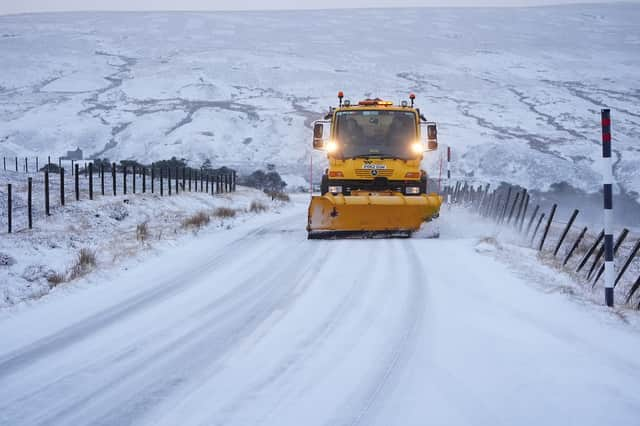

Weather site WXCharts shows freezing temperatures could start as early as the start of next week, dropping to -7C in Scotland, -3C in northern England and -2C in the south by Wednesday. And as the cold air meets moisture coming from the Atlantic, experts predict it could result in snow across the UK.
The Met Office said stratospheric warming occurs each year, but not always 'suddenly', with forecasters saying: "In recent years some extreme cold, winter snow events have all been connected to the surface effects of sudden stratospheric warmings, such as those in 2009-10, 2013, and ‘the beast from the east’ in 2018.
"The term sudden stratospheric warming refers to what is observed in the stratosphere: a rapid warming (up to about 50C in just a couple of days), between 10km and 50km above the earth’s surface.
"This is so high up that we don’t feel the ‘warming’ ourselves. However, usually a few weeks later, we can start to see knock-on effects on the jet stream, which in turn effects our weather lower down (in the troposphere). However, the stratospheric sudden warming doesn’t happen every year, and it doesn’t always affect our weather when it does."
But sudden events are different, the Met Office added, saying: "In some years, the winds in the polar vortex temporarily weaken, or even reverse to flow from east to west. The cold air then descends very rapidly in the polar vortex and this causes the temperature in the stratosphere to rise very rapidly, as much as 50C over only a few days; hence the term sudden stratospheric warming.
"As the cold air from high up in the stratosphere disperses, it can affect the shape of the jet stream as the cold air sinks from the stratosphere into the troposphere. It is this change in the jet stream that causes our weather to change."
Experts said sudden events can create a large area of "blocking high pressure", typically over the North Atlantic and Scandinavia, and bringing "a long spell of dry, cold weather" to the UK.
"On the boundary of these areas, cold easterly winds develop and in some cases the drop in temperatures leads to snow, which is what happened in early 2018," they added.