
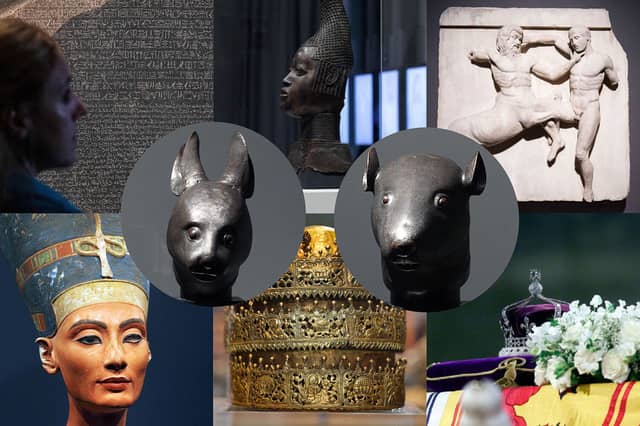


British Museum Chairman George Osborne has reportedly drawn up an agreement with Athens as part of a “cultural exchange” to return the Elgin Marbles. According to The Telegraph, the former Conservative Party chancellor is reportedly seeking to repatriate the antiquities back to Greece.
It comes after the Government rejected Tory peer Lord Vaizey of Didcot’s call for a law change to make it easier for UK museums to deal with restitution requests, as current legislation prevents treasures from being legally given away by the museum. However, the loan deal will not end the long-running dispute over the 17 sculptures and part of a frieze that decorated the 2,500-year-old Parthenon temple at the Acropolis.
Lord Elgin - Thomas Bruce - after whom the marbles have been named, was the British ambassador to the Ottoman Empire between 1799 and 1803. He petitioned the authorities to be able to draw, measure and remove the marbles.
Greek prime minister Kyriakos Mitsotakis has called for the marbles to be returned to Greece on many occasions, even offering to loan some of his country’s other treasures to the British Museum in exchange. In December 2022, the museum said in a statement it had “publicly called for a new Parthenon Partnership with Greece” and would “talk to anyone, including the Greek government about how to take that forward”. In December, Germany returned artefacts to Nigeria, in a similar agreement.
But what other antiquities are disputed? Here’s some of the items wanted back by countries:
Read more:
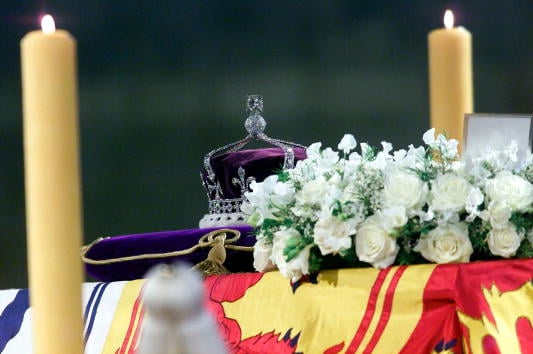
9. Koh-i-noor diamond
The Koh-i-noor, which is in one of Britain’s crowns, weighs around 105.6 carats, and is thought to have been discovered in southern India in the 1300s, however, it has been contested that it was looted during colonial times. It is currently sitting at the top of the Queen Mother’s crown, which was first made in 1937 for her coronation as King George VI’s Queen consort. It is currently on display in the Queen Mother’s crown in the Jewel House at the Tower of London. After Queen Elizabeth II’s death in 2022, the question of it being returned to India was raised again. | Getty Images
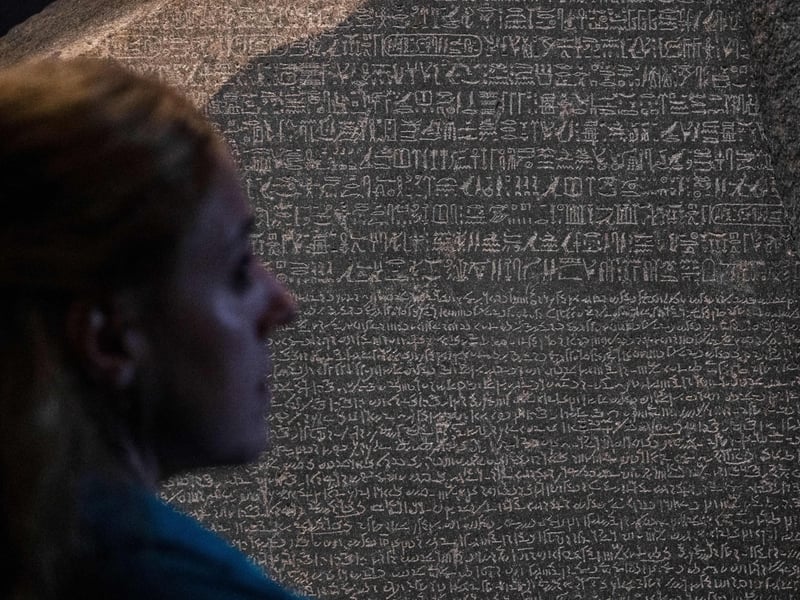
10. The Rosetta Stone
The inscriptions on the dark grey granite slab, the text of a decree in three languages, were the seminal breakthrough in deciphering ancient Egyptian hieroglyphics. The “confiscation” of the relic came during imperial battles between Britain and France. The Rosetta Stone was rediscovered by the French in 1799 in the town of Rashid, but was transferred to British possession after the Capitulation of Alexandria in 1801. Officials from Egypt have been requesting the stone be given back to its country of origin ever since. In November 2010, Hawass told NPR that he was fighting to have the Rosetta Stone returned to Egypt from the British Museum. | AFP via Getty Images
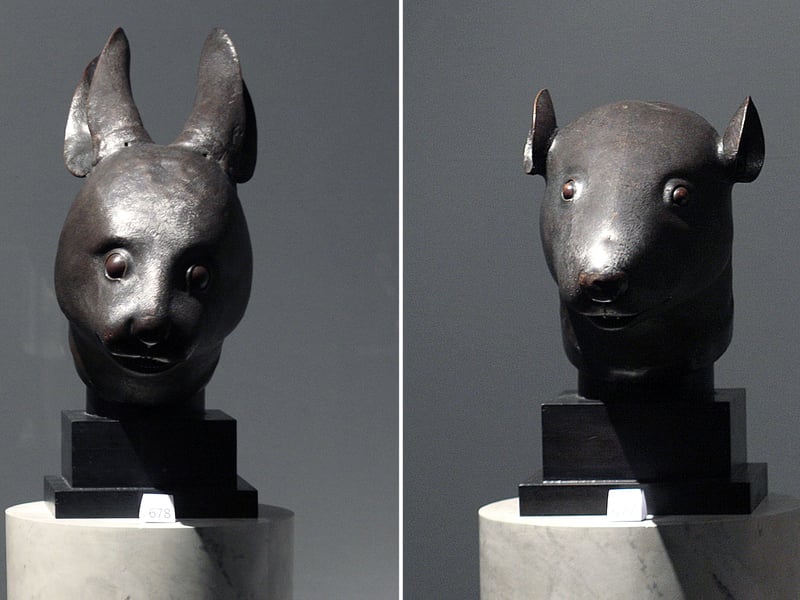
11. Chinese Bronzes
Renowned auction house Christie’s ignored protests from Beijing, and sold off a pair of bronze rat and rabbit heads which were stolen by French and British troops from the Old Summer Palace in 1860. As a result, Chinese authorities have slapped strict checks on all future imports and exports by Christie’s, making it potentially more difficult to source top relics. “This will have a serious impact on Christie’s development in China,” the State Administration of Cultural Heritage said in a statement at the time, according to the official China Daily newspaper. Chinese art dealer Cai Mingchao submitted the massive $40 million bid which he then withdrew to protest the sale of the heads, which many Chinese see as unfairly torn from their cultural patrimony. | AFP via Getty Images