
World's oldest P45? 200-year-old roof tile reveals bizarre message firing employee called John Lewis

Forget an awkward meeting with HR – one unfortunate worker appears to have been given his marching orders in a message scratched onto a roof tile 200 years ago.
A bizarre 200-year-old message scratched onto a roof tile could be the world's oldest P45 – after revealing how one unfortunate worker was given his marching orders.
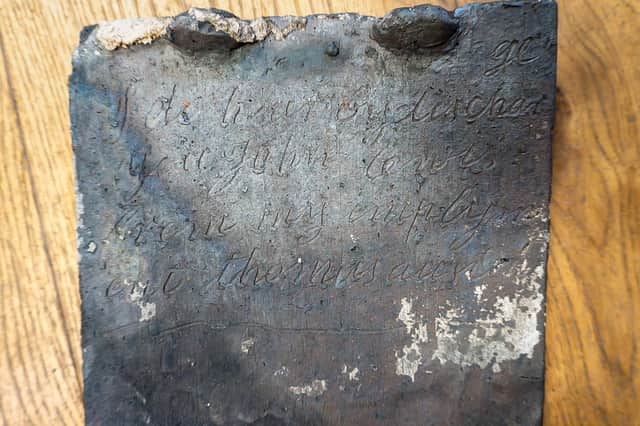

The extraordinary discovery appears to show a furious boss called Thomas Austin sacking an employee named John Lewis in the early 19th century. And rather than handing him a letter, the employer apparently chose to immortalise the dismissal on a handmade clay tile.
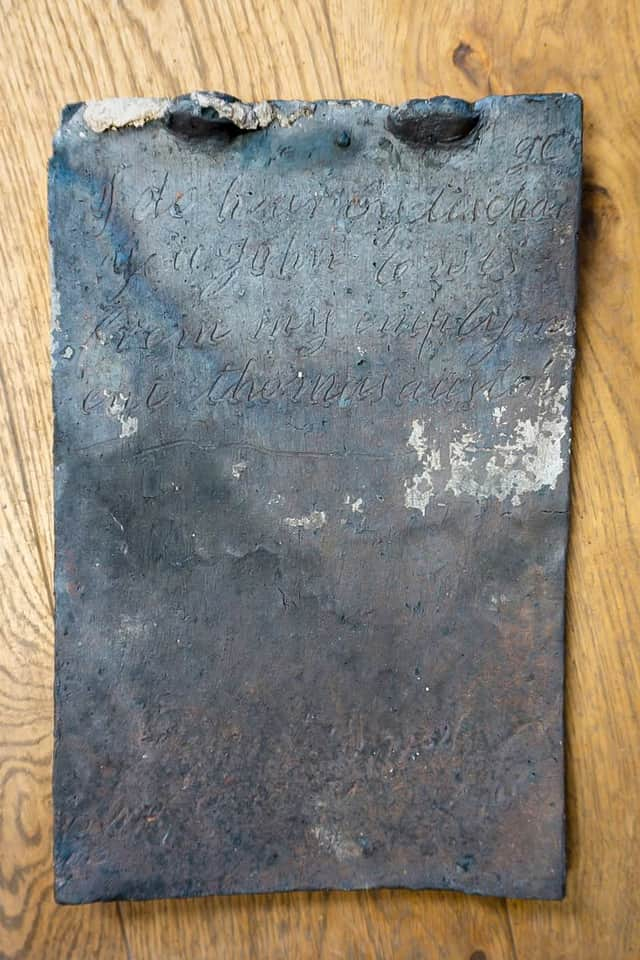
The remarkable Staffordshire Blue roof tile was discovered by a worker sorting through old stock at Cawarden Reclaim, a building materials reclamation yard in Rugeley, Staffordshire. Its elaborate handwritten message reads: "I do hereby discharge you, John Lewis, from my employment, Thomas Austin." The words were scratched into the soft clay before the tile was fired, preserving the extraordinary workplace fallout for around two centuries.
Chairman Richard Parrott, 63, said staff were stunned when the unusual artefact was brought into the office. He said: "We've been going for 40 years and I've never come across anything like this before – a 19th century P45!"

After investigating its origins, the team uncovered a possible clue to the identity of the mysterious boss. Historical records show a Thomas Austin was operating as a brick and tile maker at Clay Hills in Stoke-on-Trent in 1820. Workers believe the tile may have come from a former farm site where new homes are now being built.
Exactly why Austin dismissed Lewis – and why he decided to write the message on a roof tile – remains a mystery. Richard joked that employment practices had improved considerably since those days. He said: "Things have definitely moved on since then, probably for the better. It shows that industrial relations have improved tremendously!"
The inscription survived because it was hidden underneath the roof, protected from the worst of the weather for generations. The company has discovered other unusual historical treasures over the years, including centuries-old fingerprints, animal paw prints and tiny hobnail shoe marks possibly left by a seven-year-old child.
Richard now plans to put the fascinating finds on display in a special 'Wall of Interest' at the showroom, which is expected to open to visitors in January.