
I grew up in a Christian cult. I was just four when they took me away from my parents and broke me

This article contains affiliate links. We may earn a small commission on items purchased through this article, but that does not affect our editorial judgement.
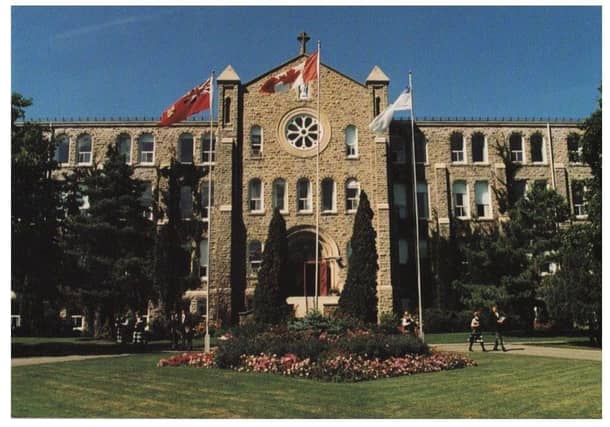
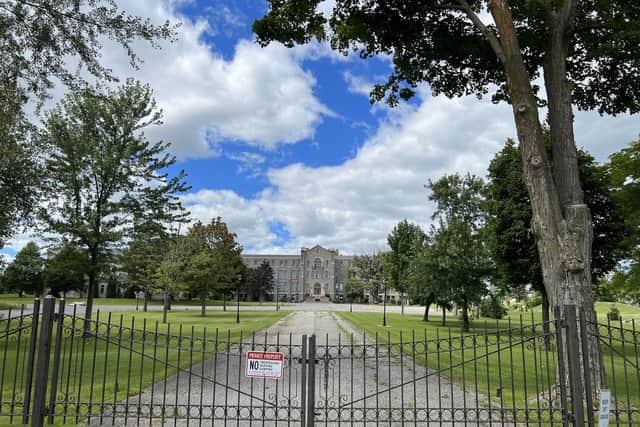
Grenville Christian College was beautiful from the outside and its inhabitants were the envy of many.
The private boarding school was set in immaculate grounds. It achieved excellent exam results and its facilities were second-to-none.
But behind the wrought iron gates, children were emotionally, spiritually and physically abused and ritually humiliated by adults that were supposed to be caring for them.
In the beginning, Beth Granger’s father was the high school principal and her mother, a French teacher.
She has chosen not to name them. Beth had two older brothers, Dan and Garth and her early years were spent happily with her family and beloved dog Linus.
She has fond memories of swimming in the St Lawrence River next to the Ontario school.
But life as Beth knew it ended when she was four and new leadership was brought into the school.
Under their influence, the staff were expected to attend regular secret group meetings, the atmosphere of the school darkened and her parents seemed to change overnight.
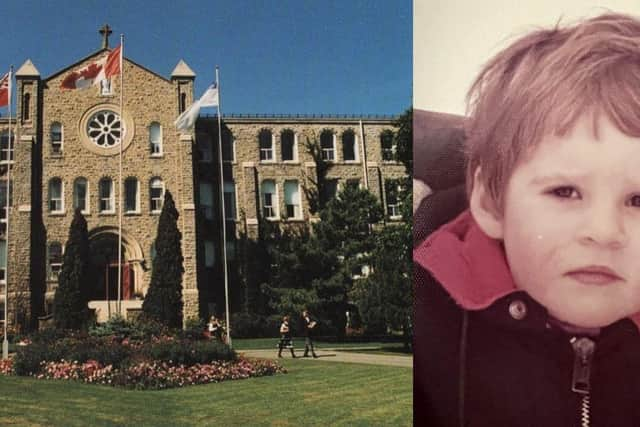
‘There was an air of heaviness about them, as if they were wilting, their confidence and vitality diminishing’, Beth, now 55, remembers.
Then, her family was torn apart.
Staff lived on the grounds of the college in trailers, but some families were split up and moved around.
Beth - just four at the time - was sent to live in a dorm with two other members of staff and their two daughters.
She was instructed not to talk to her parents - who were placed in a room on the floor below - and told that she was with her new family for now.
Beth, from Ontario, finds it hard to remember the pain of being separated even 50 years on.
‘I just felt completely bereft. I felt lost and abandoned and just so confused, because not all the staff kids were separated. So I saw the unfairness of it, and I was living with a family with two daughters my age, and they were allowed to stay with their parents,’ she tells Cover Media.
For the rest of her childhood and teenage years, Beth would be bounced around between different families with the explanation that her parents were ‘sinful’.
‘My parents were told that their main sin was that they were idolatrous, which I took to mean that it was a sin to love me. And that is hard to take’, she remembers, tearful still today.
‘For years I was passed around like some unwanted pet. Parented by everyone and no one. I never felt safe. Or loved,’ she explains.
As the new leadership’s regime set in, staff members and their children were regularly publicly humiliated for their myriad crimes against God as part of rituals known as ‘light sessions’ - because the leaders were letting in the light.
‘Everyone was subjected to light sessions, in which adults were expected to publicly berate and humiliate each other. They would gang up on a person in the hot seat and torment them until that person broke down. If someone resisted or refused to agree with the condemnation, the heat would be turned up. Being yelled at was a best-case scenario. Sometimes glasses of water were thrown in faces, or people were slapped, or even spanked in front of others,’ Beth explains.
In one session all the women were forced to have their long hair cut short, in another a staff member was told to spend an entire week in silence. Then Beth became a target.
At the age of five she was told she was too fat and ‘full of sin'; she was put on a diet and was denied seconds or desserts.
Then, when she was eight, Beth was permitted to return to her family when her mother was pregnant with her third son, Robby.
Beth fell deeply in love with baby Robby, caring for him, feeding him and changing his nappies.
But when he was six months old, her mum and Robby were sent away to the church’s headquarters in Cape Cod with a heartbroken Beth left behind.
They didn’t return until he was three years old. Beth was permitted to live with her family again in a trailer, but after a year, Dan, Garth and Beth were moved away again. She was passed from pillar to post until adulthood.
The school days at Grenville were jam-packed. School started at 6.30am and ended at 10.30pm.
When they weren’t in lessons or church, staff kids were expected to do menial work.
‘I can picture us spread out in a long line across the sprawling front lawns, looking for litter. We’d pick up random bottles, sticks and cigarette butts… The chores seemed endless’, she writes in her memoir.
Beth tried to be the model student and worked as hard as she could to fly under the radar, but she was constantly berated by her elders. She was accused of being haughty, rebellious and disrespectful.
The first time she was put on ‘Discipline’ it was due to her ‘bad attitude’.
Discipline meant students couldn’t talk, socialise or even make eye contact with each other. They were put in work clothes, forbidden from classes and study time and instead, laboured from dawn to dusk doing dirty work around the school, usually indefinitely. The experience made Beth, who was then just 11 years old, feel sick with fear.
One vile task involved her climbing inside industrial bins and cleaning them out. On another occasion she was put on 29 days of the discipline regime.
‘I was treated like a criminal and made to believe I deserved nothing better’, she remembers.
As the children grew older they were lambasted for their normal, changing bodies. If a boy looked at a girl, the girl was blamed for being a 'jezebel’ or a ‘whore’.
Teens were told to ‘plead with Jesus’ to cleanse their contaminated minds and Beth was criticised for eating too much, talking to a boy, doing too well at school or befriending other students.
The constant remarks about her weight left her starving herself. She skipped meals and lived off coffee until she was anaemic and dangerously thin. She exercised obsessively and started to run out of energy and her periods stopped.
Then she was accused of being ‘too concerned’ about her looks, ‘self centred and preoccupied with her body’ and was put on a force-feeding regime. She then veered into binge eating and bulimia, a disorder that followed her throughout her adult life.
Throughout her teens the abuse, control and humiliation continued; she was grilled about masturbation, was told she was going to hell, and regularly disciplined.
At 16 she was expelled and sent to headquarters in the United States indefinitely until she had ‘changed’. She lived like a slave for 7 months; doing 12-hour days of unpaid housework, unable to contact family or friends, subjected to multiple daily light sessions and was denied any education.
Despite all this, Beth never realised there was an alternative life. Constantly being told she was ‘going to hell’ if she didn’t comply, she blindly followed orders, even becoming a staff member herself when she graduated.
‘Even when I was 25 they stripped us of our dignity. We weren't allowed showers or baths or makeup or hair products or any clothing other than two outfits. They tried to break us down. Everywhere you turned you were not acceptable, unless you were drowning in shame or unless your spirits were broken,’ she says.
In her twenties she fell for another staff member named Mark who had asked her out, but the pair were not permitted to spend any time alone and their relationship was picked apart by elders. They drifted apart and she learned a decade later that he had died by suicide.
It wasn’t until she handed in her notice and left the college when she was 31 that she realised another life was possible. But even then, she didn’t realise how badly she’d been treated.
‘Even when I left, I didn’t think the school was wrong or abusive. I thought I was the wrong one. I was the one who was too rebellious to honour my lifetime vows. I left feeling like a failure. But when the school went bankrupt six years later, it was like a dam broke, and everyone met on this online forum and there were thousands of posts about what people had been through. People were still hurting and struggling and really falling apart. I just felt huge sorrow and anger,’ she explains.
She has since learned of at least eight former-Grenville students who have died by suicide. Beth was diagnosed with complex PTSD after she left, a condition that she is still learning to manage. For almost a decade, she was prescribed benzodiazepines to manage her anxiety, which left her with serious memory fog. She came off them in 2019 but has been unable to work ever since and still suffers effects of protracted withdrawal
A class action lawsuit was launched in 2008 on behalf of former students at the school and Beth chose to be a representative plaintiff.
In 2021 the Ontario Court of Appeal confirmed that the college used practices and policies which amounted to child abuse. A settlement reached in 2023 found that Grenville Christian College created an environment of control, intimidation and humiliation that fostered and inflicted enduring harms on its students. The students are now awaiting compensation.
‘I am healing every day. But I am still coming to terms with the depth of the damage that happens when you separate a child from their parents. I normalised it so I didn't understand how deeply it affected me. I have felt a deep emptiness and there is a distance between me and my parents now even when I am around them. It does still affect me to this day,’ she adds.
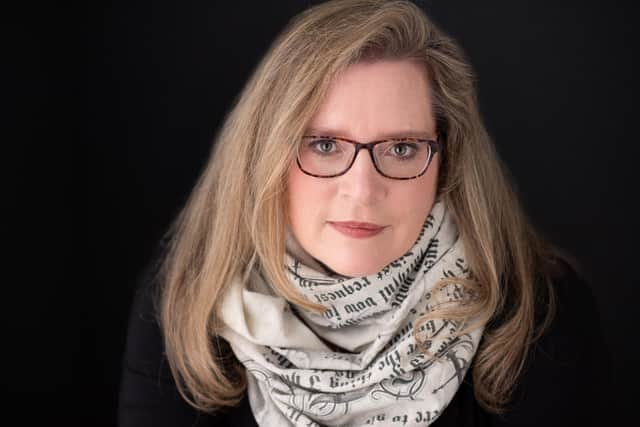
Beth is author of Born and Razed: Surviving The Cult Was Only Half The Battle
https://amzn.eu/d/5khQN5C