
Philips Sonicare 4100 review: simple, effective and easy to recommend


This article contains affiliate links. We may earn a small commission on items purchased through this article, but that does not affect our editorial judgement.
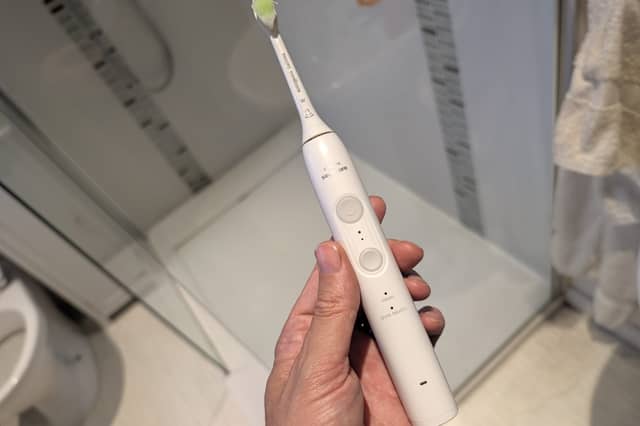
The Philips Sonicare 4100 skips apps and flashy screens in favour of strong cleaning, useful pressure feedback and excellent battery life. It’s a refreshingly simple electric toothbrush that gets the important bits right.
Electric toothbrushes have become surprisingly sophisticated things. You can now buy models with colour screens, Bluetooth, smartphone apps, and enough brushing statistics to turn cleaning your teeth into a competitive sport.
The Philips Sonicare 4100 takes a different approach, though. It sits towards the more affordable end of the Philips range and concentrates on the things that actually matter: a powerful cleaning action, pressure monitoring, sensible brushing modes, and a battery that should comfortably survive a holiday without its charger.
The current model costs £94.99 direct from Philips, but if you've ever been shopping for an electric toothbrush, you'll know discounts are common. In fact, at this moment, the black version is discounted to £45.39 on the Philips website. The general rule is you should never pay the RRP for a toothbrush.
But I digress. The Sonicare 4100 uses the company's familiar sonic system, producing 31,000 bristle movements to help shift plaque from around and between your teeth.
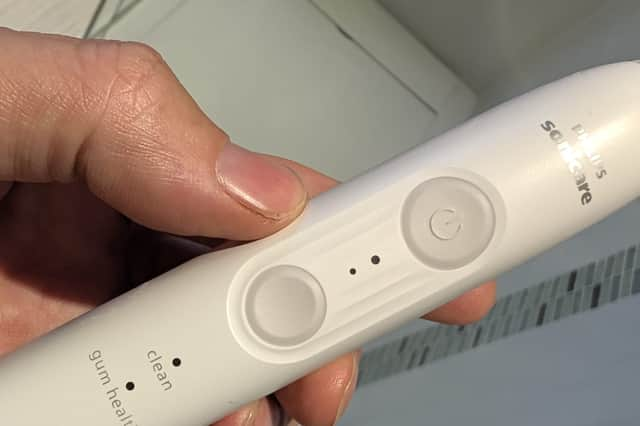
You get four brushing combinations, made up of two cleaning modes and two intensity levels, a two-minute timer, 30-second pacing reminders and an Easy Start feature designed to ease newcomers into electric brushing gradually.
It's hardly the most exciting gadget I've tested, then, but perhaps that's rather the point.
What I liked about the Philips Sonicare 4100
The simplicity is probably the biggest attraction. There isn't an app nagging you to improve your brushing score and there isn't a tiny screen or a camera trying to justify the price. You press the button, choose the setting you want and clean your teeth.
I particularly like the pressure sensor. Brushing harder doesn't necessarily mean brushing better, and it's very easy to get carried away with an electric toothbrush. If you start applying too much force, the Sonicare gives you haptic feedback to encourage you to back off.
Philips also gives you a choice of two intensities, and there's a clever Easy Start system, which gradually increases the power over your first 14 brushing sessions.
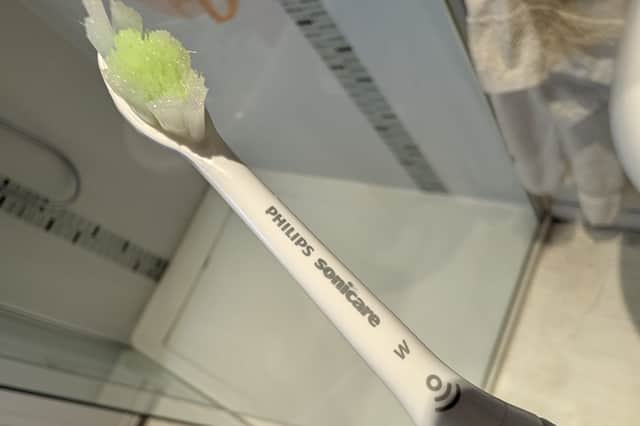
Then there's the cleaning system itself. Rather than having a circular head that rotates, the Sonicare uses a conventional-looking elongated brush head vibrating at very high speed.
Philips calls the effect Fluid Action, with the movement helping force toothpaste and saliva around the teeth and gumline as you brush.
The effect it quite startling at first, depending on which type of toothbrush you're accustomed to, but it's easy to get used to it, and it starts to feel natural and very effective very quickly.
The timer is another small feature that makes more difference than you'd expect. Every 30 seconds the brush gives you a prompt to move onto another area of your mouth, then lets you know when the recommended two minutes are up.
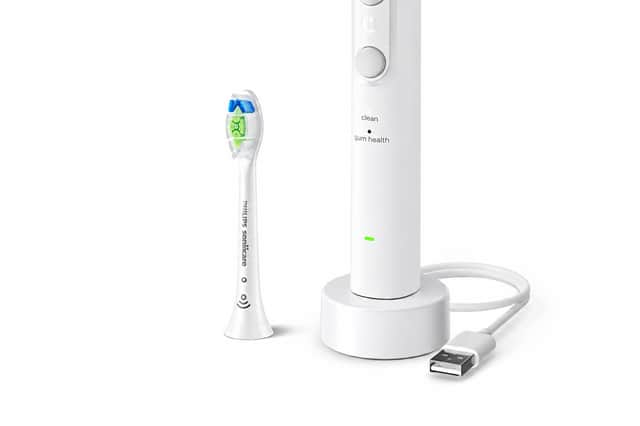
Battery life is excellent too. It's claimed you'll make it to three weeks between charges, and I've managed close to that. I also love the fact it chargers off USB, too. So much easier than having to find a shaver socket.
What I didn't like about the Philips Sonicare 4100
If you do happen to pay the full £94.99, or you're insistent on the non-discounted white version, this isn't an especially cheap toothbrush.
There are plenty of perfectly competent electric brushes available for considerably less, so you're paying a premium for the Sonicare system and Philips name even though the 4100 is one of the company's simpler models.
The lack of clever extras could also work against it depending on what you want.
There is no display, no smartphone coaching and none of the detailed tracking you'll find on some expensive electric toothbrushes. Personally, I'm not convinced I need an app to tell me I've brushed my teeth, but anyone moving down from a high-end smart model might find the 4100 rather basic.
You only get one brush head with the standard package too, and replacement Sonicare heads aren't particularly cheap.
And while four settings sounds generous, it's slightly less exciting when you realise you're essentially choosing between two brushing modes and two intensity levels.
That's probably plenty for most people, but rivals further up the market offer more specialised settings for things like whitening, sensitive teeth and tongue cleaning. Whether they actually do anything other than gimmickry and bragging rights is a different matter. But we'll brush over that for now.
Overall verdict - should you buy the Philips Sonicare 4100?
In an era where Dyson now offers a £420 toothbrush, the Philips Sonicare 4100 makes a very good argument that electric toothbrushes really don't need to be particularly clever.
It gives you the parts that matter: powerful sonic cleaning, a useful pressure sensor, two intensity levels, proper brushing timers and enough battery life that charging should rarely become a nuisance.
The Sonicare 4100 sits in a sensible middle ground, then. It's considerably more capable than the cheapest rechargeable brushes without straying into the increasingly ridiculous prices commanded by flagship models.
For anyone who simply wants a good electric toothbrush that will tell them when they're brushing too hard and then otherwise leave them alone, that makes it very easy to recommend.