
Is it safe to travel to Sicily? Latest Foreign Office advice after Mount Etna volcano erupts on Italian island and orange alert issued

Mount Etna has erupted in Sicily, the largest Mediterranean island.
Tourists ran down the mountainside on Monday morning as black clouds billowed into the sky from Europe’s tallest and most active volcano. It had been seeing some activity in the last few hours with volcanic tremors felt overnight. However, this has now escalated to continuous "explosions of growing intensity."
It saw pyroclastic flow, a deadly combination of burning ash and sulphur descend down the mountain. Italy’s National Institute of Geophysics and Volcanology said the eruption began around 3.50am local time, following volcanic tremors which began around midnight local time. The institute said eruption activity has continued since then with "increasing intensity" and were currently "almost continuous."
The Volcanic Ash Advisory Center Toulouse (VAAC), which monitors aviation risks, issued a brief ‘code red’ due to the eruption earlier today. This has since been downgraded to an orange alert. It means that pilots should exercise caution when flying near the area.
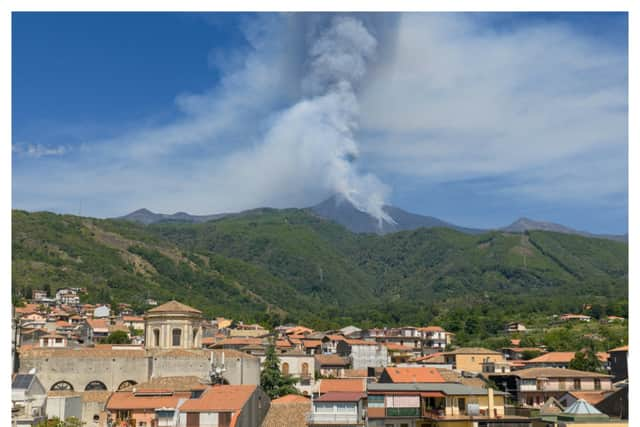

AccuWeather forecasts the ash cloud to drift southwest, potentially affecting air quality and visibility. Catania Airport, which sits at the foot of Mount Etna, remains fully operational. Departures are taking off on schedule but some arrivals have been delayed this afternoon.
The UK Foreign Office has not updated guidance on travel to Sicily. This means it is still safe to travel to the destination.
When eruptions occur, the airport usually advises passengers to check their flight status with their airline before leaving home, as the situation can change quickly depending on volcanic activity. According to Italian volcanologists, Mount Etna has been experiencing strombolian explosions of ‘growing intensity’. These explosions are typically moderate eruptions.