
Boeing 787 Dreamliner: United Airlines plane narrowly avoids crashing due to engine failure shortly after take-off - bringing more scrutiny after Air India crash

A Boeing 787 Dreamliner plane narrowly avoided crashing due to an engine failure shortly after take-off from Washington Dulles International Airport.
The incident occurred last Friday, 25 July. According to reports, the aircraft, operating as Flight UA108 and bound for Munich, was forced to return to the airport after the crew declared a 'Mayday' at around 5,000 feet altitude.
The pilots reported a malfunction in the aircraft's left engine just minutes into the flight. In coordination with air traffic control (ATC), the crew initiated emergency procedures to ensure a safe landing back at Dulles.
No injuries were reported, and all passengers and crew disembarked safely. According to flight data and air traffic recordings, the aircraft's left engine failed as it was climbing after departure. The crew made the emergency call 'Mayday, Mayday, Mayday' and advised ATC of the malfunction.
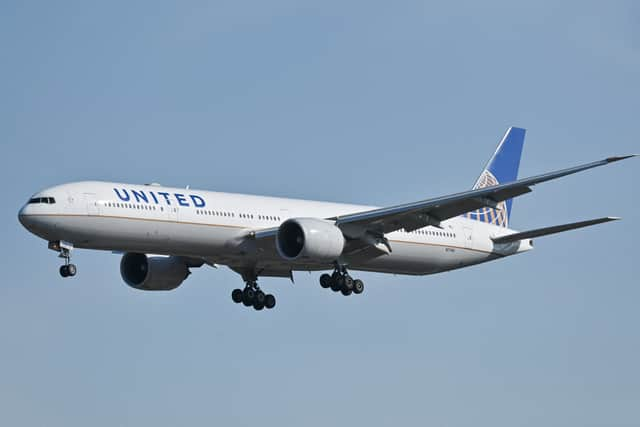

In response, the aircraft was directed into a holding pattern northwest of Washington to begin dumping fuel, a necessary step to reduce landing weight and minimise structural stress on touchdown. ATC asked the pilots, 'How long do you expect to hold, fuel, or just get set up there?' The pilot responded, 'We'll have to climb six [thousand feet] and adjust fuel.'
Over the next several minutes, the Dreamliner remained at around 6,000 feet, flying pre-determined headings to safely release fuel while remaining clear of other air traffic. ATC closely monitored the aircraft and issued vectors to help the pilots avoid any congestion in the airspace.
The pilot later informed ATC, 'We're dumping fuel at six thousand. We'll let you know when complete.' Once the process was finished, the crew requested an Instrument Landing System (ILS) approach to Runway 19C at Dulles.
The aircraft made a safe landing without further complications and ended without any harm to everyone on board. However, due to the engine failure, it was unable to taxi under its own power and had to be towed off the runway by ground crews.
Recent incidents, including a deadly crash involving an Air India 787 last month, have brought scrutiny to the model's safety record. In the Air India case, both engines failed shortly after take-off from Ahmedabad, resulting in a tragic crash that killed more than 260 people. That accident remains under investigation.