
Is Greek airspace still closed? Flights resume after holidaymakers left stranded due to technical failure - Greece launches investigation

Holidaymakers were left stranded after Greece closed its airspace suddenly on Sunday 4 January.
Air travel in Greece was severely disrupted due to a technical failure in the country’s air traffic control system. The failure affected multiple European flights leading to cancellations, delays, and diversions of hundreds of flights from major Greek airports, including Athens International Airport.
The issue stemmed from a technical malfunction that impacted Greece’s air traffic control system, which manages flights across the Athens Flight Information Region (FIR). The failure was primarily caused by a problem with radio communication systems.
This left air traffic controllers unable to maintain constant communication with aircraft. As a result, the Hellenic Civil Aviation Authority (HCAA) was forced to ground flights temporarily until communication systems were restored.
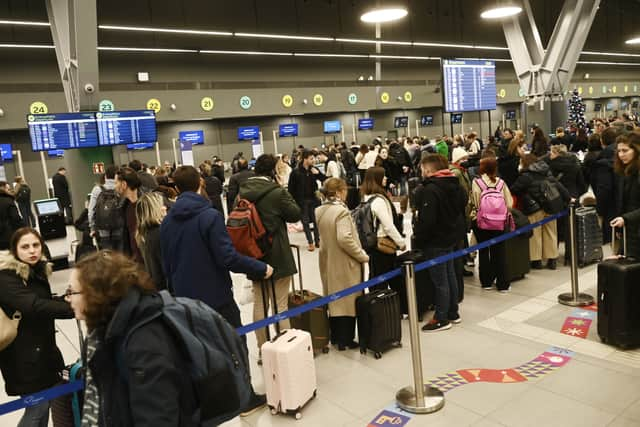

Aegean Airlines, Greece’s largest carrier, was among the hardest hit. The airline had to ground dozens of flights, mostly to and from Athens, due to the reduced capacity in Greek airspace. In a statement to passengers, Aegean Airlines confirmed that a technical issue with radio frequency systems had resulted in a significant reduction in airspace capacity across Greece.
Jet2 was also forced to cancel several flights to Athens, affecting passengers travelling from the UK. Athens International Airport began to slowly resume operations, following the gradual restoration of communication systems.
However, air traffic control systems were not fully operational until the afternoon, and delays continued throughout the day. The technical issue has been resolved, but passengers were left stranded and faced rebooking challenges as well as compensation claims.
Under European Union air passenger rights regulations, travellers whose flights were cancelled are entitled to rebooking and assistance, including meals, accommodation, and transport, as they await new flights. An urgent preliminary investigation has now been launched into the shut down of Greece’s airspace.
The head of the Athens Misdemeanor Prosecutor’s Office, Aristidis Koreas, ordered the inquiry, which will be conducted by the police’s electronic crime department. The investigation will examine whether the offence of dangerous interference with aircraft traffic was committed and how disruptions occurred across almost all frequencies of the Athens Flight Information Region (FIR).
Greece’s civil aviation authority said an indeterminate “noise” impacted radio channels, but the cause was not clear. “The ‘noise’ observed in the frequencies was in the form of continuous, involuntary emission,” it said in a statement. Initial indications, however, suggest the “noise” may have come from telecommunications infrastructure.