
Move over Stratford! Quaint village in Herefordshire transformed for new Oscar-tipped Shakespeare film Hamnet - only a two hour drive from Birmingham

‘Hamnet’ is out now in the UK and is hotly tipped to win everything at the Oscars
The film is a largely fictional retelling of William Shakespeare’s early years, and brings other characters to the fore including Shakespeare’s wife, Anne Hathaway, or more accurately, ‘Agnes’, and their children. The film brings to life the devastating loss of a child, its profound impact on William & Agnes’ world, and how grief expressed itself through William’s work on the stage of the Globe Theatre.
But rather than filming in Shakespeare’s real hometown, the 300-strong crew had to look elsewhere for 16th-century England due to business and popularity of Stratford. Instead, the crew decided to film in Herefordshire’s black and white village of Weobley - which is less than a two-hour drive from Birmingham.
The timber-framed buildings of Broad Street, Bell Square and Church Road became the perfect replacement for Stratford-upon-Avon in ‘Hamnet’. Filming took place over six weeks, with various locations along the River Wye also making an appearance in the film.
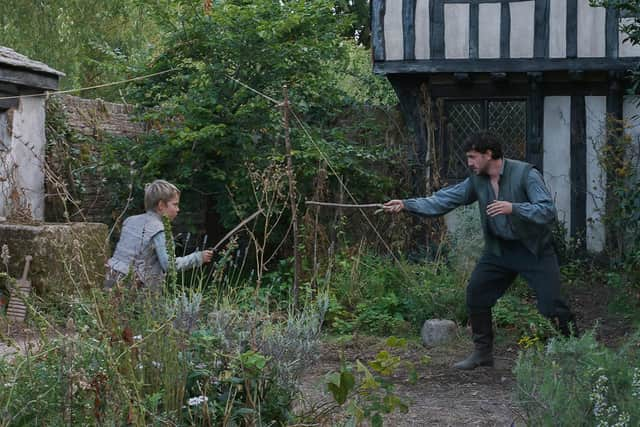

The village was once hailed as one of Britain's most idyllic villages by the Daily Mail, with compliments paid to its well-preserved Tudor buildings. A short journey from Weobley Village is the National Trust’s Cwmmau Farmhouse, and this stood in as the exterior for Agnes’ home in the film.
This striking 17th-century black and white timbered farmhouse, once at the heart of a significant farm, retains many of the original features and personal touches still in place. Supervising Location Manager, Lindsey Powell, said of the location for the film: “Taking a project to a relatively non filmed area of the Country can come with its challenges.
“However, from the moment that I first contacted Herefordshire Council, we received the upmost support with this project. Herefordshire Council and Herefordshire County BID attended site recces, online meetings and provided us with the necessary Council contacts to ensure that we could maximise our time spent in the County.”