
US storm: Snow and dangerous ice to hit much of United States this weekend including major cities New York, Nashville and Memphis

A powerful winter storm is set to hit much of the US this weekend - particularly New York.
New York City and the Tri-State area facing snow, heavy at times, for much of Sunday and lingering into early Monday. A Winter Storm Watch has been issued for the Tri-State area from late Saturday night through Monday afternoon, in addition to a Cold Weather Advisory that goes into effect Friday night.
Areas well north and west of New York City could see accumulations of a foot or more of snow, with bullseye regions including northwestern New Jersey, the Hudson Valley and eastern Pennsylvania. The area around the city and Long Island, as well as much of New Jersey, could land in the 6-to-12-inch range, but those numbers could be impacted by mixing with sleet or freezing rain.
New York City Public School students will be sent home on Friday with equipment and instructions for virtual learning, in case it is needed on Monday due to the snow storm. The National Weather Service (NWS) warned that the Arctic blast will bring sub-zero temperatures and wind chills, which "pose a life-threatening risk of hypothermia and frostbite to exposed skin".
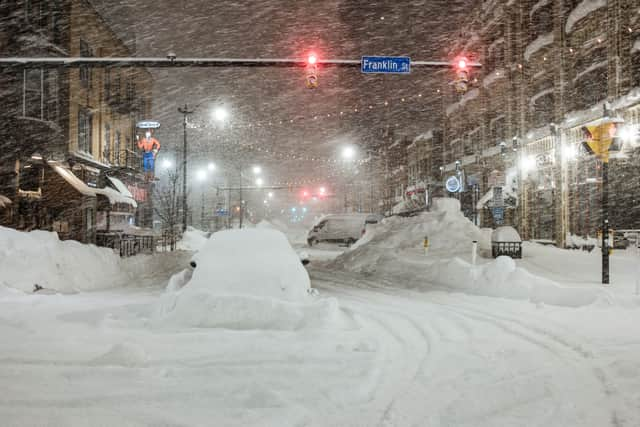

US transportation officials, including airport authorities in several major cities, have warned of weekend travel disruption, delays and cancellations. Some airlines have offered passengers the option to change their flights, in some cases without incurring extra fees, due to concerns about cancellations.
The winter storm is forecast to move slowly across the US, blanketing cities including Memphis, Nashville, Washington DC, Baltimore, Philadelphia and New York with snow.
Numerous low temperature records are likely to be broken, according to the NWS, with the coldest wind chills potentially falling below -50F (-46C) across the Northern Plains. Governors in several US states, including Arkansas, Georgia, Texas, North Carolina, South Carolina, have declared states of emergency, allowing emergency officials - including National Guard troops - to begin mobilising response efforts.