
What is a music bridge (Köprü) and why it matters in song structure

If you've ever found yourself swept away by a song, suddenly taken in a new direction before returning to the familiar chorus, you've likely experienced the effect of a bridge. But what exactly is a music bridge.
If you've ever found yourself swept away by a song, suddenly taken in a new direction before returning to the familiar chorus, you've likely experienced the effect of a bridge. But what exactly is a music bridge, and why is it such a powerful tool in songwriting? In this article, we’ll explore the concept, its purpose, and how it contributes to a song's emotional and musical journey.
What Is a Bridge in Music?
In music theory and song structure, a bridge also known as a “middle eight” in British terminology is a section that provides contrast to the verses and choruses. It typically appears once in a song and often introduces new chords, melodies, or lyrical themes that weren’t previously heard.
Unlike the verse or chorus, which repeat throughout the song, the bridge serves as a departure, giving listeners a fresh perspective before returning to the main themes. In Turkish, the bridge is referred to as “Köprü,” which literally translates to “bridge,” symbolizing its function as a connector between two sections.
Why Use a Bridge in a Song?
A well-crafted bridge can elevate a song from good to unforgettable. Here’s why:
1. Emotional Shift
The bridge often brings a moment of emotional depth or contrast, allowing the songwriter to express a twist in the narrative or reveal a new feeling. This can make the return to the final chorus even more impactful.
2. Musical Variety
Even the most catchy chorus can grow repetitive without contrast. A bridge provides musical relief, preventing the song from becoming monotonous. It keeps the listener engaged by offering something unexpected.
3. Dynamic Build-Up
Many songs use the bridge to build tension or anticipation, leading into a powerful final chorus. This dynamic arc is a common feature in pop, rock, R&B, and many other genres.
Typical Structure of a Song with a Bridge
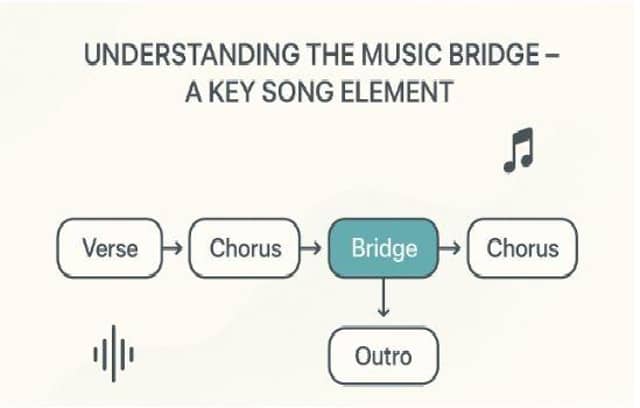
A standard pop song might look like this:
- Verse 1
- Chorus
- Verse 2
- Chorus
- Bridge
- Chorus (or Double Chorus)
- Outro
In this format, the bridge usually comes after the second chorus and is followed by a final chorus that often feels richer or more emotional due to the shift introduced by the bridge.
Characteristics of a Good Bridge
What makes a bridge effective? Here are some common traits:
- Chord Progression Change
The chords in a bridge usually deviate from those used in the verse and chorus. For example, a song in a major key might temporarily switch to the relative minor, adding emotional weight.
- Melodic Variation
Bridges often introduce a new melody, giving the vocalist a chance to show range or expression. This shift captures the listener’s attention.
- Lyrical Contrast
Lyrically, the bridge might offer a revelation, a question, or a moment of reflection. It can help develop the song’s storyline or highlight a different perspective.
Examples of Iconic Bridges in Popular Music
Here are some examples of unforgettable bridges that changed the trajectory of their songs:
- The Beatles – “Something”
- The bridge changes the mood entirely with a new melody and emotional honesty: “You’re asking me will my love grow…”
- Adele – “Someone Like You”
- The bridge intensifies the heartbreak just before the final chorus, adding raw vulnerability.
- Bruno Mars – “Grenade”
- The bridge elevates the emotional drama, expressing desperation and sacrifice.
Each of these examples demonstrates how the bridge serves as an essential turning point, enriching the song’s structure and emotional depth.
Do All Songs Need a Bridge?
Interestingly, not all songs include a bridge. Some artists opt for simplicity, relying on verse-chorus repetition or using other structural techniques like instrumental solos or breakdowns. However, when used effectively, a bridge can add dimension and balance, enhancing a song's longevity and replay value.
The Bridge in Different Genres
The function of a bridge varies across genres:
- Pop/Rock: Bridges are standard, often featuring emotional or musical shifts.
- Hip-Hop: Bridges may be replaced by rap verses, beat changes, or instrumental breaks.
- Jazz: Known as the “B section” in an AABA form, the bridge offers harmonic contrast.
- Electronic/Dance: Often includes a drop or breakdown that functions similarly to a bridge.
Writing Your Own Bridge: Tips for Songwriters
If you're a songwriter, here are some tips to craft a powerful bridge:
- Switch things up: Change the chords, melody, or rhythm.
- Introduce a lyrical twist: Add a plot development or emotional reveal.
- Use dynamics: Go softer or louder to create tension and release.
- Keep it short: A bridge is usually 4 to 8 bars—make it count!
Remember, the goal is to take the listener somewhere new, even briefly, before circling back to the familiar.
Conclusion: The Bridge Is More Than Just a Transition
The music bridge (Köprü) is not just a structural element—it’s a storytelling device, an emotional pivot, and a musical innovation. Whether you're a music lover, a budding songwriter, or simply curious about song structures, understanding the purpose and power of a bridge can transform how you experience music.