
Claire's Accessories: UK high street chain with 280 stores faces uncertain future as American bosses bring in restructuring experts

Another UK high street staple could face trouble in the coming months - as it looks to service a huge debt.
Claire’s Accessories has been beloved of young and teenage girls for decades. It’s originally an American chain - founded in Chicago in 1961 - and has 280 branches in the UK, which comprise a chunk of its 2,300 stores worldwide. Its window posters proudly proclaim that it has carried out more ear piercings, more than 100m, than any other retailer, and its multiple offers are also famous.
However, trouble could be ahead. Seven years ago, Claire’s filed for Chapter 11 bankruptcy in the US. This is a means by which companies can restructure their debt, make payments more affordable, and keep on trading.
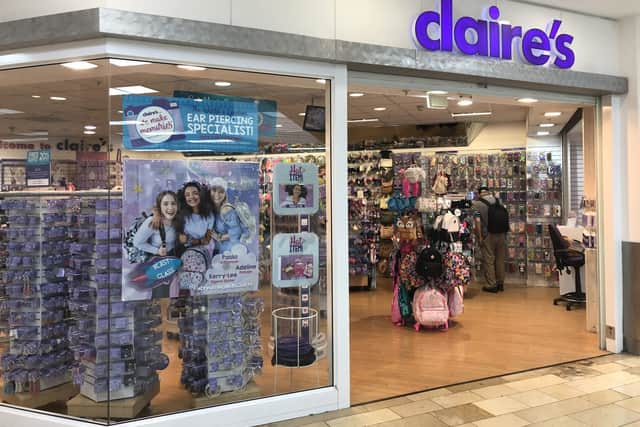

In 2022, Claire’s said it had exited bankruptcy and had seen some growth - but that appears to have stalled. It still has a debt of $480m (£355m) which needs to be paid by December next year.
Last Wednesday it said it would be looking for another Chapter 11 bankruptcy order, saying customer demand had fallen away and that Donald Trump’s tariffs had also affected its performance.
It has been reported that investment banking services company Houlihan Lokey is in talks with Claire's to improve financing and explore the sale of some or all of its assets - including international operations. There are allegedly interested buyers, but no names have been divulged.
The Standard has reported that the UK wing of Claire’s has made losses totalling £25m over the last three years, with the most recent accounts showing it was £4.7m down in the year ending March 2024.
And the Telegraph says that restructuring experts at Interpath “have been tasked with seeking investors willing to salvage all or part of its British operations”.
It adds: “Interpath’s appointment has fuelled expectations of a radical break-up that could result in sweeping store closures, and the chain pulling out of some countries completely, as it seeks to dramatically rein in costs.”