
Fluffy fighters: Hand-reared African Penguin chicks waddle back to the wild amid conservation victory
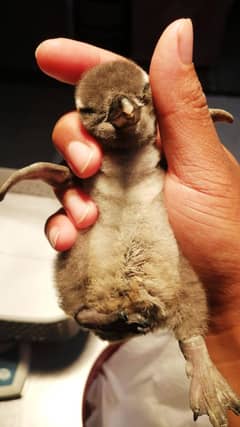

The future of the African Penguin is looking brighter. Thanks to a hard-won settlement agreement, the latest batch of hand-reared chicks will enter a marine environment with stronger protections in place.
Following several weeks of exceptionally hard work and negotiations between BirdLife South Africa and SANCCOB, and the commercial sardine and anchovy fishing industry, an agreement has been reached (subsequently endorsed by the State) to secure biologically meaningful foraging areas for African Penguins.
The victory sees revised delineations of no-take zones for the commercial sardine and anchovy fishery around six key African Penguin breeding colonies. The agreement also ensures that the South African Department of Forestry, Fisheries and the Environment (DFFE) has to renew the closure permits each January for the next 10 years. The 10-year period takes closures to the critical year, 2035, when the iconic African Penguin is predicted by scientists to be extinct in the wild – just a generation of penguins away.
“Taking our daily fight for conservation to court was vital to securing a future for the African Penguin,” says Dr Alistair McInnes, Seabird Conservation Programme Manager at BirdLife South Africa. “With this settlement in place, the agreed protections will lead to real change for the African Penguin as well as other marine predator species, such as Cape Gannets, Cape Cormorants, and other socio-economically important fish.”

The chick bolstering project: a lifeline for African Penguins
To help combat dwindling African Penguin numbers, SANCCOB launched its Chick Bolstering Project (CBP) to rescue, rehabilitate and release abandoned African Penguin chicks. Since 2006, over 10,000 chicks have been rescued, with an impressive 81% release rate. The latest batch of hand-reared chicks has just been released into the wild, offering renewed hope for the species’ survival.
Currently, SANCCOB is caring for another 85 African Penguin chicks, preparing them for release when they are strong enough. An additional 40 eggs are being incubated, meaning even more penguins will soon bolster wild populations.
Each chick undergoes a carefully managed process to ensure survival:
- Eggs are incubated and monitored for healthy development.
- Hatchlings receive nutrient-packed fish smoothies to grow strong.
- Fledglings are trained to swim and preen in rehabilitation pools.
- Before release, each fledgling undergoes health checks to ensure fitness for the wild.
- Tiny microchips are inserted under the skin to monitor their survival in the wild.
Monitoring confirms that hand-reared chicks survive at similar rates to their wild counterparts, proving that these efforts are a vital conservation intervention. Now, with the settlement agreement in place, these fledglings will be released into a marine ecosystem that is seeing long-overdue protections to ensure continued nutrition.
A victory for systemic change
Despite years of conservation efforts, African Penguin numbers have continued to plummet due to food shortages contributed to by competition with commercial fishing. However, the recent agreement represents a major breakthrough. Key measures include:
- Regionally representative, scientifically-informed fishing closures to safeguard key foraging areas.
- Greater collaboration between conservationists, government, and industry to mitigate the impact of fishing on penguin populations.
- A commitment to implementing additional measures recommended by the expert panel convened in 2022 to advise the Minister on the matter of fishing closures.
“This isn’t just about hand-rearing chicks; it’s about ensuring they return to a thriving ecosystem,” says Nicky Stander, Head of Conservation at SANCCOB.“However, while we celebrate today's success, we remain acutely aware that our journey is far from over. The threats facing the African Penguin are complex and ongoing – and the order itself requires monitoring, enforcement and continued cooperation from Industry and the government.”
The agreement establishes regional fishing closures to protect African Penguin foraging areas while considering commercial fishing needs. Key measures include maintaining the Dassen Island closure, expanding the Robben Island closure to a 20km closure predicted to have good population growth results, and significantly increasing protections at Stony Point to align with penguin foraging zones. Dyer Island’s existing “split zone” closure remains, allowing smaller vessels to fish in the area to support local fishers. In the extremely sensitive Algoa Bay, St Croix Island’s closure provides penguin protection while enabling local fishing access to the bay, while Bird Island gains a 20 km protective zone similar to Robben Island.
Ensuring a future for Africa’s only penguin
Throughout the fight for change, conservation charity, Blue Marine Foundation has provided unwavering support to BirdLife South Africa and SANCCOB.
Jo Coumbe, Communications Director at Blue Marine, says: “The recent settlement is a step in the right direction and these new, effective measures will help avert a catastrophe for the African Penguin. However, continued vigilance is essential. Now that an agreement has been reached, we must ensure these protections are upheld. If we let our guard down, the progress we’ve made could be undone.”
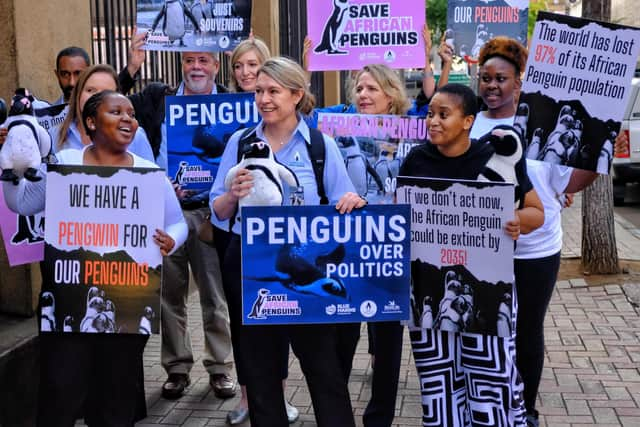
The public can continue to play a crucial role in securing the future of the African Penguin by: signing and sharing the OnlyOne petition urging the South African government to enforce stricter fishing regulations.
African Penguins are not just charismatic seabirds; they are also an economic powerhouse. With penguin tourism generating up to R2.7 billion (£118 million) annually, their extinction would deal a devastating blow to South Africa’s tourism industry and global conservation reputation.