
Riley Green ‘That’s Just Me’ review: ‘Deeply personal with exceptional musicianship’

This article contains affiliate links. We may earn a small commission on items purchased through this article, but that does not affect our editorial judgement.
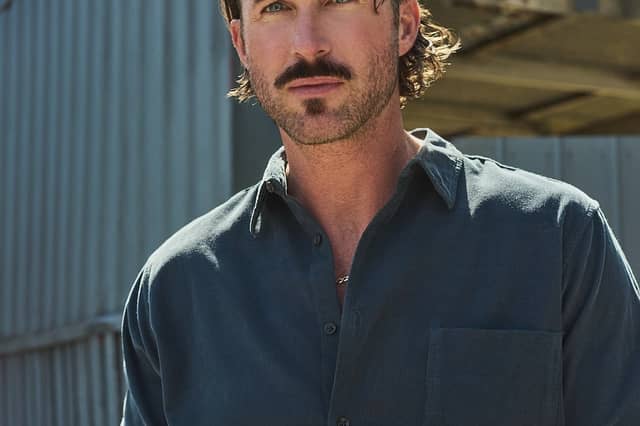
After a whirlwind 2026 that has seen Riley Green make his acting debut on CBS’ hit drama Marshals and a sold-out arena run, Green’s fourth studio album ‘That’s Just Me’ sees the 37-year-old deliver a record that’s deeply personal with exceptional musicianship.
The making of Green’s fourth studio album captured the Alabama-born artist’s desire to remain true to himself while continuing to evolve as an artist. The 19-track collection showcases Green’s signature blend of traditional country storytelling, Southern roots and authentic, lived-in songwriting, while offering an intimate look at the experiences and relationships that have shaped him. It’s a revealing look into the life of the country artist, who has been announced as a 2027 Stagecoach headliner and recently played a sold-out date at Bridgestone Arena in Nashville, home to the NHL’s Nashville Predators.
The album’s opener ‘My Way’ feels like the structural anchor for the album’s emotional tone. The arrangement is built around a warm acoustic guitar and a mournful fiddle line, but there’s some exceptionally intricate drumming built around eighth and sixteenth note subdivisions. Rather than relying on heavy downbeats, the subdivisions fill in the rhythmic gaps to keep the song moving without ever overshadowing the stark intimacy of the vocal and acoustic guitar. The lyricism relies on intimate, cinematic vignettes, which range from pouring red wine into coffee cups, watching stars come out, having an Al Green record playing by a fireplace and dancing around to add the intimate nature of the song. Green’s vocals feel almost conversational, singing with a sense of resignation and loss.
The production choices on ‘That’s Just Me’, arguably my personal favourite on the album, were exceptionally thought-out. The opening verses begin completely stripped-back with Riley’s vocals and an acoustic guitar before dropping the lyric “Baby, you’re the only thing I need,” signalling a sense of contrast. The drumming is exceptionally tight, the piano is melancholic yet spacious, and there's a degree of overdrive on the guitar. I think there's a steel guitar adding a richness to the arrangement, but as it's evidently Riley being reflective on the demise of a relationship, the instrumentation is allowing that message to breathe. It's restrained but exceptional musicianship.
As the song progresses, the mix clears with a drop-out section just after the bridge, stripping the arrangement back down to just the acoustic guitar and vocals, allowing the vocals to breathe and creating a rich, emotional lull that gives the song’s final realisation more impact before the full instrumentation slams back in for the final chorus, culminating with the declaration with Green uttering “Yeah, it’s just me”. That rich wall of sound eventually fades out for the final time, leaving just Green and the acoustic guitar, highlighting that sense of it now just being him on his own.
“Girl, keep those hands where I can see them. Don’t move a muscle, don't say a thing,” Green sings in the opening verse of ‘Don’t Come Any Closer’, delivering a narrative warning. The instrumentation is intentionally kept restrained, allowing Green’s vocal to remain at the forefront of the arrangement, giving his vocals a weight of authority in a high-stakes stand-off that’s also a moment of caution. Instead of a sustained band explosion, Green and his producer, Dann Huff, allow the arrangement to build steadily, with sudden bursts of an overdriven guitar cutting through the mix. The instrumentation remains restrained in the chorus, mirroring the sense of caution as Green sings, “Unless you wanna give one last time another try again. Unless you wanna make mine the bed you're climbin' in. 'Cause if we end up back in those sheets. You ain't gonna put the blame on me,” he pleads. It’s an intentionally tight groove that refuses to let the tempo accelerate, maintaining a heavy, atmospheric weight right through the chorus. It’s a masterclass in sonic restraint, mirroring the thematic concept of how “take it slow” can swiftly evolve into “movin' pretty damn fast".
‘Go Again’, featuring Hannah McFarland, is a masterclass in structured conversational pacing and vocal interplay. Rather than exchanging standard verses with McFarland, the song is arranged to mimic having conversational dialogue. Green’s vocals establish a morning-after scene: "Last night's red wine has my head hurtin’. You didn’t sleep a wink all night, but somehow, girl, you still look perfect,” and sees McFarland directly respond, “Boy, we were hell on this hotel room. You made me laugh, fumblin' with my dress,” responding in a way that sees the pair complement each other rather than overshadow. Sat underneath the pair’s vocals, they are complemented by a warm acoustic guitar, a delicate mandolin line and restrained drumming, allowing the vocals to remain front-and-centre.
‘Imagine That’ handles the psychological aftermath of a breakup. “I just called to let you know that you’re the only, always on my mind. See if there’s a chance in hell that you’d see me tonight,” he sings. That despair transitions into a breezy optimism as Green is left in a state of wonder, wondering whether the chapter is truly over: "Imagine there’s a full moon. Shinin’ on a poor ol’ fool. Who’s ready to make things ring, even if it takes all night,” he added. The bass guitar and drumming provide a steady anchor, complementing each other to provide a very distinct, punchy foundation without overwhelming the acoustic guitar and the steel guitar, adding the richness to help retain the song’s southern roots.
‘Think As You Drunk’ is the album's definitive shot of rowdy, light-hearted energy, blending a soaring fiddle, a twangy steel guitar, a honky-tonk piano and a mildly overdriven guitar. It pays tribute to the late Toby Keith, interpolating and sampling Keith’s track ‘As Good as I Once Was’. Additionally, the sign of true confidence of any artist is knowing when to play and when not to play. In the 28th measure, the instrumentation drops out as Green sings, "You're probably thinkin' I’m three sheets to the wind,” before a rest in the first three beats of the 29th measure, successfully mimicking that boozy, disorientating feeling of being intoxicated within the lyrics, and that willingness to use restraints underlines Green’s red-hot confidence in himself.
The track concludes with the unmistakable voice of Keith cutting through and delivering the final lines of “may not be as good as I once was, but I’m as good once as I ever was". Keith sings, wrapping up the rowdy bar room drinking anthem with a powerful, tear-jerking nod to one of Green's single biggest musical influences, with a portion of the track's proceeds going straight to the Toby Keith Foundation.
‘Well Well Whiskey’ continues that strong honky-tonk showcase, incorporating frequent harmonica stabs within the arrangement, acting as the direct sonic counterpart to Riley’s vocals. Green’s vocal delivery retains a slightly gritty, rhythmic phrasing, allowing that sharp tone of the harmonica to complement him to extend the emotion of his vocal lines. When Jake Worthington's traditional, smoother baritone takes the lead vocals, the bright, rolling honky-tonk piano fills the spaces, offering a contrast to Jake's sustained vocal notes.
‘Pave All Them Red Dirt Roads’, a nod and a sequel to Brooks & Dunn’s ‘Red Dirt Road’, wrestles with the concept of rural modernisation and small-town identity, serving as a massive cross-generational bridge, bringing together two eras in which the prequel and sequel were written. Backed by a warm acoustic guitar, restrained drumming, a rich pedal steel, Green documents classic rural imagery, ranging from wrecked cars, old bass fishing ponds, first beers, and old hay barns—over a rich, sweeping neotraditional background. The payoff is unveiled in the final chorus when Brooks & Dunn step in to interpolate the aforementioned ‘Red Dirt Road’, elevating a song about rural life into a symbolic passing of the torch.
Ultimately, ‘That’s Just Me’ is a triumph for Riley Green. The step-up as co-producer and collaboration with Huff has allowed Green to deliver a masterclass of musicianship and restraint. It is an album that confidently understands the beauty of musical arrangement, allowing traditional country elements—from steel guitars to sharp harmonica stabs—to enrich the narrative rather than crowd the subject. It is an exceptional listen that demands—and entirely justifies—the audience's full, undivided attention.
You can stream ‘That’s Just Me’ here.